VMAs Biggest Moments: 10 Shocking Highlights Revealed
The VMAs biggest moments have become some of the most recognizable events in modern music and pop culture. Since MTV launched the Video Music Awards in 1984, the annual ceremony has delivered spectacular performances, unexpected celebrity appearances, controversial moments and fashion statements that continued to dominate conversations long after the broadcasts ended.
Few artists are more closely associated with that history than Madonna. From her unforgettable debut performance at the first VMAs to her return to the ceremony decades later, Madonna has repeatedly helped define what audiences expect from MTV’s biggest night.
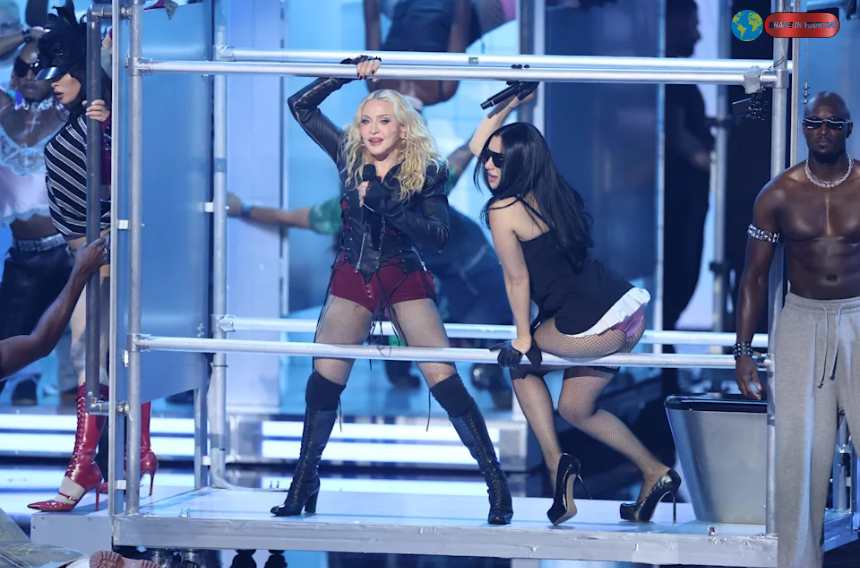
The 2026 MTV Video Music Awards once again put that history in the spotlight. Madonna returned to the VMA stage for the first time as a live performer in 23 years, opening the show alongside Sabrina Carpenter before performing with Charli XCX. Her appearance connected several generations of pop music and became one of the major highlights of the ceremony.
But Madonna’s latest appearance is only one chapter in a long history of memorable VMA moments.
VMAs Biggest Moments Begin With Madonna
The story of the VMAs biggest moments starts with Madonna herself.
At the inaugural MTV Video Music Awards in 1984, Madonna performed “Like a Virgin” while wearing a wedding-inspired outfit. She emerged from a giant wedding cake and performed across the stage in a sequence that quickly became associated with the rebellious spirit of MTV.
According to People, the performance helped establish Madonna as one of the defining artists of the new music-video era. Her appearance also established an important tradition for the VMAs: performances did not necessarily have to be predictable or conventional.
The moment was particularly significant because the VMAs were still a new concept. MTV had built its identity around music videos, but the awards ceremony offered artists an opportunity to turn those visual ideas into live spectacle.
Madonna understood that opportunity immediately.
Her 1984 performance became a reference point for future VMA performers and helped establish the ceremony as a place where musicians could create moments designed specifically for television.
Madonna Returns for Another Major VMA Moment
More than four decades after her VMA debut, Madonna returned to the ceremony in 2026.
The return was significant because her previous live performance at the VMAs had taken place in 2003. That appearance featured Britney Spears, Christina Aguilera and Missy Elliott and became one of the most discussed performances in the show’s history.
In 2026, Madonna opened the ceremony with Sabrina Carpenter, performing their song “Bring Your Love.” She then performed “Danceteria Afterhours,” her collaboration with Charli XCX.
The performance included appearances by Charli XCX, Debbie Mazar, Seth Rogen and Julia Garner, creating a deliberately crowded celebration of Madonna’s career and influence.
The performance also reflected the changing nature of pop music.
Rather than appearing alone, Madonna shared the stage with younger performers whose careers developed decades after her first VMA appearance. The result connected different eras of pop culture in a single opening sequence.
The 2003 Madonna, Britney Spears and Christina Aguilera Performance
One of the most famous moments in VMA history came in 2003, when Madonna shared the stage with Britney Spears and Christina Aguilera.
The three performers opened the show with a medley that included Madonna’s music. The performance became particularly famous because of onstage kisses involving Madonna and the two younger pop stars.
People described the 2003 performance as one of Madonna’s most memorable VMA appearances. It was also her last live performance at the ceremony before her 2026 return.
The performance became part of the broader pop-culture conversation surrounding the VMAs.
It demonstrated how the ceremony could turn a live performance into a cultural event that extended far beyond the music itself.
Beyoncé and Jay-Z Bring “Crazy in Love” to the VMAs
Another important entry among the VMAs biggest moments came in 2003 when Beyoncé and Jay-Z performed “Crazy in Love.”
The performance arrived during the early stages of Beyoncé’s solo career following her years with Destiny’s Child. She had released her debut solo album, Dangerously in Love, and “Crazy in Love” had become one of the year’s defining hits.
People’s retrospective look at VMA history identifies the 2003 performance as an important early moment for the pair. Beyoncé and Jay-Z also won three awards that night.
The appearance captured Beyoncé at an important transition point.
She was moving from being known primarily as a member of Destiny’s Child toward becoming one of the world’s biggest solo performers. The VMAs provided a highly visible platform for that transformation.
Shakira’s “Hips Don’t Lie” Performance
The VMAs have also been a showcase for international pop stars.
In 2006, Shakira performed “Hips Don’t Lie,” one of the biggest songs of her career. The performance remains part of the ceremony’s visual history and is included among People’s collection of memorable VMA moments.
The performance arrived when Shakira was expanding her audience globally.
“Hips Don’t Lie” had become an international hit, and her VMA appearance helped reinforce the growing presence of Latin music and international artists within mainstream American pop culture.
The VMAs have frequently served as a snapshot of changing musical tastes. Shakira’s appearance was one example of that evolution.
Britney Spears and Christina Aguilera Before Their Madonna Performance
Before Britney Spears and Christina Aguilera shared the stage with Madonna, the two young stars appeared together at the 2000 VMAs.
People’s historical collection of VMA photographs notes that Spears and Aguilera joined forces to present Video of the Year in 2000. Two years later, both would become central figures in Madonna’s famous 2003 performance.
Their appearance illustrates how the VMAs often document artists at different stages of their careers.
An artist can arrive as a rising star, return as an established performer and eventually become part of the ceremony’s own history.
That cycle has repeated throughout the awards show’s existence.
Taylor Swift’s Rise Through the VMAs
Taylor Swift’s relationship with the VMAs provides another long-running storyline.
She first attended the ceremony in 2008, a period when her career was rapidly expanding. People included an image of Swift posing with Britney Spears during that year’s event in its retrospective of memorable VMA moments.
Years later, Swift became one of the central figures of the awards ceremony herself.
At the 2026 VMAs, she was among the major honorees while Madonna also dominated the awards. Yahoo’s retrospective of the 2026 ceremony identified Swift and Madonna as two of the night’s major winners.
The contrast between Swift’s first VMA appearance and her later status at the ceremony illustrates how quickly the awards can become a record of an artist’s career.
Sienna Spiro Has a Breakout VMA Moment
The 2026 ceremony also introduced audiences to a newer generation of performers.
Sienna Spiro delivered a solo performance of “Great Expectation” during the ceremony. According to Yahoo’s review of the night’s best moments, the performance placed the young singer in a prominent position before she later won the Best New Artist award.
The moment followed a familiar VMA pattern.
The ceremony uses its large television audience not only to celebrate established stars but also to introduce emerging performers to a wider audience.
For Spiro, the performance and subsequent award created one of the night’s important career milestones.
Kacey Musgraves Pays Tribute to Dolly Parton
The 2026 VMAs also looked backward while celebrating contemporary music.
Kacey Musgraves delivered a tribute to Dolly Parton, another moment highlighted in TheWrap’s review of the ceremony. The performance reflected one of the evening’s central themes: the relationship between music’s past and its present.
Tributes have long been an important part of awards shows.
At the VMAs, they also provide an opportunity for younger performers to acknowledge artists whose work influenced later generations.
The Dolly Parton tribute therefore fit into a broader 2026 ceremony that repeatedly moved between established legends and newer artists.
The VMAs and the Power of Surprise
What makes the VMAs biggest moments distinctive is the element of surprise.
Unlike a conventional concert, the ceremony brings together artists from different genres, generations and audiences. Performances can involve unexpected collaborations, elaborate costumes, dramatic staging or celebrity appearances that audiences did not anticipate.
That unpredictability has been part of the VMAs since the beginning.
Madonna’s 1984 performance established one version of that formula. Her 2003 appearance demonstrated another. In 2026, her collaboration with Sabrina Carpenter and Charli XCX showed how the concept continues to evolve.
The common thread is spectacle.
Why VMA Moments Continue to Matter
The MTV Video Music Awards have changed considerably since 1984.
Music consumption has moved from television toward streaming platforms and social media. Music videos are no longer experienced primarily through MTV. Artists can communicate directly with audiences through digital platforms within seconds.
Yet the VMAs continue to generate moments designed for immediate attention.
That is partly because the ceremony combines music, celebrity culture and live television in one event.
A performance can become a headline. A fashion choice can become a viral image. A collaboration can introduce two different fan bases to each other.
The ceremony therefore remains a useful snapshot of the entertainment industry at a particular moment.
Madonna’s Legacy at the VMAs
Madonna’s place in VMA history extends far beyond one performance.
She appeared at the inaugural ceremony in 1984 and returned for major performances in 1989, 1990, 1993 and 2003. She also became the first solo female artist to receive the Video Vanguard Award in 1986, according to People.
Her history with the ceremony reflects the evolution of both MTV and popular music.
In 2026, Madonna entered the ceremony with 11 nominations and ultimately won major awards, including Artist of the Year, Best Collaboration and Best Dance Song, according to Yahoo’s post-show recap.
Her return therefore was not simply a nostalgic appearance.
It placed one of the ceremony’s defining artists back at the center of the event while allowing her to perform with contemporary stars.
The VMA Legacy Continues
The VMAs biggest moments span more than four decades, but the formula behind them remains recognizable.
Madonna’s 1984 debut, her 2003 collaboration with Britney Spears and Christina Aguilera, Beyoncé and Jay-Z’s “Crazy in Love,” Shakira’s “Hips Don’t Lie,” Taylor Swift’s rise and the 2026 ceremony’s combination of Madonna, Sabrina Carpenter, Charli XCX, Sienna Spiro and Kacey Musgraves all demonstrate how the show has evolved.
The awards ceremony has never been only about handing out trophies.
It has also been a stage where artists attempt to create moments audiences will remember.
That tradition continued in 2026, when Madonna returned after more than two decades away and opened the show with a performance connecting her own history to the next generation of pop performers.
From its first ceremony in 1984 to its latest celebration, the VMAs have remained closely connected to the biggest personalities and defining performances in popular music.
And as the 2026 ceremony demonstrated, the show’s most memorable moments can still come from the combination of established legends, rising artists and unexpected collaborations.