Scientists Discover a Surprising Second Role for Ovaries After Menopause
Scientists are challenging the long-standing assumption that ovaries become largely inactive after menopause. New research suggests that these organs continue to undergo significant biological changes, potentially influencing inflammation, immune activity, and the aging process.
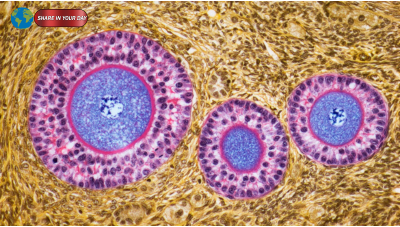
The findings provide fresh insight into the importance of ovarian health beyond reproduction. They could also help researchers better understand why certain health risks, including ovarian cancer, become more significant as women grow older.
Published in the scientific journal Aging Cell, the research examines how proteins in human ovarian tissue change with age after reproductive activity has ended. The results suggest that menopause may represent a transition into a different biological phase rather than the complete retirement of the ovaries.
Ovaries May Continue Working After Menopause
Menopause marks the end of menstrual cycles and natural ovulation. As ovarian function changes, hormone levels, particularly estrogen, decline significantly. These changes can affect multiple systems throughout the body, including bone health and other aspects of long-term well-being.
However, researchers increasingly recognize that the ovaries do more than produce eggs.
Reproductive biologist Francesca Duncan of Northwestern University and proteomics expert Birgit Schilling of the Buck Institute led the investigation into the biological activity of postmenopausal ovaries.
Their work challenges the idea that ovaries become functionally irrelevant once reproduction ends.
Instead, the researchers found evidence that ovarian tissue continues to change as women age. These changes may influence how the ovaries interact with other organs and contribute to the body’s broader aging processes.
The findings suggest that scientists need to examine the ovaries as more than reproductive organs, particularly when studying health after menopause.
Researchers Analyze Ovarian Proteins in Older Women
To investigate what happens to ovaries after menopause, the research team analyzed ovarian tissue from 28 postmenopausal women.
The participants were divided into three age groups: 50 to 59, 60 to 69, and 70 years and older.
The ovaries had been surgically removed for various medical reasons. Importantly, the tissue samples examined in the study did not show signs of disease.
Researchers used mass spectrometry, a technique that helps identify and measure proteins in biological samples, to investigate how ovarian tissue differed across the age groups.
Proteins perform many essential functions in the body, including supporting cellular structures, regulating biological processes, and coordinating immune responses. Changes in their abundance can therefore provide important clues about how an organ functions over time.
The analysis identified a group of 17 proteins that helped characterize age-related changes in the ovaries.
The results indicated that ovarian tissue from younger postmenopausal women contained more proteins associated with RNA and DNA regulation, cellular maintenance, and the preservation of tissue structure.
By comparison, ovaries from women aged 70 and older showed greater activity involving lipid metabolism, innate immunity, and inflammation.
These differences indicate that ovarian tissue does not simply remain unchanged after reproductive activity stops.
An Increasingly Important Role in Inflammation and Immunity
One of the most intriguing aspects of the research is the apparent shift toward biological processes associated with immunity and inflammation.
The findings are consistent with earlier research in mice, which found that aging ovaries undergo substantial changes in their cellular composition and immune activity.
In those animal studies, researchers observed increased infiltration by immune cells, including T cells and macrophages, in older ovarian tissue.
The human findings provide complementary evidence that ovarian aging involves more than the loss of reproductive capacity.
Instead, the ovaries appear to develop a different biological profile over time, although scientists still need to determine precisely what these changes mean for overall health.
The immune system is essential for protecting the body against infections and responding to damaged cells. However, persistent or poorly regulated inflammation can contribute to several age-related conditions.
Understanding how ovarian tissue participates in these processes could therefore help scientists investigate the connections between reproductive aging and health throughout the body.
Nevertheless, the study does not establish that postmenopausal ovaries directly cause inflammation elsewhere in the body. Further research will be needed to determine whether the observed protein changes have measurable effects on other organs.
Could These Changes Help Explain Ovarian Cancer Risk?
The research may also have implications for understanding ovarian cancer, a disease whose risk generally increases with age.
Although the ovarian samples in the study were free of detectable disease, researchers identified proteins previously associated with ovarian cancer.
These proteins were particularly prominent in some samples from women in their 60s.
The findings suggest that age-related changes in ovarian tissue could create an environment that deserves closer investigation when studying cancer development.
One possible factor is fibrosis, a process involving the accumulation of structural proteins such as collagen in tissues. Together with inflammation, these changes may influence the environment surrounding cells.
Certain fibrotic and inflammatory conditions can create circumstances that favor tumor development. However, the presence of cancer-associated proteins does not mean that a woman will develop ovarian cancer.
The researchers are interested in determining whether changes in aging ovarian tissue could eventually help identify new biomarkers or potential targets for prevention and treatment.
At this stage, the findings do not establish a direct cause-and-effect relationship between the observed protein changes and cancer.
More studies are necessary before scientists can determine whether these biological patterns could be used in clinical practice.
What the Findings Mean for Women’s Health
The research highlights an important gap in medical understanding: scientists still know relatively little about the long-term biological activity of ovaries after menopause.
As life expectancy increases, understanding the health of postmenopausal women becomes increasingly important. Researchers must consider not only the immediate effects of hormonal changes but also how aging reproductive organs may influence health over decades.
The findings could eventually help improve care for women experiencing natural menopause and for patients who undergo surgical removal of their ovaries.
Such surgery may be necessary for several medical reasons, including certain cancers and other gynecological conditions. Better knowledge of ovarian biology could help researchers investigate the potential long-term consequences of removing these organs.
However, the study does not establish that keeping the ovaries prevents age-related diseases or that removing them necessarily leads to poorer health outcomes in every patient.
Further research is needed to clarify the relationship between ovarian aging, immune activity, hormones, and other physiological systems.
More Research Is Needed
The study provides an initial picture of how human ovarian tissue changes after menopause, but several questions remain unanswered.
Researchers must determine whether the protein patterns observed in the samples are consistent across larger and more diverse populations. They also need to establish how these changes affect the function of the ovaries and whether they contribute to specific health outcomes.
Future investigations could examine whether particular proteins serve as reliable markers of ovarian aging or help identify people at increased risk of certain conditions.
For now, the findings offer a different perspective on menopause. Rather than becoming biologically inactive, the ovaries appear to continue changing in ways that scientists are only beginning to understand.
This emerging research could eventually expand knowledge of women’s health beyond fertility and provide new directions for investigating healthy aging.
The central message is clear: the end of reproductive function does not necessarily mark the end of an organ’s biological significance.