Diesel Export Ban: Trump Backs Bold 2026 Plan
President Donald Trump has backed the idea of a diesel export ban as the United States confronts record fuel prices, tightening supplies and growing pressure from farmers, truckers and other fuel-intensive industries. The proposal comes as wars involving Iran and Ukraine disrupt global energy markets and push diesel prices sharply higher.
Trump said Tuesday that he supports restricting US diesel exports in an effort to keep more fuel inside the country. Treasury Secretary Scott Bessent confirmed that the administration is examining whether a partial or full restriction could be feasible without creating new problems for domestic refiners.
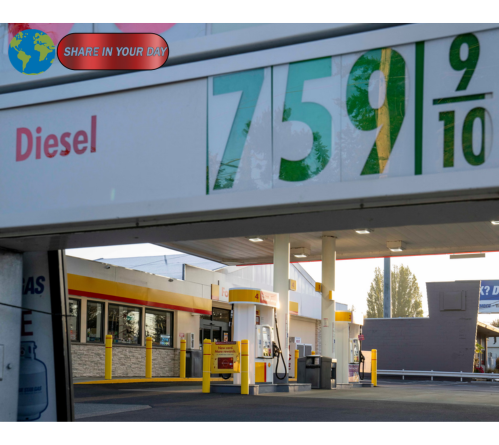
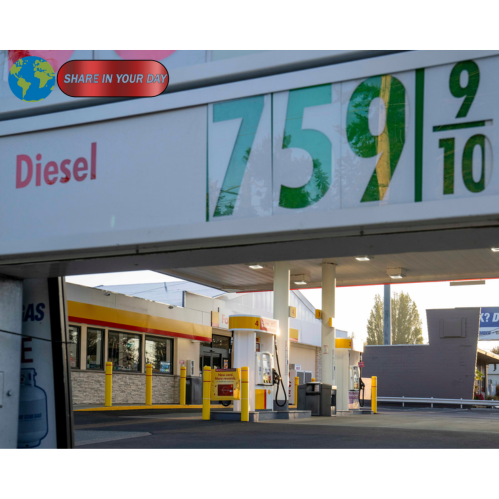
The debate has become increasingly urgent as US diesel prices climb to unprecedented levels. According to the latest reporting, the national average reached $6.53 per gallon on Tuesday, more than 75% above the level recorded a year earlier.
The proposed diesel export ban therefore represents a major shift in the administration’s response to the fuel crisis. However, the plan also faces opposition from the refining industry, which warns that restricting exports could reduce refinery output and ultimately push gasoline prices higher.
Trump backs diesel export ban as prices surge
Trump’s comments came ahead of his meeting with Ukrainian President Volodymyr Zelenskyy. The president said the United States produces substantial quantities of diesel and argued that some of that fuel should remain available to American consumers.
The White House is now considering whether limiting exports could increase domestic supply and ease pressure at the pump.
Bessent said officials are examining both a full ban and a partial restriction. The central question is whether American refineries have enough capacity and flexibility to respond to the policy without producing unintended consequences.
That distinction matters because diesel production cannot simply be separated from the production of other refined fuels. Refineries process crude oil into multiple products, including diesel, gasoline and other petroleum products.
As a result, an aggressive export restriction could affect the entire fuel market rather than diesel alone.
Why diesel prices are reaching record levels
The immediate pressure on diesel markets is global.
The conflicts involving Iran and Ukraine have disrupted supplies from major energy-producing regions. Russia, Saudi Arabia and the United Arab Emirates are among the producers affected by the broader disruption to global fuel flows.
At the same time, attacks on energy infrastructure have reduced refining availability in important markets. Russia’s refining system has faced repeated disruption, while instability in the Middle East has affected regional energy flows.
The result is a market in which diesel inventories are unusually low.
Reuters reported that US diesel inventories fell to 107.9 million barrels by September 11, the lowest level for that point in the year since records began in 1982. The US Energy Information Administration also expects distillate inventories to remain below the five-year average through the end of 2026 and much of 2027.
That shortage matters because diesel is not simply a fuel for passenger vehicles.
It powers trucks, agricultural machinery, construction equipment, industrial operations and many forms of heavy transportation. When diesel becomes more expensive, the impact can spread throughout the economy.
Diesel export ban could target American farmers
One of the strongest political arguments for a diesel export ban is the pressure facing American agriculture.
Farmers rely heavily on diesel to operate tractors, combines, irrigation equipment and other machinery. Higher fuel costs can therefore raise the expense of planting, harvesting and transporting crops.
Those costs eventually filter through the food supply chain.
The political pressure is particularly significant ahead of the US midterm elections. Republican lawmakers from agricultural states have increasingly called for action as farmers and rural businesses struggle with higher operating expenses.
Republican Senate candidate Ashley Hinson of Iowa was among those urging the administration to use available tools to provide relief from elevated prices.
For farmers, the issue is straightforward: if diesel prices remain elevated, every trip across a field and every shipment to a grain elevator or processing facility becomes more expensive.
However, a diesel export ban may not provide an immediate or guaranteed solution.
Why refiners warn the plan could backfire
The American Fuel and Petrochemical Manufacturers trade group has warned that an export restriction could produce the opposite result from what policymakers intend.
The industry group’s argument centers on refinery economics.
US refiners do not produce diesel in isolation. A refinery’s output includes multiple products, and changes in the economics of one product can influence overall refinery operations.
The group said an export ban could cause domestic refiners to reduce production. If that happened, the United States could potentially produce less diesel while also producing less gasoline.
That would create a difficult policy dilemma.
The administration wants more diesel available to American consumers. But if an export restriction causes refiners to cut output, the resulting supply reduction could undermine the original goal.
Gasoline prices could also become part of the problem.
This is why the administration is examining the feasibility of a partial restriction rather than immediately imposing a blanket ban.
Global markets could feel the impact
A US diesel export ban would not affect America alone.
The United States is an important supplier of refined petroleum products to international markets. Limiting those exports would leave fewer barrels available for buyers overseas at a time when global diesel supplies are already tight.
Europe could be particularly exposed because the region depends significantly on imported refined fuel.
Reuters reported that diesel inventories at the Amsterdam-Rotterdam-Antwerp trading and storage hub were already 16% below the five-year average in July. Asian markets are also experiencing tighter supply conditions.
Removing additional US barrels from the international market could therefore push prices higher outside the United States.
That could create a political trade-off for Washington: lower domestic pressure might come at the expense of higher fuel costs for international customers.
The diesel shortage may last into 2027
The timing of Trump’s proposal is particularly important because market conditions are not expected to normalize quickly.
Reuters reported that analysts and industry participants expect the global diesel shortage to continue into 2027. US inventories are projected to remain unusually low, while European and Asian markets are also dealing with supply constraints.
The US Energy Information Administration expects US distillate inventories to remain below the five-year low through the end of 2026 and most of 2027.
That suggests policymakers are dealing with a structural supply problem rather than a short-lived price spike.
Several factors could provide relief.
Higher refining margins may encourage refiners to increase production. China has also increased exports of refined fuel in recent months, potentially adding additional supply to the global market.
But those developments may not be enough if geopolitical disruptions continue.
Ukraine’s attacks on Russian refineries add another layer
Trump has also linked the diesel crisis to the war in Ukraine.
The president recently urged Zelenskyy to pause Ukrainian attacks on Russian oil refineries, arguing that the strikes were contributing to higher energy prices. Trump said the attacks were damaging Russia while also putting upward pressure on diesel prices.
Ukraine has targeted Russian energy infrastructure as part of its broader campaign to weaken Moscow’s ability to finance and sustain its war effort.
For Washington, however, the economic consequences are becoming increasingly important.
A prolonged reduction in Russian refining capacity can tighten international diesel supplies. That can raise costs for American consumers even though the physical disruption occurs thousands of miles away.
Trump’s discussions with Zelenskyy therefore have an energy component as well as a diplomatic one.
What a diesel export ban could mean for consumers
For American consumers, the biggest question is whether the policy would actually lower prices.
In theory, restricting exports would keep more diesel in the United States. Greater domestic availability could put downward pressure on wholesale prices.
But the outcome would depend on refinery production, domestic demand and the behavior of international markets.
If refiners maintain production while exports fall, consumers could benefit from increased domestic supply.
If refiners cut production because export economics deteriorate, the benefit could be smaller or could disappear altogether.
There is another issue: gasoline.
Because diesel and gasoline are produced through the same refining system, a policy designed to reduce diesel prices could influence gasoline availability as well. The refining industry’s warning that lower diesel production could mean lower gasoline production highlights the complexity of the proposal.
Truckers and businesses face rising costs
The diesel crisis extends well beyond the farm sector.
Trucking companies depend on diesel to move goods across the country. Higher fuel costs increase operating expenses and can eventually raise freight rates.
Those higher transportation costs can then reach retailers and consumers.
Construction companies, mining operations, waste-management businesses and industrial manufacturers face similar challenges.
Reuters reported that some businesses are already adapting by reducing unnecessary truck movements, grouping deliveries and using smaller vehicles where practical.
These adjustments demonstrate how a fuel shortage can affect economic activity even before consumers see the full impact through retail prices.
If diesel remains above $6 per gallon for an extended period, companies may have to rethink transportation schedules, equipment usage and pricing.
The political stakes are rising
The timing of the diesel export ban debate is politically significant.
US voters are already dealing with higher living costs, while Republican candidates in competitive races face pressure to demonstrate that the administration is responding to inflation and energy costs.
Diesel is particularly politically sensitive because it affects sectors that are economically and electorally important, including agriculture, transportation and manufacturing.
A policy that lowers fuel costs could give the administration a powerful political message.
But a policy that fails to reduce prices—or causes gasoline prices to rise—could create a different political problem.
That makes the coming weeks important for both energy markets and Washington policymakers.
What happens next?
For now, the United States has not imposed a nationwide diesel export ban.
Instead, the administration is evaluating whether a partial or complete restriction is workable. Bessent’s comments indicate that officials are focused on refining capacity and the potential market consequences before making a final decision.
Several developments will likely determine what happens next.
First, policymakers will watch US diesel inventories and refinery output.
Second, they will monitor prices as the Northern Hemisphere approaches the winter heating season.
Third, officials will track developments in Russia, Ukraine and the Middle East, where additional disruptions could tighten the market further.
Finally, the administration will have to weigh the domestic political benefits of restricting exports against the potential international and industry consequences.
A bold move with significant risks
Trump’s support for a diesel export ban reflects the growing pressure created by record fuel prices and depleted inventories.
The policy could potentially increase domestic availability and provide relief to farmers, truckers and other diesel users. Yet industry groups warn that reducing exports could discourage refinery production and create higher gasoline prices.
The global market adds another layer of uncertainty.
With diesel inventories already low in the United States, Europe and parts of Asia, removing US supplies from international markets could intensify shortages elsewhere. Meanwhile, continued disruptions linked to Iran and Ukraine could keep prices elevated well into 2027.
For now, the proposal remains under examination rather than being an implemented policy.
But Trump’s endorsement ensures that the diesel export ban debate will remain a major part of the US energy conversation as policymakers attempt to control fuel costs without triggering a broader supply shock.
The coming months will reveal whether restricting exports can deliver the relief the administration wants—or whether the measure risks creating a new set of problems in an already strained global fuel market.