Mac Mini SSD Upgrade Ends With New M6 Models
Apple’s new Mac mini SSD design brings an important change that buyers should understand before choosing a storage configuration. The 2026 Mac mini models powered by Apple’s M6 and M5 Pro chips no longer use a removable SSD module. Instead, their NAND storage is soldered directly to the logic board.
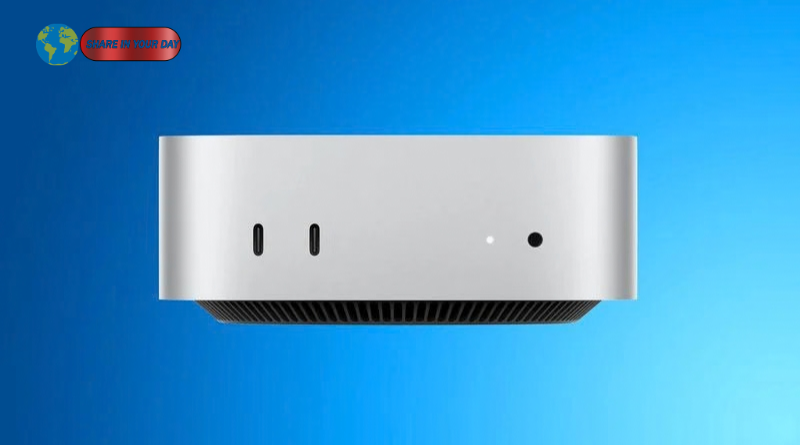
The change means owners cannot simply open the computer and replace the internal storage with a larger aftermarket module later. That upgrade path was possible with the previous-generation Mac mini models using the M4 and M4 Pro chips.
The storage change was confirmed after the new machines became available on September 22. Expand Mac mini, a website that has developed aftermarket storage modules for compatible Mac mini models, opened both the M6 and M5 Pro machines and found that the removable storage module had been eliminated.
For buyers, the decision is significant. A Mac mini that looks highly similar externally now requires more planning when it comes to storage capacity.
Mac Mini SSD Storage Is Soldered Again
The biggest Mac mini SSD change is hidden inside the computer.
According to Expand Mac mini’s teardown, both the M6 and M5 Pro versions have NAND chips soldered directly onto the logic board. There is no removable SSD module or vacant connector that can be used to install a larger drive later.
That reverses one of the most notable storage characteristics of the M4 generation.
The M4 and M4 Pro Mac mini models used removable storage modules. Third-party companies were therefore able to develop replacement modules that allowed users to increase internal storage after purchase.
Expand Mac mini previously offered modules designed to work as alternatives to Apple’s proprietary storage components. Those upgrades could potentially save customers hundreds of dollars compared with purchasing a higher storage configuration from Apple at the time of the original order.
That option is no longer available for the new M6 and M5 Pro models.
What Happened to the Mac Mini SSD Upgrade Option?
Apple’s decision is notable because the removable storage arrangement in the M4 and M4 Pro Mac mini was unusual compared with several earlier generations.
Mac mini models based on the M1 and M2/M2 Pro chips also used NAND storage soldered to the logic board. According to MacRumors, the removable storage introduced with the M4 and M4 Pro turned out to be a temporary exception rather than the beginning of a permanent shift toward user-replaceable internal storage.
The new M6 and M5 Pro systems therefore return to an approach Apple has used before.
For consumers, the practical difference is straightforward: the storage capacity selected at purchase becomes much more important.
Someone buying a 256GB Mac mini can no longer assume that a future hardware upgrade will allow the internal storage to be replaced with a larger capacity.
External storage remains an option, of course. Users can connect external SSDs through the Mac mini’s available ports, but that is different from having additional storage installed internally.
The 256GB Mac Mini Has Another Storage Catch
The loss of a removable Mac mini SSD is not the only storage-related detail attracting attention.
Testing cited by MacRumors indicates that the new 256GB Mac mini configurations use a single NAND chip rather than two 128GB chips. Configurations with 512GB or more use dual NAND chips.
That difference can affect storage performance.
Blackmagic Disk Speed Test results cited by MacRumors showed the M6 Mac mini with 512GB storage reaching approximately 6,371.5 MB/s read speeds and 6,577.4 MB/s write speeds.
The 256GB M6 configuration, meanwhile, recorded approximately 3,216.8 MB/s read speeds and 3,000.2 MB/s write speeds.
In other words, the 256GB configuration produced roughly half the measured performance of the 512GB version in those tests.
These figures should not be interpreted as meaning every user will experience a dramatic slowdown. Storage benchmarks can differ from everyday workloads, and typical users may not notice the difference during ordinary web browsing, office work or media consumption.
However, people moving large files, editing video, working with large development projects or performing other storage-intensive tasks may have more reason to pay attention to the configuration.
Why 512GB Could Be Important
The new storage architecture makes 512GB an interesting point for Mac mini buyers.
The 256GB version remains useful for people who primarily work with cloud services, documents, applications and external storage. But the combination of soldered NAND and the lower benchmark performance means choosing 512GB at purchase could provide two advantages.
First, users receive twice the internal capacity.
Second, the 512GB configuration benefits from the dual-NAND arrangement that allows higher measured SSD throughput.
MacRumors reported that the average customer is unlikely to notice the difference in everyday use. However, power users may have more reason to choose 512GB or higher if storage performance matters to their workloads.
The decision becomes more important because upgrading later is no longer an option.
New Mac Mini Starts at 256GB
Apple’s 2026 Mac mini lineup includes the new M6 chip and the M5 Pro chip.
The M6 Mac mini starts with 16GB of unified memory and 256GB of storage, while higher configurations can be ordered with up to 32GB of memory and 2TB of SSD storage.
The M5 Pro models offer substantially higher configurations, reaching up to 64GB of unified memory and 8TB of storage.
The M6 itself is also a significant hardware upgrade. Apple says the chip includes a 12-core CPU and 12-core GPU, compared with the 10-core CPU and GPU configuration of the previous M5. Apple also introduced a dual Neural Engine design in the M6.
The new Mac mini maintains the compact design that has become familiar to Mac users, meaning the storage change is primarily something buyers discover through specifications or a teardown rather than through an obvious external redesign.
The Mac Mini SSD Decision Is Now Permanent
With removable storage, customers could make a more conservative decision when ordering.
For example, someone could buy a lower-capacity Mac mini and later install a larger compatible module. That approach offered a degree of flexibility that is now absent from the M6 and M5 Pro models.
With soldered NAND, customers effectively need to make the storage decision before purchasing.
That makes Apple’s storage pricing more consequential.
The new Mac mini can be configured with considerably more storage, but buyers who need additional capacity will have to select it during the ordering process rather than relying on a future internal upgrade.
For businesses deploying multiple Mac minis, this could also affect purchasing decisions. A company that expects machines to remain in service for several years may need to consider future storage requirements before ordering.
External SSDs Remain an Alternative
The return to soldered storage does not mean Mac mini users are restricted to Apple’s internal storage.
External SSDs can still provide substantial additional capacity. Depending on the workload, an external high-speed drive can be useful for video libraries, project files, backups, archives and other data that does not need to occupy the internal drive.
However, external storage introduces another physical device and cable into the setup.
For users who prefer a compact desktop with everything contained inside the computer, internal capacity remains particularly important.
The distinction is therefore less about whether additional storage is possible and more about whether users can upgrade the internal storage themselves.
On the new models, the answer is no.
M4 Mac Mini Owners Keep Their Advantage
Existing M4 and M4 Pro Mac mini owners are not affected by the change.
Expand Mac mini says its existing modules remain supported for M4 and M4 Pro systems. The company specifically advises owners of the new M6 and M5 Pro machines not to purchase those modules because they will not fit.
That makes the M4 generation particularly unusual in Apple’s recent Mac mini history.
The removable storage arrangement lasted for one generation before Apple returned to soldered NAND in the newer machines.
It also means potential buyers comparing an M4 Mac mini with a new M6 model need to consider more than processor performance.
Storage architecture is now another major difference between the generations.
What Buyers Should Know Before Ordering
The most important lesson from the new Mac mini SSD design is simple: choose internal storage carefully.
A 256GB configuration may be sufficient for a basic desktop setup, especially when files are stored in the cloud or on external drives. But users who expect their software libraries, creative projects, media files or development environments to grow may want more internal capacity from the beginning.
The 512GB configuration also has a technical advantage in Apple’s new storage architecture because it uses two NAND chips, while the 256GB version uses one according to the testing reported by MacRumors.
For demanding users, that makes the storage decision about more than capacity alone.
It is also worth remembering that SSD performance is only one part of a computer’s overall performance. CPU, GPU, memory, software optimization and workload characteristics can all have a much larger impact depending on what the Mac mini is being used for.
A Return to Apple’s Older Storage Strategy
The new Mac mini’s soldered storage represents a return to an approach Apple used before the M4 generation.
The M1, M2/M2 Pro and earlier systems relied on soldered NAND, while the M4/M4 Pro generation introduced removable storage that created opportunities for aftermarket upgrades. The M6 and M5 Pro models now close that door again.
Apple has not publicly explained why it returned to soldered storage.
The hardware design does, however, remove the need for a removable storage connector and module. It also gives Apple greater control over the storage configurations it sells.
For consumers, the consequence is much clearer than the reason: internal storage is no longer a component they can expect to replace themselves.
Bottom Line
The 2026 Mac mini brings major performance improvements with Apple’s M6 and M5 Pro chips, but its storage design introduces an important limitation.
The Mac mini SSD is soldered to the logic board on the new M6 and M5 Pro models. That means aftermarket internal SSD upgrades are no longer supported, reversing the flexibility offered by the M4 and M4 Pro generation.
The 256GB configuration also uses a single NAND chip, while 512GB and larger configurations use dual NAND. Testing cited by MacRumors showed substantially higher sequential read and write speeds on the 512GB M6 model.
For buyers, the message is straightforward: storage should be considered a long-term configuration choice rather than an upgrade that can be postponed.
Those who need only basic storage can still use the 256GB model alongside external drives or cloud services. Users who expect heavier workloads, larger files or higher storage performance may want to consider starting at 512GB or more.
The new Mac mini may look familiar from the outside, but internally, its storage strategy has changed again.