
China Defense Ministers Death Sentence Shocks Military Leadership
The China defense ministers death sentence has sent shockwaves through global political and military circles after Beijing confirmed that two former top defense officials were sentenced to death with a two-year reprieve over corruption charges. The ruling, announced by Chinese state media, marks one of the most severe punishments handed down to senior military leaders in recent years and underscores the continued intensity of President Xi Jinping’s long-running anti-corruption campaign.
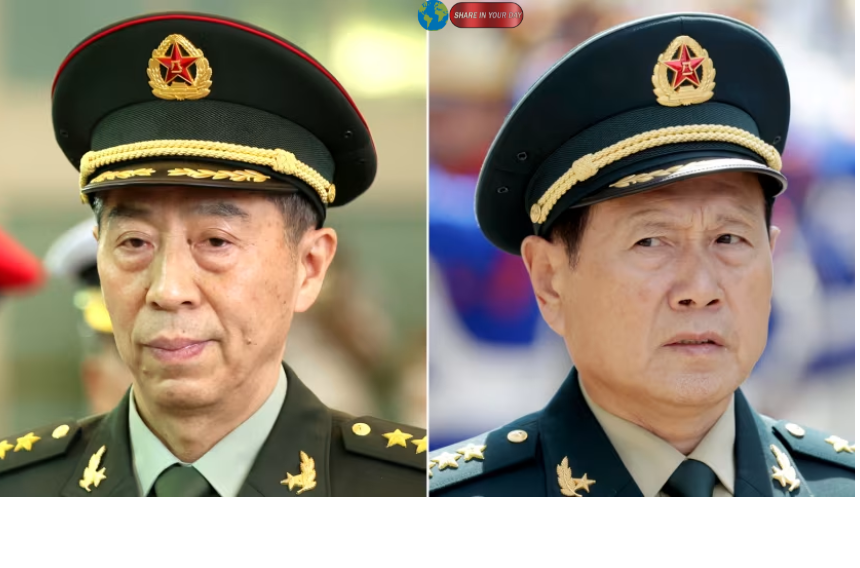
The individuals involved, former Defense Ministers Wei Fenghe and Li Shangfu, were both found guilty of bribery-related offenses by a Chinese military court. According to official reports, both men were convicted of abusing their positions of power for personal financial gain during their service in the People’s Liberation Army (PLA) leadership structure.
What the Court Decided
The military court issued a death sentence with a two-year reprieve, a unique legal mechanism in China that typically results in the sentence being reduced to life imprisonment if the individual commits no further offenses during the suspension period.
In practice, this means the two former ministers are expected to spend the rest of their lives in prison without parole once the reprieve expires.
The court found that:
- Wei Fenghe accepted large bribes during his tenure
- Li Shangfu both accepted and offered bribes
- Both men abused military procurement and personnel systems
The verdict also includes:
- Permanent deprivation of political rights
- Confiscation of personal assets
- Expulsion from the Chinese Communist Party
- Removal of military ranks
This outcome reflects the seriousness of the China defense ministers death sentence ruling, which is among the harshest penalties available under Chinese law.
Who Are Wei Fenghe and Li Shangfu?
The two convicted officials once held some of the most powerful military positions in China.
Wei Fenghe
Wei served as China’s defense minister from 2018 to 2023. Before that, he was a senior commander in the PLA Rocket Force, the branch responsible for China’s nuclear missile systems.
Li Shangfu
Li replaced Wei in 2023 but held the position for less than a year before being abruptly removed from office and disappearing from public view. He previously oversaw China’s military procurement and space systems.
Both men were considered part of China’s strategic military leadership and were members of the Central Military Commission, the country’s highest military governing body.
Part of Xi Jinping’s Anti-Corruption Campaign
The sentencing is widely seen as part of President Xi Jinping’s ongoing anti-corruption campaign, which began in 2012 and has since expanded across all levels of government and the military.
Over the past decade, the campaign has:
- Removed hundreds of senior officials
- Targeted military procurement networks
- Investigated top generals and defense industry leaders
- Reshaped China’s military command structure
Analysts say the China defense ministers death sentence reflects Xi’s continued effort to strengthen political control over the PLA while eliminating rival power networks within the military establishment.
The military has become a central focus of Xi’s governance strategy, especially as China modernizes its armed forces and expands its global influence.
Why This Case Is Significant
This case is particularly important for several reasons:
1. Unprecedented senior-level punishment
It is rare for former defense ministers to receive such severe sentences, even in corruption cases.
2. Military leadership instability
The case highlights ongoing instability within the PLA leadership, where several senior officials have been removed or investigated in recent years.
3. Political signaling
Experts believe the ruling sends a strong message that no official, regardless of rank, is immune from prosecution.
4. Internal power consolidation
The case is also viewed as part of Xi Jinping’s effort to consolidate authority over the military and ensure loyalty within top ranks.
Understanding “Death Sentence with Reprieve”
China’s legal system uses a unique form of punishment known as a “death sentence with reprieve.” Unlike immediate execution sentences, this system functions as follows:
- Convict receives a death sentence
- Execution is suspended for two years
- If no further crimes occur, sentence is reduced
- Typically converted to life imprisonment
In practice, this system is often used for serious corruption cases where execution is not immediately enforced but severe punishment is still symbolically applied.
Impact on China’s Military Structure
The China defense ministers death sentence has raised questions about the stability and morale of the country’s military leadership.
Potential consequences include:
- Reduced trust within military leadership
- Disruption in defense procurement systems
- Increased internal scrutiny of officials
- Slower decision-making in defense policy
Some analysts argue that while the crackdown strengthens discipline, it may also create uncertainty within the ranks of senior commanders.
Global Reactions and Concerns
International observers have closely watched the development, particularly due to the strategic importance of China’s military leadership.
Concerns include:
- Lack of transparency in judicial proceedings
- Potential political motivations behind corruption charges
- Long-term impact on military modernization
- Broader implications for China’s global defense posture
While China maintains that the case is purely legal and anti-corruption in nature, foreign analysts continue to debate whether the ruling reflects internal political consolidation.
Conclusion
The China defense ministers death sentence marks one of the most significant corruption rulings in recent Chinese military history. With two former defense ministers now facing suspended death penalties, the case highlights both the intensity of Xi Jinping’s anti-corruption campaign and the deep structural changes taking place within China’s armed forces.
While the sentences are unlikely to result in immediate executions, they symbolize a powerful message from Beijing: corruption at the highest levels of military leadership will not be tolerated.
As China continues to modernize its military and expand its global influence, the long-term impact of this purge on stability, governance, and military readiness remains a key question for analysts worldwide.