
UN Experts Find Grounds to Believe US Committed War Crimes in Iran
United Nations-backed human rights experts say there are reasonable grounds to believe that the United States committed war crimes during two airstrikes in Iran in February, including a devastating attack on a primary school that killed large numbers of civilians.
The findings were published by the Independent International Fact-Finding Mission on Iran, which is expected to present its conclusions to the UN Human Rights Council in Geneva. The report examines the conduct of the United States during the conflict as well as alleged human rights violations committed by Iranian authorities during a crackdown on anti-government protests.
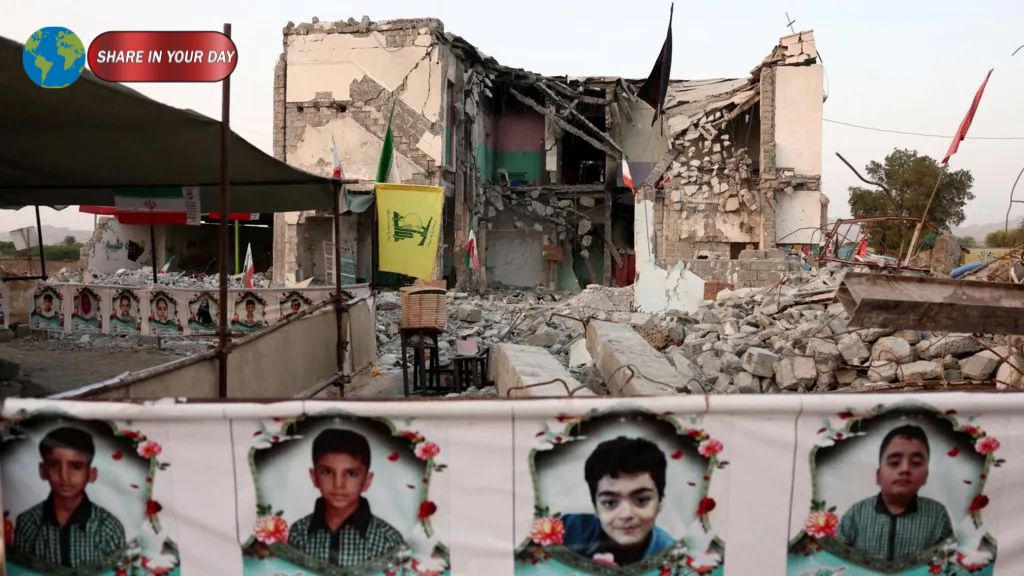
According to the investigators, the two strikes examined in detail occurred on 28 February. One struck the Shajareh Tayyebeh Primary School in the southern Iranian city of Minab, while the other hit a sports facility in Lamerd.
The mission said the attacks caused extensive civilian casualties and damage to civilian infrastructure. It concluded there were reasonable grounds to believe the strikes amounted to indiscriminate attacks under international law.
Deadly strike on Minab school
The most serious finding concerns the attack on the school in Minab, where Iranian authorities reported that more than 150 people were killed, including about 120 children.
The school was described by investigators as a clearly identifiable civilian facility. The fact-finding mission said it found no evidence that the building was being used for military purposes at the time of the attack.
Investigators said US forces had relied on intelligence indicating that a senior Iranian military commander could have been present at the location. However, the report concluded that the information was not adequately verified before the strike was carried out.
The experts said the failure to properly confirm the nature of the target and to update intelligence created a substantial risk to civilians. They concluded that the attack amounted to an indiscriminate attack causing civilian deaths and damage to civilian infrastructure.
The exact death toll has varied in reports. Iranian officials have cited figures ranging from more than 150 to 168 people, while international investigations have continued to examine the circumstances surrounding the attack.
The United States has not publicly accepted responsibility for deliberately targeting the school. President Donald Trump previously said the school was not intentionally attacked and referred to an investigation into the incident. A preliminary US assessment reported by American media suggested US forces were likely responsible, while also indicating that outdated intelligence may have contributed to the strike.
The Pentagon has not publicly released a final investigation into the incident.
Questions over Lamerd strike
The UN-backed investigation also examined an attack on a sports complex in Lamerd.
According to the report, the strike damaged nearby residential buildings and a school and resulted in 22 civilian deaths and injuries. Investigators said the attack was also indiscriminate and therefore constituted a war crime under their assessment of international law.
The circumstances surrounding the Lamerd attack remain disputed. US Central Command previously said American forces did not conduct strikes in Lamerd on the day of the incident.
That discrepancy has become an important part of the broader debate over responsibility for civilian casualties during the conflict.
UN experts also accuse Iran of serious abuses
The report does not focus solely on US military operations.
The fact-finding mission also accused Iranian authorities of committing crimes against humanity during the government’s response to anti-government protests that began in late December.
Investigators cited alleged unlawful killings, torture, arbitrary detention and enforced disappearances. They said state security forces had carried out killings on what they described as a staggering scale.
The mission said civilians in Iran had effectively been caught between violations allegedly committed by their own government and the wider war involving the United States and Israel.
The investigators acknowledged difficulties in establishing the full scale of abuses, including restrictions on access and the challenges of collecting evidence during an active conflict.
Iran has consistently rejected allegations that its authorities carried out systematic human rights violations. US officials, meanwhile, have previously maintained that American military operations are conducted in accordance with the law of armed conflict.
Neither government immediately provided a response to the latest findings when the report was published.
What the findings mean
The UN mission’s conclusions are significant but do not represent a criminal conviction or a court judgment.
The fact-finding mission was established by the UN Human Rights Council and is made up of independent experts. Its reports can contribute to the international record of alleged violations and potentially provide evidence for future legal proceedings, but the mission itself does not prosecute individuals or impose criminal penalties.
The findings are expected to receive further attention when they are presented to the Human Rights Council.
The report also highlights the difficulties involved in investigating alleged war crimes while a conflict is continuing. Investigators must rely on interviews, satellite imagery, photographs, videos, public information and other evidence while dealing with limited access to affected areas.
For families of those killed in Minab and Lamerd, however, the international investigation represents another attempt to establish what happened and whether those responsible can eventually be held accountable.
The findings place renewed attention on the protection of civilians during warfare and the obligations of military forces to distinguish between legitimate military targets and civilian locations.
As the UN Human Rights Council considers the report, questions surrounding the Minab school strike, the Lamerd attack and Iran’s internal crackdown are likely to remain part of the wider international debate over accountability during the Iran conflict.