Full Article
Golden Orb Deep Sea Mystery Finally Solved
The golden orb deep sea mystery that baffled scientists and captured global attention has finally been solved. What once looked like something out of a science fiction movie—a glowing, dome-shaped object sitting in the darkness of the ocean floor—turned out to be something far more surprising.
Discovered in 2023 nearly two miles beneath the surface in the Gulf of Alaska, the strange object puzzled researchers for years. Initial theories ranged from alien eggs to unknown marine species. However, after extensive analysis, scientists now confirm that the mysterious orb is linked to a deep-sea creature—though not in the way many expected.
The Discovery That Shocked Scientists
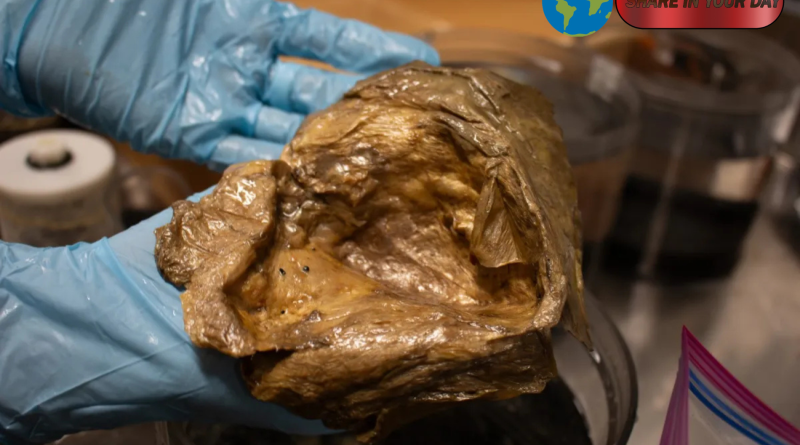
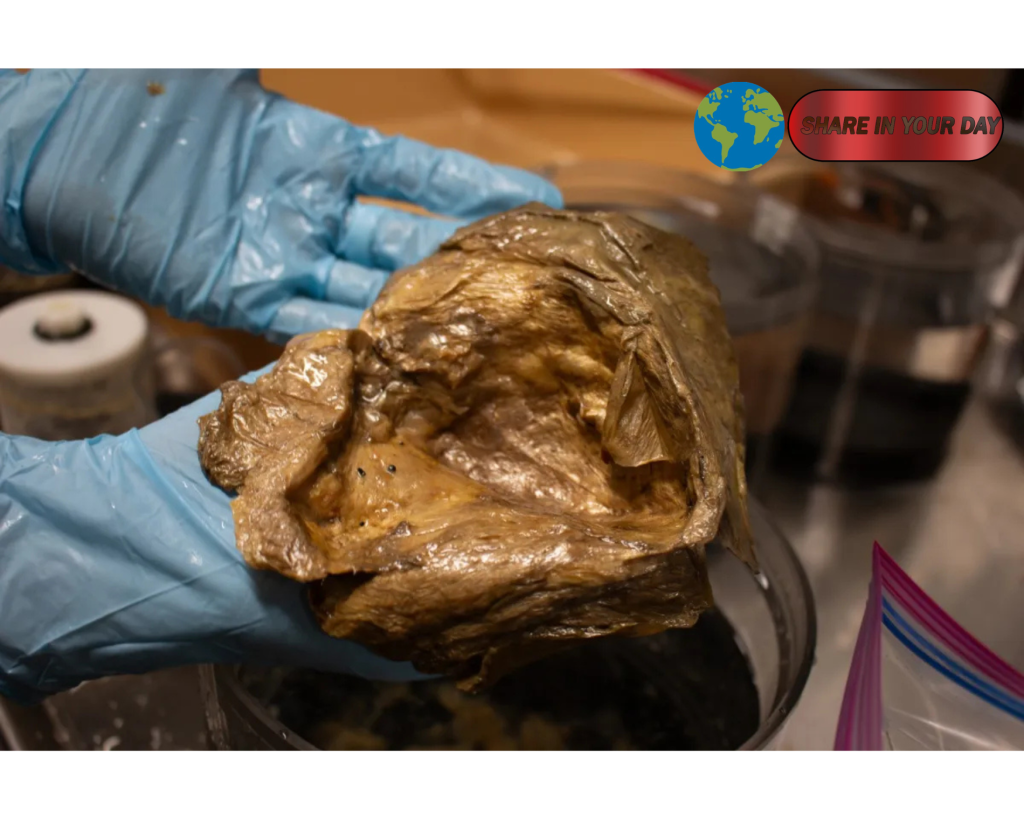
The story began when a remotely operated vehicle exploring the deep ocean encountered a shimmering golden object attached to a rock. The orb measured about four inches across and had a small hole in its surface—adding to its eerie appearance.
Scientists watching the live feed were immediately intrigued. Some even joked it looked like something from a horror movie, unsure whether anything might emerge from it.
At such extreme depths—over 3,000 meters below the surface—sunlight cannot penetrate, and pressure levels are immense. Discoveries in this environment are rare, and unfamiliar objects often challenge existing scientific knowledge.
What Scientists First Thought It Was
At first, researchers had no clear explanation. Early hypotheses included:
- An egg casing from an unknown marine species
- A dead sponge or coral structure
- A completely new organism
- Even something extraterrestrial
These theories were fueled by the orb’s unusual texture and structure. Its smooth, golden appearance and hollow opening made it unlike anything scientists had previously documented.
Because the deep ocean remains largely unexplored, such uncertainty is not uncommon. In fact, many deep-sea discoveries initially defy classification.
The Breakthrough: A Deep-Sea Anemone Connection
After years of investigation, researchers finally uncovered the truth behind the golden orb deep sea mystery.
Using advanced DNA sequencing and microscopic analysis, scientists identified the object as part of a giant deep-sea anemone known as Relicanthus daphneae.
More specifically, the orb is a remnant of the anemone’s base—a structure used to anchor itself to the ocean floor.
This revelation surprised many, as the object did not resemble a typical sea anemone. Unlike the soft, tentacled appearance most people associate with anemones, this structure was rigid, fibrous, and oddly metallic in color.
5 Shocking Truths About the Golden Orb
1. It Was Not an Egg or Alien Object
Despite early speculation, the orb was not an egg, nor was it extraterrestrial. Instead, it originated from a known marine species—though in an unexpected form.
This highlights how unfamiliar deep-sea biology can appear, even to experts.
2. It Is Essentially “Left Behind” Tissue
The orb is made from a cuticle—a thin, layered structure secreted by the anemone. In simple terms, it is like a piece of biological material the animal left behind.
Scientists believe the anemone may have detached from this structure and moved elsewhere.
3. It Contains Stinging Cells
Microscopic analysis revealed that the orb is packed with specialized stinging cells called cnidocytes, which are characteristic of corals and anemones.
This discovery was key to identifying its origin and linking it to the cnidarian family.
4. DNA Testing Was Extremely Difficult
Standard DNA testing initially failed because the orb contained genetic material from multiple microorganisms living on it.
Scientists had to use full genome sequencing to isolate the correct biological signature and confirm its identity.
5. It Became a Microbial Ecosystem
After being abandoned, the orb did not remain lifeless. Instead, it became a hotspot for microbial activity.
Tiny organisms colonized the structure, breaking down organic material and contributing to the ocean’s nutrient cycles.
This reveals how even discarded biological material can play a vital role in deep-sea ecosystems.
Why the Mystery Took Years to Solve
The golden orb deep sea mystery was particularly challenging for several reasons:
- It lacked recognizable features of known animals
- It contained mixed DNA from multiple organisms
- It required collaboration across multiple scientific disciplines
- It involved cutting-edge genomic sequencing
According to researchers, solving the mystery required expertise in morphology, genetics, deep-sea biology, and bioinformatics.
This level of complexity is rare, even in marine science.
The Role of Advanced Technology
Modern technology played a crucial role in solving the case.
Scientists used:
- Remotely operated underwater vehicles (ROVs)
- High-resolution imaging
- Microscopic cellular analysis
- Whole-genome DNA sequencing
Without these tools, identifying the orb would have been nearly impossible.
This case demonstrates how technological advancements are transforming our understanding of the ocean.
What This Discovery Means for Science
The resolution of the golden orb deep sea mystery has broader implications for science:
Expanding Knowledge of Deep-Sea Life
The discovery highlights how much remains unknown about ocean ecosystems.
Improving Identification Techniques
It showcases the importance of combining traditional observation with advanced genetic tools.
Revealing Hidden Ecosystems
It shows how even discarded biological material can support life.
The Deep Ocean: Still Full of Mysteries
Despite this breakthrough, scientists emphasize that the deep ocean remains one of the least explored environments on Earth.
New species, unusual biological processes, and unexpected discoveries continue to emerge from the depths.
As one researcher noted, solving mysteries like the golden orb is exactly why deep-sea exploration is so important—to better understand our planet and its ecosystems.
Public Fascination and Online Reactions
The golden orb captured widespread public attention, sparking intense discussion online.
On Reddit, users joked about the object’s strange appearance while also recognizing its scientific importance:
“The relic of a giant, deep-sea anemone.”
Others humorously referred to it as a “fish butt,” highlighting how surprising the final explanation was compared to initial theories.
These reactions show how science discoveries can engage and entertain the public.
Conclusion: Mystery Solved, Curiosity Continues
The golden orb deep sea mystery is a powerful reminder that nature often defies expectations.
What began as a puzzling, almost alien-like discovery turned out to be a fascinating piece of marine biology—evidence of a deep-sea anemone’s life cycle.
Yet, even with this mystery solved, countless others remain hidden beneath the ocean’s surface.
As exploration continues, one thing is certain: the deep sea will keep surprising us.