NASA Rotor Breakthrough Pushes Mars Flight Past Mach 1
A major NASA Rotor Breakthrough could dramatically change the future of Mars exploration after engineers at NASA’s Jet Propulsion Laboratory successfully tested next-generation helicopter blades capable of exceeding the speed of sound on the Red Planet.
The breakthrough, announced by NASA and highlighted in recent aerospace reports, marks one of the most significant advances in extraterrestrial flight technology since the historic success of the Ingenuity Mars helicopter. Engineers confirmed that experimental rotor blades survived extreme high-speed testing while operating in a Mars-like atmosphere, opening the door for larger and more capable aerial vehicles on future missions.
The achievement represents a critical milestone for NASA as the agency prepares for future Mars exploration missions involving autonomous aircraft, cargo drones, and advanced robotic scouts.
NASA Engineers Push Rotor Blades Beyond Mach 1
The tests took place inside NASA’s famous 25-Foot Space Simulator at the Jet Propulsion Laboratory in California. Engineers recreated the thin carbon dioxide atmosphere found on Mars and gradually increased rotor speeds to evaluate how the blades performed under extreme stress.
During the experiments, the rotor tips reached speeds exceeding Mach 1 — approximately 1.08 times the speed of sound in Mars conditions. Most importantly, the blades remained structurally stable despite the intense aerodynamic forces involved.
NASA engineers conducted more than 130 test runs to gather performance data and identify how the technology could improve future Martian aircraft.
The successful tests could allow future helicopters to:
- Carry heavier scientific payloads
- Fly farther across Mars
- Operate in stronger winds
- Support human exploration missions
- Scan underground terrain using radar
NASA said the new rotor system generated roughly 30% more lift compared to earlier helicopter designs.
Why Flying on Mars Is Extremely Difficult
The NASA Rotor Breakthrough is especially important because flying on Mars is far more difficult than flying on Earth.
Mars has an extremely thin atmosphere — only about 1% as dense as Earth’s atmosphere at sea level. That means helicopters must spin their blades much faster to create enough lift to stay airborne.
NASA’s original Ingenuity helicopter already pushed engineering limits when it first flew on Mars in 2021. The aircraft’s rotor tips traveled at approximately Mach 0.65 in Mars conditions, significantly faster than conventional Earth helicopters.
The new tests move far beyond those earlier capabilities.
According to NASA engineers, faster rotor speeds increase lift capacity, allowing future aerial vehicles to carry scientific instruments, larger batteries, and communication systems that Ingenuity could not support.
The challenge is maintaining structural integrity while operating near or beyond the sound barrier.
On Earth, supersonic rotor blades create severe turbulence, vibration, and stress that can damage aircraft. Testing these conditions in a Mars-like environment required specialized facilities and years of research.
Ingenuity Changed NASA’s Mars Strategy
NASA’s latest breakthrough builds directly on the success of the Ingenuity helicopter mission.
Originally designed for only five demonstration flights, Ingenuity exceeded expectations by surviving for years on Mars and completing dozens of flights before its mission ended.
The tiny helicopter proved that powered flight on another planet was possible.
Its success completely changed NASA’s long-term exploration strategy.
Before Ingenuity, Mars missions relied almost entirely on orbiters and slow-moving rovers. Helicopters introduced a new exploration method capable of reaching cliffs, craters, and rugged terrain that wheeled vehicles struggle to access.
NASA engineers now envision future missions involving fleets of advanced aerial vehicles working alongside astronauts and robotic systems.
The new rotor breakthrough could accelerate those plans significantly.
Future Mars Helicopters Could Become Scientific Labs
One of the most exciting aspects of the NASA Rotor Breakthrough is the possibility of transforming Mars helicopters into fully operational scientific platforms.
Ingenuity mainly served as a technology demonstration. Future aircraft, however, could carry advanced scientific instruments capable of performing independent research missions.
NASA researchers are exploring helicopter concepts equipped with:
- Ground-penetrating radar
- Mineral analysis tools
- Atmospheric sensors
- High-resolution imaging systems
- Water-ice detection technology
Some future drone concepts may even scout landing zones for astronauts before human missions arrive.
According to NASA’s long-term plans, aerial vehicles could travel several kilometers per day across Mars — dramatically faster than traditional rovers.
This mobility would allow scientists to study much larger areas of the planet in shorter periods of time.
The “SkyFall” Concept Could Revolutionize Mars Exploration
NASA has already hinted at future helicopter systems inspired by the recent testing campaign.
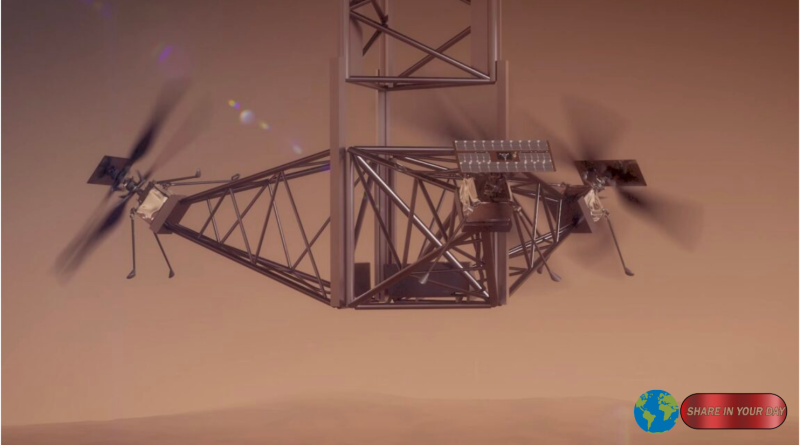
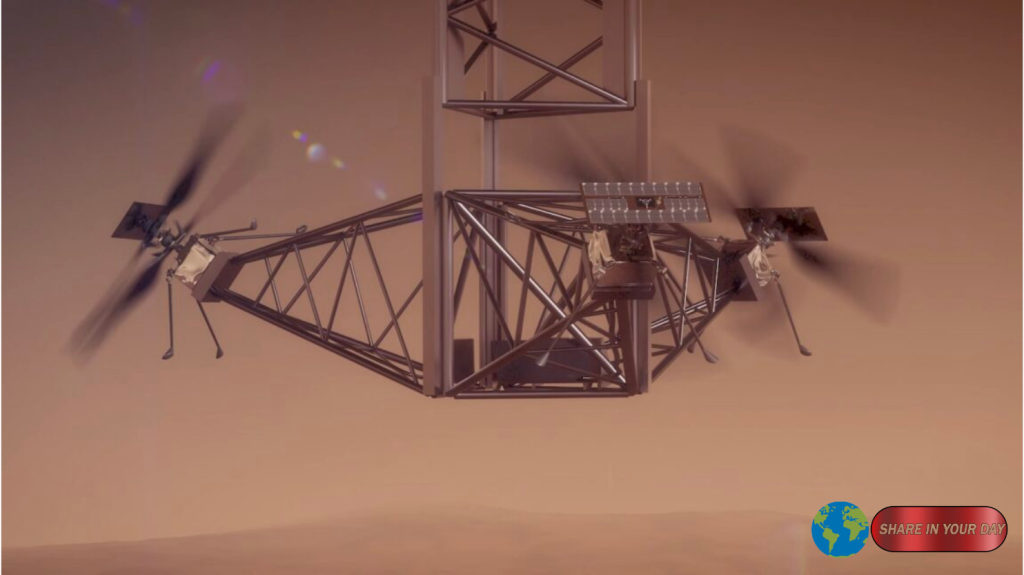
One proposed concept, known as “SkyFall,” involves multiple autonomous drones deploying onto Mars to explore terrain independently. The aircraft would carry radar systems capable of detecting subsurface water ice — a critical resource for future human missions.
The new rotor technology could make those missions far more practical.
Engineers believe the stronger and faster blades will improve flight stability in Mars’ unpredictable wind conditions while enabling heavier payloads.
The technology could also help aerial vehicles survive dust storms and operate at higher altitudes than current designs.
NASA officials have repeatedly emphasized that aerial mobility will become increasingly important as exploration expands beyond robotic missions toward permanent human presence on Mars.
Supersonic Rotors Create New Engineering Challenges
Although the breakthrough is exciting, operating rotor blades near Mach 1 introduces serious engineering complications.
When blades approach supersonic speeds, shock waves form around the rotor tips. These shock waves can create vibration, noise, aerodynamic instability, and mechanical stress.
Historically, supersonic propeller systems on Earth produced severe operational issues. Aerospace enthusiasts on Reddit pointed to experimental aircraft like the XF-84H “Thunderscreech,” which became infamous for extreme noise and instability caused by supersonic propeller tips.
NASA’s Mars environment is different because the atmosphere is much thinner. Nevertheless, engineers still needed to ensure the blades could survive the stress generated during high-speed operation.
The successful testing campaign suggests NASA may have solved several key aerodynamic challenges that previously limited helicopter performance on Mars.
JPL Continues Advancing Deep Space Technology
The rotor breakthrough is part of a broader wave of innovation happening at NASA’s Jet Propulsion Laboratory.
In recent weeks, JPL engineers also tested a powerful lithium-fed electric thruster designed for future deep-space missions. The propulsion system could eventually support human missions to Mars using advanced nuclear-electric spacecraft.
NASA is increasingly investing in technologies that can support long-duration missions, autonomous robotics, and next-generation exploration systems.
The agency’s focus now extends beyond simply reaching Mars.
Instead, NASA is developing technologies intended to support sustained exploration, scientific operations, and eventually human settlement.
Rotorcraft are expected to play a major role in that future ecosystem.
Why This NASA Rotor Breakthrough Matters
The importance of the NASA Rotor Breakthrough extends beyond a single engineering milestone.
The achievement demonstrates that powered flight on Mars can evolve from experimental technology into a practical exploration tool.
Future Mars helicopters may:
- Carry meaningful scientific payloads
- Assist astronauts
- Explore dangerous terrain
- Search for water resources
- Map underground structures
- Support cargo transportation
The technology may also influence aircraft design for other planets and moons with thin atmospheres.
As NASA continues preparing for human exploration of Mars, aerial systems are becoming essential components of future mission architecture.
The successful Mach 1 rotor tests represent a major step toward making that vision a reality.
Conclusion
NASA’s latest rotor breakthrough marks a turning point in the future of planetary aviation.
By successfully pushing Mars helicopter blades beyond Mach 1, engineers at the Jet Propulsion Laboratory proved that next-generation aircraft can operate at far higher performance levels than previously thought possible.
The breakthrough builds on the legacy of Ingenuity while paving the way for larger, smarter, and more capable aerial explorers.
As NASA prepares for more ambitious Mars missions, advanced helicopters may soon become one of the most important tools for exploring the Red Planet.