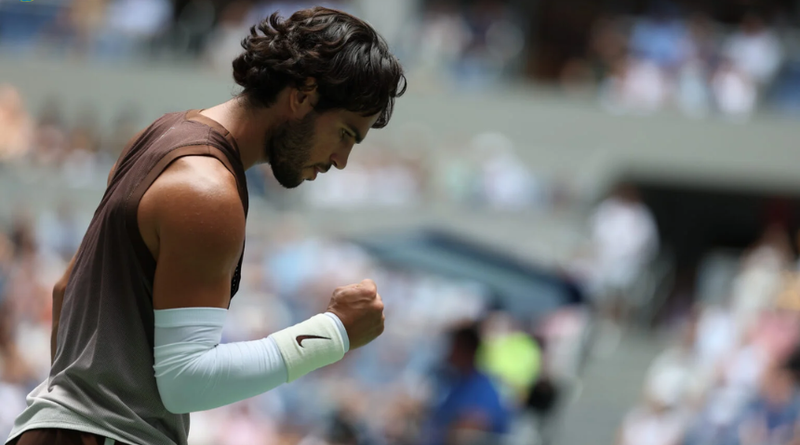
Carlos Alcaraz ATP Warning Sends Strong Message
Carlos Alcaraz ATP warning has put the increasingly demanding professional tennis calendar back under the spotlight after the Spaniard said it is becoming impossible for players to compete in every major tournament.
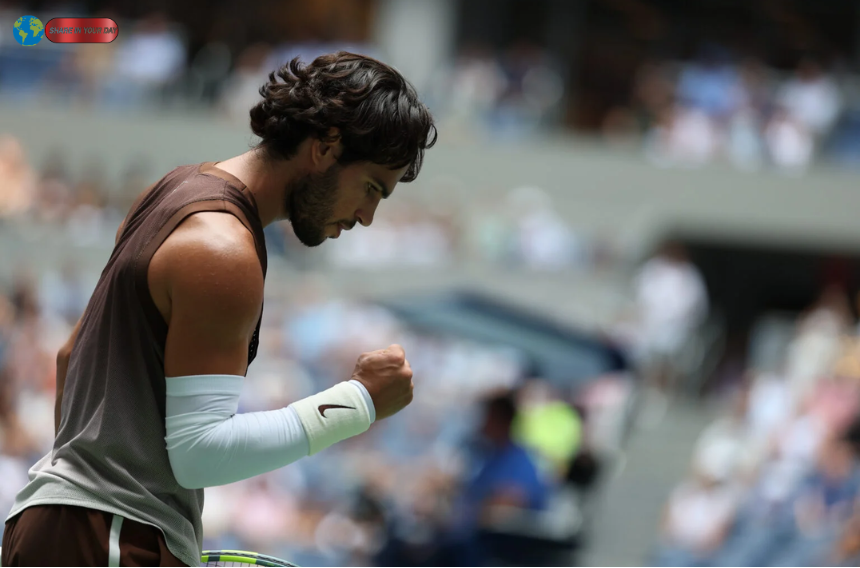
Alcaraz made the comments after reaching the third round of the 2026 US Open, where the defending champion recovered from a slow start to defeat Portugal’s Jaime Faria in four sets. His return to competitive tennis has already attracted significant attention because he spent around four months away from the sport while recovering from a wrist injury. RReuters+1
Rather than celebrating only his successful comeback, however, Alcaraz used his post-match press conference to raise concerns about the demands being placed on professional players.
The 23-year-old said he expects to take longer breaks from tennis in the future, even if those breaks mean deliberately missing tournaments.
His message was direct: players cannot realistically compete everywhere on an increasingly crowded ATP calendar.
Alcaraz Says the Schedule Is Becoming Impossible
Alcaraz’s comments focused on the number of tournaments players are expected to play throughout the season.
The Spaniard explained that he could see himself taking breaks lasting one or two months in the future. Unlike his recent absence, which was caused by injury, those breaks would be planned.
The goal would be to protect his body and maintain his ability to compete at the highest level over a long career. TThe Times of India+1
Alcaraz also pointed to the growing number of important tournaments that players are expected to attend.
Under the ATP’s current structure, top players face mandatory commitments at major events, including Masters 1000 tournaments. The schedule can therefore become extremely demanding for players who also want to compete at the four Grand Slams and other major events. TTennis Majors
For Alcaraz, this creates a difficult choice.
A player can technically manage his schedule, but skipping too many important tournaments can have consequences for rankings, qualification and financial opportunities.
That tension is at the heart of the Spaniard’s criticism.
Carlos Alcaraz ATP Warning Comes After Injury
The timing of Alcaraz’s comments is particularly significant.
The Spanish star did not make them from a position of someone who has avoided injury. Instead, he was speaking immediately after returning from a lengthy absence caused by a wrist problem.
His injury forced him to miss important portions of the season and interrupted his competitive rhythm.
He acknowledged that he did not want to be away from tennis for that long. However, the enforced break also gave him a different perspective on the demands of the professional game.
After spending months away from competition, Alcaraz now appears more willing to consider planned periods of rest.
That could mean missing tournaments that he might previously have attempted to play.
The difference is important.
An injury can force a player to stop unexpectedly, while a planned break allows the player and his team to control recovery, training and preparation.
Alcaraz appears to believe the second approach could help him avoid the first.
“It’s Impossible” Becomes Alcaraz’s Central Message
The strongest part of the Carlos Alcaraz ATP warning was his assertion that playing every tournament is simply unrealistic.
He argued that the calendar has become so crowded that players can spend roughly 40 weeks of the year competing if they fulfill every mandatory commitment. TTennis Majors
That leaves limited time for rest, physical preparation and recovery.
Tennis is also unusual because players must travel constantly between countries and continents.
A tournament may last one or two weeks, but the physical workload does not end when a player leaves the court. Long-distance travel, training sessions, recovery work, media obligations and preparation for the next event all consume time.
For the world’s best players, the problem can become even more complicated.
The deeper they go in tournaments, the more matches they play.
A player who reaches the final of several major events may accumulate substantially more court time than someone eliminated early. That success can therefore create an additional physical burden.
Expanded Masters Events Add to the Pressure
One of Alcaraz’s concerns is the changing structure of ATP tournaments.
Since 2025, seven of the nine ATP Masters 1000 tournaments have been expanded to 12-day events, increasing the amount of time players may need to spend at those competitions. RReuters
The Masters 1000 series is one of the most important components of the men’s professional calendar.
For elite players, these tournaments sit below the Grand Slams in prestige but remain crucial to rankings and the overall competitive structure.
The expansion was designed to provide greater commercial and sporting opportunities.
However, from the perspective of players, longer events can also make an already crowded season feel even heavier.
Alcaraz’s criticism suggests that the sport needs to consider not only the number of tournaments but also how long players must remain engaged with them.
More Players Are Dealing With Injuries
Alcaraz also connected the demanding schedule with the growing number of injuries among professional players.
He warned that if the current situation does not change, more players could experience physical problems in the future. RReuters
His concern is not limited to one particular player.
The modern ATP Tour requires athletes to compete at an extraordinary physical level. Matches can last several hours, while elite players may need to repeat that workload multiple times during a tournament.
The situation becomes even more challenging when tournaments are played on different surfaces and in different climatic conditions.
Players must constantly adjust their movement, preparation and recovery routines.
Travel adds another layer.
A top player may move between continents within a short period, with little opportunity to fully recover before the next competition begins.
Alcaraz believes the sport needs to take those realities more seriously.
Carlos Alcaraz Still Wants to Compete at the Highest Level
Despite his criticism, Alcaraz has not suggested that he wants to step away from elite tennis.
Quite the opposite.
His decision to consider longer breaks appears to be motivated by a desire to remain at the top for many years.
The Spaniard is still one of the defining players of his generation. His career has already included multiple Grand Slam titles, and he returned to the US Open as defending champion after missing several major events during his injury layoff.
He therefore has little reason to treat the calendar lightly.
Every tournament carries ranking points and competitive value.
But Alcaraz’s latest comments suggest that he increasingly sees selective participation as part of managing a long career.
That could become a model for other elite players.
Strong US Open Comeback Adds to the Story
Alcaraz’s warning came after an impressive comeback victory in New York.
The defending champion lost the opening set against Jaime Faria but responded strongly, winning the next three sets to advance to the third round. Reuters reported that he produced 43 winners and converted seven of 12 break-point opportunities. TThe Times of India
The result was significant for another reason.
Alcaraz was using the tournament itself to test how his body would respond after months away.
He had already defeated Roman Safiullin in the opening round before facing Faria.
The four-set battle against Faria provided another valuable physical test.
Rather than viewing the extra set only as a problem, Alcaraz said playing a longer match gave him useful information about his endurance and how his body responded.
That is particularly important following a serious injury absence.
The Long-Term Question for the ATP Tour
Alcaraz’s comments raise a larger question for professional tennis.
How can the ATP balance the commercial demands of a global sport with the physical limits of its athletes?
Tournament organizers want the biggest names to appear as often as possible.
Broadcasters want attractive matchups.
Fans want opportunities to watch stars such as Alcaraz, Jannik Sinner and Novak Djokovic.
Sponsors and tournament organizers also have financial interests in maintaining large and prestigious events.
Players, however, have a different priority.
They must protect their bodies.
A tennis career can last for many years, but repeated injuries can dramatically shorten an athlete’s time at the top.
That makes workload management a crucial issue.
Why Planned Breaks Could Become More Common
If Alcaraz follows through with his plans, his decision could encourage other players to take a similar approach.
Instead of attempting to play almost every significant tournament, elite players could increasingly prioritize Grand Slams and selected Masters events.
Such a strategy would allow them to create recovery periods during the season.
It could also make individual tournament appearances more meaningful.
However, there are potential consequences.
A player who skips tournaments may lose ranking points and competitive sharpness.
Lower-ranked players could also benefit from the absence of major stars, creating more opportunities for them to advance deeper into tournaments.
From a fan perspective, though, the trade-off could be frustrating.
Fans may prefer to see the world’s best players competing every week.
Yet a healthier schedule could ultimately keep those players on court for longer.
Alcaraz’s Message Is Bigger Than One Player
The significance of the Carlos Alcaraz ATP warning goes beyond the Spaniard’s own schedule.
He is one of the sport’s biggest stars, meaning his comments are likely to receive attention from tournament organizers, the ATP and fellow players.
His warning also arrives at a time when professional tennis is increasingly focused on the balance between expanding the sport and protecting athletes.
The calendar cannot simply continue growing without consequences.
Every additional event potentially adds travel, training, matches and recovery demands.
Alcaraz’s position is therefore straightforward: if the sport wants its biggest stars to remain healthy and competitive, it must consider the total workload they face.
What Could Happen Next?
For now, Alcaraz remains focused on the US Open.
His immediate priority is to continue his title defense and regain his best competitive level after a long absence.
But his comments could have a lasting impact on the discussion surrounding the ATP schedule.
The Spaniard has already made clear that he is prepared to skip tournaments in the future if he believes doing so is necessary.
That could give him greater control over his physical condition and reduce the likelihood of another lengthy injury-related absence.
For the ATP, however, the challenge is broader.
The governing body must balance the interests of tournaments, broadcasters, sponsors, fans and players.
Alcaraz’s warning provides a high-profile reminder that the current structure has physical consequences for the athletes at its center.
A Warning the ATP Cannot Easily Ignore
The Carlos Alcaraz ATP warning is ultimately about sustainability.
The Spaniard is not calling for an end to professional competition. He is arguing that elite players need enough time to recover if they are expected to perform at the highest level throughout the year.
His own four-month injury absence has given the argument added weight.
Alcaraz now intends to make future breaks a deliberate part of his career rather than waiting for his body to force him off the court.
That decision could become increasingly common across men’s tennis.
The ATP Tour has some of the world’s most demanding athletes competing across a global calendar. But if those athletes are repeatedly pushed beyond their physical limits, the sport risks losing the very stars who attract its largest audiences.
For Alcaraz, the solution is clear: playing every tournament is impossible.
Now, the question is whether the ATP will respond to that warning with meaningful changes.