17-Year-Old AI Founder Builds Startup Despite School Ban
A 17-year-old AI founder is building a business while finishing high school, even though her school blocks access to ChatGPT and similar generative AI tools during the school day.
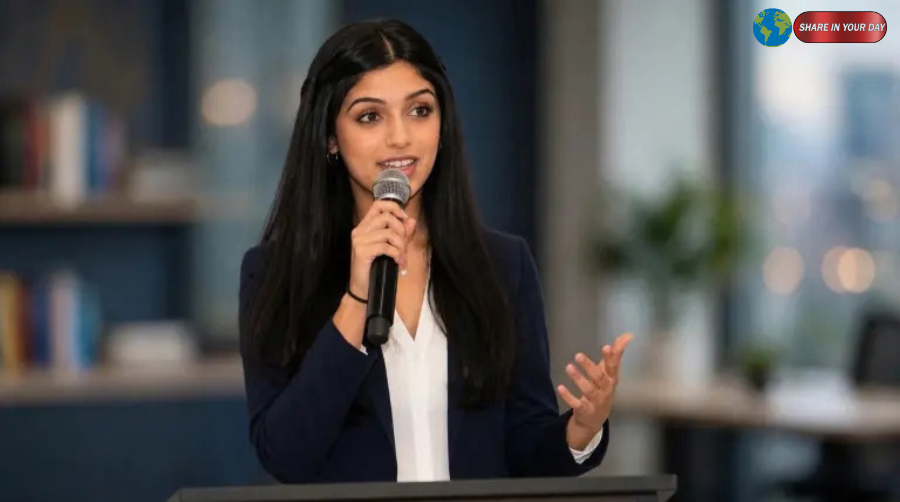
Navya Tuteja, a senior at Thomas Jefferson High School for Science and Technology in Northern Virginia, launched Raaha, a free platform designed to help neurodivergent job seekers determine whether a job listing may be a good fit before applying. According to Fortune, the platform had attracted more than 1,000 users and contained about 20,000 job listings just two months after launch.
Tuteja’s story offers an unusual perspective on the debate surrounding artificial intelligence in schools.
While many students are increasingly turning to generative AI for homework, Tuteja says being unable to access ChatGPT at school ultimately helped her develop a stronger habit of doing academic work independently.
At the same time, she does not believe that simply banning AI is the right long-term answer.
How the 17-Year-Old AI Founder Started Raaha
Tuteja’s path into entrepreneurship began with a problem she observed around employment and accessibility.
Her mother is hard of hearing, and Tuteja became interested in the challenges faced by people with disabilities and neurodivergent job seekers.
She noticed that many job advertisements are written almost entirely from the employer’s perspective. They often list qualifications and responsibilities but provide little information about what the actual working environment might feel like for a particular candidate.
Raaha was designed to address that gap.
The platform evaluates job listings across several factors and gives candidates a way to assess whether a position could be compatible with their needs before investing significant time in an application.
The service is currently free for job seekers. Tuteja has said a future business model could involve employers and workforce organizations paying to use the platform or improve their job listings.
That early traction is notable because Tuteja is still a high school student.
Rather than waiting until college to experiment with entrepreneurship, she has already launched a functioning product and attracted thousands of listings.
The 17-Year-Old AI Founder Works Without AI at School
One of the most interesting parts of Tuteja’s story involves the rules at her high school.
Thomas Jefferson High School for Science and Technology blocks ChatGPT, Claude and similar AI tools on its school Wi-Fi.
That means Tuteja cannot simply open a chatbot during the school day when she needs assistance with an assignment.
She says the restriction initially felt frustrating. However, she also believes it forced her to develop a habit of completing schoolwork and exam preparation without relying on generative AI.
That experience now influences how she approaches artificial intelligence.
Tuteja serves as president of her school’s AI club, yet she says she intentionally avoids using AI for the schoolwork she considers important for learning and exams.
She does use AI outside that context, particularly for practical tasks such as drafting emails, organizing information and handling more mechanical aspects of building her website.
The distinction is important.
Her approach is not to reject AI entirely. Instead, she separates situations in which she wants to develop her own knowledge from tasks where AI can help her work more efficiently.
What the 17-Year-Old AI Founder Thinks About ChatGPT
Tuteja’s experience has not convinced her that schools should permanently ban generative AI.
In fact, she reaches a different conclusion.
She believes AI should be regulated and used appropriately rather than simply prohibited.
That position creates an interesting contrast in her own story. A school restriction appears to have helped her develop independent learning habits, but she does not believe the same restriction should necessarily become the model for everyone.
The difference comes down to how the technology is used.
For Tuteja, using AI to replace the thinking required to learn something is different from using it as a productivity tool.
That distinction is becoming increasingly relevant as schools and universities attempt to establish rules for generative AI.
Students now have access to tools capable of producing essays, explaining concepts, summarizing documents and generating computer code within seconds. Educators, meanwhile, are trying to determine where assistance ends and academic dishonesty begins.
Tuteja’s own experience demonstrates that the answer may not be as simple as allowing or banning the technology.
AI Use Among Students Is Rising
Tuteja’s approach also contrasts with broader trends in student AI use.
Fortune cited RAND research showing that the percentage of students regularly using AI for homework increased from 48% to 62% between May and December 2025.
The same polling found that roughly two-thirds of those students believed AI was negatively affecting their critical-thinking abilities.
Another study published in Science involving more than 95,000 undergraduate students found a relationship between frequent AI use and self-reported cheating. Daily AI users were substantially more likely than monthly users to say they had used AI to cheat, according to the Fortune report.
Those figures do not establish that AI itself causes students to perform worse or cheat. However, they illustrate why schools are wrestling with the technology.
Tuteja’s approach is notably more nuanced.
She uses AI while building a technology company but deliberately avoids using it as a substitute for learning the material she needs to know herself.
Why the 17-Year-Old AI Founder Is Careful About AI Disclosure
Tuteja also faces another problem common among people building products with generative AI: explaining exactly how much AI was involved.
She says she sometimes hesitates to discuss the specific tools she used because people may assume that an AI-assisted product was effectively created entirely by AI.
That perception can create an unusual stigma.
A founder can use AI to handle repetitive tasks, improve a website’s design or organize information while still making the central decisions behind the product.
Tuteja says she wrote the underlying algorithm for Raaha herself and used AI mainly for more mechanical elements of the project.
Her comments reflect a wider workplace debate over transparency.
As AI becomes part of everyday professional work, employees and entrepreneurs increasingly have to decide when and how to disclose their use of the technology.
Fortune cited a 2026 Atlassian study in which workers who disclosed AI use were perceived more negatively than people who did not, despite the work itself being identical. The article also referenced research from KPMG and the University of Melbourne involving more than 48,000 people across 47 countries.
For Tuteja, transparency is preferable when AI is being used appropriately.
The bigger issue, she argues, is making clear what the human actually contributed.
A Second Project Goes Beyond the AI Startup
Raaha is not Tuteja’s only technology project.
She has also developed a tool called Legible, which focuses on making special-education documents easier for families to understand.
The system is designed to translate complicated paperwork, including Individualized Education Programs and 504 plans, into clearer language.
The project grew from another problem she noticed while working with AI-generated summaries of disability-related information.
According to Fortune, Tuteja found that AI systems could sometimes remove the sourcing that parents would need to verify important information.
That led her to develop a proposed transparency standard called Traceable Accessibility.
She has discussed the concept with state senators and the U.S. Department of Education as a possible resource.
The project shows how her interests extend beyond simply building an AI startup.
Her work focuses heavily on accessibility, information transparency and how technology can make complicated systems easier for people to navigate.
The 17-Year-Old AI Founder Has Support at Home
Tuteja’s parents have also played an important role in her development.
Her parents, Deepti and Rohit Tuteja, both have professional backgrounds in technology, data, cybersecurity and business.
Deepti has worked in data and risk and currently holds a senior data-management role at TD Bank in the United States. Rohit has a background in law and cybersecurity consulting and works in cybersecurity governance, risk and compliance.
Despite their professional experience, they say they have emphasized independence and hard work rather than simply pushing their daughter toward entrepreneurship.
The family has also tried to establish clear boundaries around academic shortcuts.
Rohit told Fortune that the family has consistently emphasized that cheating is not a path to success and that hard work remains essential.
That philosophy appears to align closely with Tuteja’s own approach to AI.
She is comfortable using technology to increase productivity, but she does not want it to replace the effort required to actually learn.
Could Raaha Become a Full-Time Business?
For now, Tuteja still plans to attend college.
However, she has left open the possibility of changing those plans if Raaha continues to grow rapidly.
That decision will likely depend on whether the startup can turn its early user growth into a sustainable business.
The platform already has meaningful early activity, with more than 1,000 users and approximately 20,000 job listings according to Fortune.
Its proposed business model also gives the company a potential path beyond individual users.
Employers and workforce organizations could eventually pay for tools that help improve job listings or make them more accessible to candidates.
That would put Raaha between the worlds of recruitment technology, accessibility and artificial intelligence.
For a founder still in high school, that is an ambitious position.
The Bigger Question: Should Schools Ban AI?
Tuteja’s experience highlights a larger question facing educators.
If students can use AI everywhere outside school, should schools prevent access entirely during the school day?
There are arguments for restrictions. Students need opportunities to practice writing, mathematics, research and problem-solving without outsourcing the underlying thinking to a chatbot.
At the same time, students are likely to encounter AI throughout higher education and the workplace.
That creates a second challenge: teaching them how to use the technology responsibly.
Tuteja’s own position reflects that tension.
The school ban may have helped her learn without AI during important academic work. Yet she believes students ultimately need to learn how to use AI properly rather than simply being prevented from accessing it.
That distinction could become increasingly important as schools develop long-term AI policies.
A Young Founder Navigating a Fast-Changing Industry
What makes Tuteja’s story unusual is not simply her age.
Many young people are experimenting with AI, and some are already building businesses around it.
Her story stands out because she is simultaneously experiencing the technology from three different perspectives: student, AI-club leader and startup founder.
At school, she works without generative AI for learning.
Outside school, she uses AI as a productivity tool.
As an entrepreneur, she is building a platform that uses technology to address problems faced by job seekers.
Those experiences give her a perspective that is difficult to capture through a simple debate over whether AI is good or bad for students.
Final Takeaway
The story of this 17-year-old AI founder offers a revealing look at the complicated relationship between teenagers, education and artificial intelligence.
Navya Tuteja launched Raaha to help neurodivergent job seekers evaluate employment opportunities. The platform has already reached more than 1,000 users and includes around 20,000 job listings, despite being launched only recently.
At the same time, Tuteja attends a school where ChatGPT and similar AI tools are blocked on the network.
Rather than becoming completely opposed to AI, she has developed a selective approach. She wants to do important learning herself while using AI for tasks where it can save time or improve productivity.
Her position also challenges the idea that there is a simple answer to the school AI debate.
A ban may limit access, but teaching students when and how to use AI responsibly could ultimately require a more complicated approach.
For Tuteja, that lesson is already playing out in real time. She is still a high school senior, but she is also building a company, developing accessibility technology and thinking about how AI should be used in education and the workplace.