Read the original AppleInsider report
1. The Folding iPhone Has Already Reached Outside Testers
The biggest revelation is not necessarily a specification. It is the suggestion that people outside Apple have already used pre-release versions of the folding iPhone.
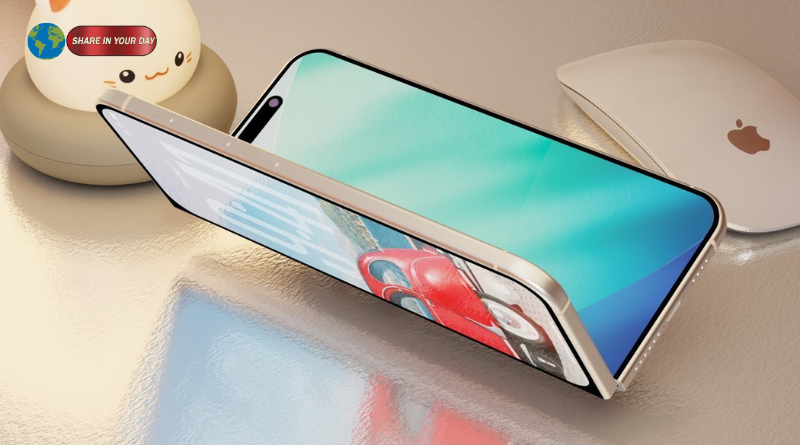
That matters because Apple is known for maintaining strict control over unreleased products. While prototypes and engineering samples can circulate within manufacturing and development networks, reports that multiple people have experienced the finished or near-finished hardware suggest the project has reached a relatively advanced stage.
Bloomberg’s Mark Gurman reportedly spoke with several people who have used the upcoming device. Their feedback was broadly positive, particularly regarding the hinge, display and overall usability.
Of course, this does not mean the final product is guaranteed to match the devices these testers handled.
Apple can still make changes before launch, and the company h a s not publicly confirmed the product’s name, specifications, price or release schedule.
Still, the reports strengthen the case that Apple’s foldable project has moved beyond the purely experimental stage.
2. The Hinge Could Be One of Apple’s Biggest Wins
Foldable phones have one obvious engineering challenge: the hinge.
A foldable smartphone has to open and close repeatedly while protecting a flexible display. It also needs to feel premium when users hold it, without becoming excessively bulky when folded.
Early users of the folding iPhone reportedly liked the hinge mechanism and described it as durable.
That is potentially one of the most important details in the latest report.
Apple does not have the luxury of entering the foldable market with a product that feels unfinished. Consumers buying a device that could cost more than $2,000 are likely to expect exceptional construction quality.
The reported positive response to the hinge suggests Apple may have spent considerable time refining the mechanism.
AppleInsider’s broader coverage of the iPhone Fold rumor cycle has also pointed to a book-style design, with an external display and a much larger internal screen when opened.
If Apple can make that mechanism feel solid while keeping the phone relatively thin, it could become a major selling point.
3. The Folding iPhone Could Turn Into a Mini iPad
The internal display may ultimately be the feature that makes Apple’s foldable stand apart.
When opened, the rumored folding iPhone is expected to provide a substantially larger screen than a conventional iPhone. Earlier reports have pointed to an internal display of around 7.8 inches and an external screen of approximately 5.5 inches.
Those numbers would put the device in an unusual position.
Closed, it could function much like a conventional smartphone. Opened, however, it could provide enough screen real estate for more tablet-like applications.
According to the latest report, people who have used pre-release hardware liked the larger display and the way it can support iPad-style app layouts.
That could be a major software opportunity for Apple.
Imagine opening the phone to work with multiple panels, larger productivity applications, expanded photo editing controls or a more spacious web-browsing interface.
Apple already controls both iOS and iPadOS, meaning it has considerable experience adapting applications to different screen sizes.
The company could therefore use its software ecosystem to make the foldable experience feel more intentional than simply placing a larger screen inside a phone.
4. The Camera System Could Bring a Major Surprise
One of the most interesting compromises reportedly involves photography.
The folding iPhone is said to lack a telephoto camera. That would be an unusual decision for a premium Apple device, especially if the phone eventually costs $2,000 or more.
Modern flagship iPhones have increasingly emphasized advanced camera systems. A telephoto lens is particularly important for users who want optical zoom without relying entirely on digital processing.
Removing it could therefore become a point of criticism.
However, early users reportedly still considered the camera experience strong. More surprisingly, the foldable display may work particularly well as a camera viewfinder.
That makes sense from a design perspective.
A large internal display could provide photographers with a much bigger preview of a scene. It could also make it easier to review photos, frame subjects and interact with camera controls.
The trade-off is therefore potentially clear: Apple may sacrifice some traditional camera hardware in exchange for a different overall photography experience.
Whether consumers accept that compromise will depend heavily on the final price.
5. Touch ID May Replace Face ID
Perhaps the most unexpected change could be biometric authentication.
The folding iPhone is reportedly expected to use Touch ID instead of Face ID.
That would represent a major departure from Apple’s current flagship iPhone strategy.
Face ID has been a defining feature of modern iPhones since the iPhone X. Apple has gradually expanded the technology while eliminating the physical Home button from its premium smartphone lineup.
A foldable design creates new engineering challenges, however.
Apple may be choosing Touch ID because integrating Face ID sensors into a thin folding structure is more difficult, or because the company believes fingerprint authentication makes more sense for this particular form factor.
The exact implementation remains unclear.
Touch ID could potentially be integrated into a side button, similar to the approach Apple already uses on certain other devices.
For longtime iPhone users, this could be one of the most noticeable differences between the folding model and Apple’s conventional phones.
The $2,000+ Price Could Be the Biggest Problem
The reported early impressions are encouraging, but the folding iPhone still faces a major challenge: price.
Current expectations put Apple’s foldable in the $2,000-to-$2,500 range, although Apple has not confirmed pricing. AppleInsider’s broader reporting on the product has repeatedly cited estimates in that range.
That would make the device dramatically more expensive than Apple’s mainstream iPhone lineup.
It would also mean buyers are likely to judge every specification much more aggressively.
A missing telephoto camera, for example, might be acceptable on a less expensive phone. On a $2,000-plus flagship, consumers may ask why Apple could not include it.
The same applies to battery capacity, durability, charging technology and other features.
Apple’s strategy may therefore be to position the foldable as a halo product rather than a mass-market iPhone.
That would make it similar to Apple’s approach with other premium technologies, where the first generation establishes the category before later generations become more affordable and widespread.
Why the First Folding iPhone Matters
Apple is not expected to be the first major smartphone manufacturer to release a foldable.
Samsung has already spent years developing foldable phones, while Google and other manufacturers have also entered the category.
Apple’s advantage would be its ecosystem.
The company can connect the hardware with iOS, Apple services, accessories and its broader product lineup. A foldable iPhone could also encourage developers to rethink how applications behave across different screen configurations.
That is particularly important because the success of a foldable phone depends on more than the hinge and display.
The software has to make the larger screen genuinely useful.
If Apple gets that combination right, the folding iPhone could become more than another premium foldable. It could establish a new category within Apple’s own product lineup.
Launch Timing Remains Uncertain
Apple is widely expected to introduce the foldable alongside other major iPhone products in the second half of 2026, but the company has not confirmed a launch date.
There are also questions about availability.
AppleInsider previously reported that the device could face a staggered international rollout, with the United States potentially receiving it before other markets because of supply and pricing considerations.
That would not be surprising for a completely new product category.
Manufacturing a foldable smartphone is more complicated than producing a conventional phone. The display, hinge and other components all have to meet Apple’s quality requirements while production scales up.
Previous reports have also suggested that supply could be limited during the early months of the product’s life.
For consumers, that could mean two problems at once: an extremely high price and limited availability.
Apple Has More to Prove Than Its Rivals
The latest tester feedback is certainly encouraging, but Apple’s first foldable will face unusually high expectations.
The company has spent years watching other manufacturers develop the technology. As a result, customers may expect Apple to enter the category with a product that feels significantly more polished than earlier foldables.
The reported feedback suggests that may be exactly the goal.
A durable hinge, a large tablet-like display and an impressive camera experience could give the folding iPhone a strong foundation.
But the rumored lack of a telephoto camera and the return of Touch ID show that Apple may also make some unusual compromises.
The ultimate question is whether those compromises make sense at a potential price above $2,000.
What Comes Next for the Folding iPhone
The next major milestone will be Apple’s official announcement.
Until then, nearly every specification should be treated as a report or rumor rather than a confirmed feature.
That distinction is especially important because Apple has not yet publicly introduced its first foldable iPhone.
Still, the latest reports suggest the device is no longer simply a distant possibility.
People outside Apple have reportedly used pre-release versions, and their reactions appear to be surprisingly positive.
That could be the strongest signal yet that Apple believes its foldable technology is finally ready for consumers.
If the company delivers the experience described by early testers, the folding iPhone could become one of Apple’s most important new products in years.
It may not be cheap. It may not include every feature enthusiasts expect. And it may initially be difficult to buy.
But if Apple succeeds in making a foldable phone feel as refined and dependable as a conventional iPhone, it could finally give the category the mainstream push it has been waiting for.