WiCi One Revealed: Wireless GPU Hits 4K Gaming
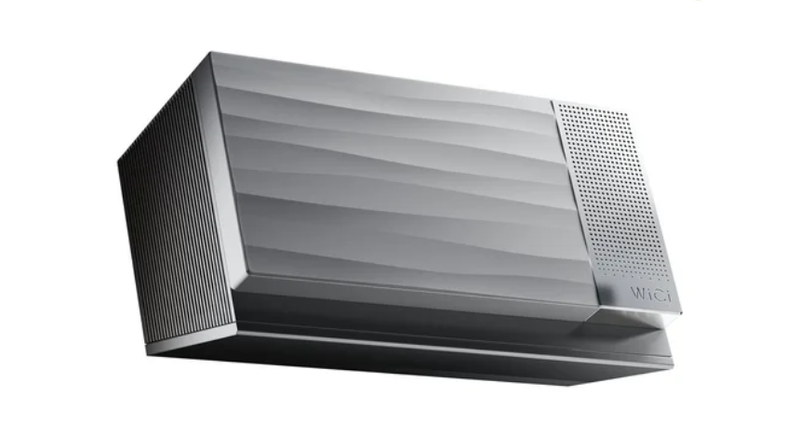
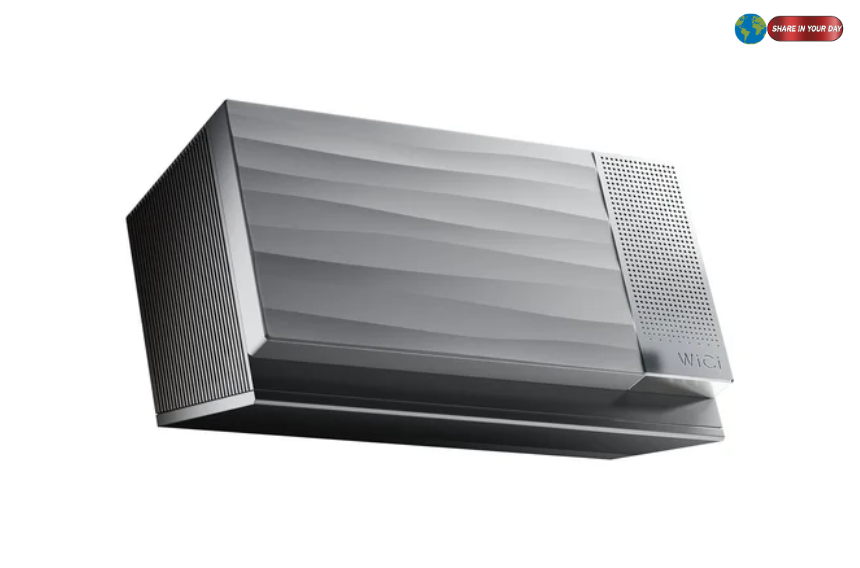
The WiCi One is taking the external GPU concept in a surprising new direction by replacing the cable with Wi-Fi 7. The wireless graphics system is designed to give laptops and other compatible devices access to dedicated GPU power without requiring a Thunderbolt or OCuLink connection.
Developed by WiCi, the device is aimed at users who want the performance of a gaming PC while keeping the portability and slim design of a modern laptop. The company says the WiCi One can also be used for demanding artificial intelligence workloads and local AI applications.
The base model includes an Nvidia RTX 5060 Ti with 16GB of memory, an Intel Core 3 100U processor and 1TB of NVMe storage. WiCi is also preparing a much more powerful version featuring an RTX 5090 with 32GB of memory.
The wireless approach could make external graphics more flexible, but it also raises important questions about latency, bandwidth and compatibility.
WiCi One Brings Wireless GPU Power
Traditional external GPUs generally depend on a physical high-speed connection between the computer and the graphics enclosure.
Thunderbolt has become one of the most common options. OCuLink is another popular connection for users seeking higher-performance external GPU configurations.
The WiCi One takes a different approach.
Instead of connecting the GPU enclosure directly to a computer with a high-speed cable, WiCi uses Wi-Fi 7. The company has designed the system as a complete computer-like unit containing the graphics hardware, wireless networking hardware, storage and cooling system.
That design could be particularly attractive to laptop owners.
A user could potentially keep a thin laptop for travel and connect it wirelessly to a more powerful graphics system when gaming or performing demanding workloads.
It effectively separates portability from graphics performance.
WiCi One Specifications Include RTX 5060 Ti
The initial WiCi One configuration is built around Nvidia’s RTX 5060 Ti 16GB.
The enclosure also includes an Intel Core 3 100U processor and 1TB of NVMe storage. WiCi has integrated its own cooling solution into the enclosure so the system does not need to depend on the laptop’s cooling hardware.
That is an important difference from conventional laptop accessories.
Rather than simply adding a graphics card to the computer, the WiCi One contains several components needed to operate as a self-contained computing platform.
The company is positioning the system for both gaming and AI workloads.
For gamers, the RTX 5060 Ti provides access to modern Nvidia features such as DLSS 4. WiCi claims its configuration can run Cyberpunk 2077 at 4K Ultra settings with DLSS 4 at around 80 frames per second.
WiCi also claims approximately 60 frames per second in Black Myth: Wukong at 4K Cinematic settings with DLSS 4. These figures are company claims rather than independent benchmark results.
A More Powerful RTX 5090 Version Is Coming
The company is not stopping with the RTX 5060 Ti model.
WiCi plans to release a higher-end configuration built around Nvidia’s RTX 5090 with 32GB of graphics memory.
The planned system is expected to use an Intel Core Ultra 7 225H processor and a 4TB NVMe 5 SSD.
That would place the future model in a dramatically higher performance class than the initial configuration.
The RTX 5090 is designed for demanding gaming, rendering and AI workloads, making it a logical choice for WiCi’s ambition to turn its wireless enclosure into more than a gaming accessory.
WiCi has not yet announced the final price for the RTX 5090 model. The company says additional pricing information will arrive closer to launch.
Wi-Fi 7 Is the Key Technology
The most unusual part of the WiCi One is not the graphics card.
It is the wireless connection.
Wi-Fi 7 provides substantially greater networking capabilities than previous Wi-Fi generations. That gives WiCi a technological foundation for attempting something that traditionally requires a physical cable.
For an external GPU, however, wireless networking introduces an obvious technical challenge.
Gaming is sensitive to latency.
When a player moves a mouse or presses a controller button, the system must process the input, render the next frame and deliver the resulting image quickly enough to maintain a responsive experience.
A wired connection provides predictable performance between the host system and external hardware.
A wireless connection can be affected by distance, interference, network congestion and other environmental factors.
WiCi’s product therefore represents an attempt to overcome those challenges through modern wireless technology.
The company’s claims will need to be evaluated through independent testing once production hardware reaches reviewers and customers.
WiCi One Could Change Laptop Gaming
The appeal of an external GPU has always been straightforward.
Gaming laptops can deliver strong performance, but powerful graphics hardware often requires larger cooling systems, heavier chassis designs and larger power supplies.
A thin laptop offers the opposite experience.
It is easier to carry but generally has less room for high-end components.
An external GPU provides a compromise.
The user can own a portable computer while adding desktop-class graphics performance when needed.
The problem has traditionally been the cable.
External GPU enclosures must remain physically connected to the computer. That can make them less convenient than a conventional desktop gaming PC.
The WiCi One attempts to remove that limitation.
A user could theoretically place the wireless GPU elsewhere on a desk while using a laptop without a cable running directly between the two devices.
That could create a cleaner setup.
The $1,999 Starting Price Is Significant
The WiCi One is not positioned as an inexpensive accessory.
WiCi is currently accepting preorders for the base model starting at $1,999. The company says the eventual price will be $2,599.
That price makes the product a premium proposition.
Potential buyers will therefore have to consider whether the convenience of wireless operation justifies the cost compared with building or buying a conventional desktop PC, purchasing a gaming laptop or using a traditional wired external GPU.
The answer could depend heavily on performance.
If the WiCi One can deliver stable low-latency performance while maintaining the flexibility promised by Wi-Fi 7, its wireless architecture could become its biggest advantage.
If wireless limitations reduce performance or responsiveness, buyers may prefer conventional wired solutions.
Independent testing will be especially important.
WiCi One Targets AI Workloads Too
Gaming is only one part of the product’s pitch.
WiCi also describes the WiCi One as a platform for demanding AI workloads and local AI assistants.
That reflects a growing trend in consumer computing.
As generative AI becomes more common, users increasingly want to run AI applications locally rather than sending every task to a cloud service.
A dedicated GPU can accelerate many AI workloads, particularly those involving graphics processing and machine learning.
The RTX 5060 Ti’s 16GB of memory gives the base model a meaningful amount of GPU memory for certain local AI applications.
The future RTX 5090 configuration, with 32GB of memory, would provide substantially more capacity for demanding workloads.
That could make the product interesting to developers, creators and AI enthusiasts in addition to gamers.
Compatibility Will Matter
The concept sounds simple, but wireless external graphics are more complicated than connecting a normal peripheral.
The host device must support the necessary software and wireless functionality.
Drivers also need to recognize the GPU and properly route workloads between the host system and the wireless enclosure.
Operating-system support will therefore be an important part of the WiCi One experience.
Compatibility could ultimately determine whether the device becomes a broadly useful accessory or remains a specialized product.
WiCi will also need to demonstrate that the wireless link remains reliable under real-world conditions.
A laboratory demonstration can show that the technology works. A consumer product needs to perform consistently in homes, apartments, offices and gaming environments filled with other wireless devices.
Shipping Is Planned for Late 2026
WiCi expects to begin shipping its first WiCi One models during the fourth quarter of 2026.
That means the product is still moving from announcement and preorder toward actual consumer availability. The RTX 5090 version is expected to follow with its pricing announced closer to launch.
As with any new hardware platform, the shipping timeline will be worth watching.
The most important information may also emerge after independent reviewers receive production units.
Testing will reveal how the Wi-Fi 7 connection behaves during demanding games, whether latency is noticeable and how much performance is lost compared with a wired connection.
Those results could determine how compelling the concept ultimately becomes.
A New Direction for External GPUs
The WiCi One represents a notable experiment in the evolution of external graphics.
For years, eGPUs have offered laptop users a way to add graphics performance without replacing their entire computer.
But the technology has remained tied to physical connections.
WiCi is betting that wireless networking has now advanced enough to change that model.
The company’s first configuration combines an RTX 5060 Ti, dedicated processing hardware, storage, cooling and Wi-Fi 7 inside one enclosure. A future RTX 5090 model could push the concept considerably further.
The technology will still have to prove itself.
Price, latency, compatibility and real-world performance will all matter. The advertised gaming numbers are promising on paper, but independent testing will provide a clearer picture of what users can expect.
For now, the WiCi One offers an intriguing vision of a future where a thin laptop does not necessarily need a powerful internal GPU to become a capable gaming machine.
Instead, the graphics power could sit elsewhere on the network.
If WiCi can make that experience feel as responsive as a traditional wired connection, the WiCi One could give external GPUs an entirely new role in PC gaming and local AI computing.