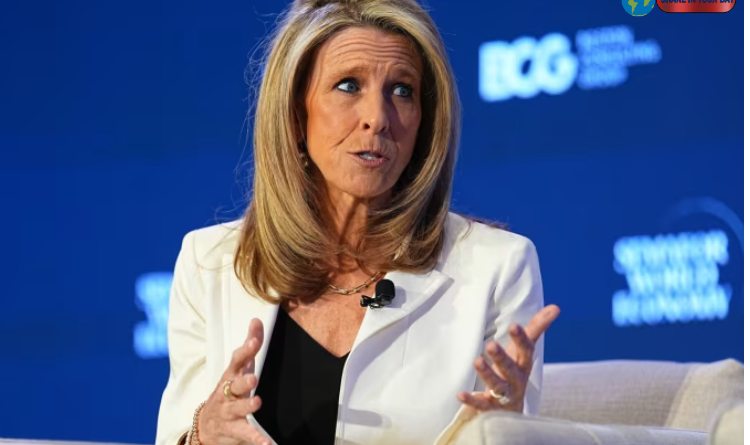
FanDuel CEO Amy Howe Departs in Major Shakeup
The sports betting industry received a major surprise this week after FanDuel CEO Amy Howe officially departed the company as part of a broader leadership restructuring at parent company Flutter Entertainment.
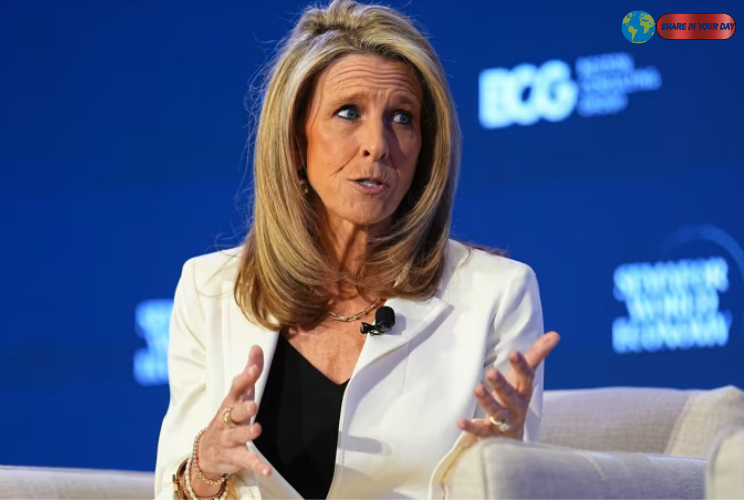
The announcement marks one of the most significant executive changes in the online gambling industry in recent years. Howe helped guide FanDuel through a period of explosive expansion as legalized sports betting transformed the American gaming market. However, slowing growth, increased competition, and changing market dynamics appear to have accelerated a major transition inside the company.
FanDuel president Christian Genetski will now assume leadership responsibilities for the company moving forward, while Flutter International CEO Dan Taylor received an expanded role overseeing broader operations.
The decision arrives during a challenging moment for the sports betting sector as operators face pressure from rising competition, shifting customer behavior, and growing uncertainty surrounding prediction-market platforms.
Amy Howe Helped Build FanDuel Into a Market Leader
The departure of FanDuel CEO Amy Howe closes an important chapter in the company’s modern history.
Howe joined FanDuel in 2021 after previous leadership roles at Ticketmaster and consulting giant McKinsey & Company. During her tenure, FanDuel solidified its position as the leading online sportsbook operator in the United States.
Under Howe’s leadership, FanDuel aggressively expanded its sports betting and online casino operations across newly legalized U.S. states. The company consistently maintained the largest market share in American online sports betting while competing directly against rivals such as DraftKings, BetMGM, and Caesars Sportsbook.
Flutter Entertainment credited Howe with helping FanDuel establish itself as the dominant force in the rapidly growing industry.
The company also focused heavily on responsible gaming initiatives during her leadership period. FanDuel became one of the most visible operators promoting safer gambling practices, avoiding some aggressive marketing strategies used throughout the industry’s early expansion phase.
Howe additionally gained recognition beyond the gaming world and was recently named to CNBC’s Changemakers list for 2026.
Why FanDuel Made a Leadership Change
Despite FanDuel’s strong market position, several recent business challenges likely contributed to the executive shakeup.
Flutter Entertainment reported mixed first-quarter earnings this week. While company revenue increased 17% year-over-year to $4.3 billion, profits declined and customer activity showed signs of slowing.
According to Flutter’s quarterly report, average monthly players dropped 3%, while sportsbook player activity declined roughly 6% compared to last year. The company also reduced portions of its full-year financial guidance.
Industry analysts believe those trends created pressure for organizational changes.
Flutter CEO Peter Jackson stated that the company wanted “the right structure and leadership” in place to maximize FanDuel’s long-term growth opportunities in the United States market.
Reports also suggested Howe’s departure may not have been entirely voluntary. Reuters noted that the leadership transition was “not her decision,” signaling that Flutter leadership sought a more aggressive operational strategy moving forward.
Christian Genetski Takes Over FanDuel
Following the departure of FanDuel CEO Amy Howe, company president Christian Genetski will now lead FanDuel operations.
Genetski has played a major role in FanDuel’s growth for years and was heavily involved in the company’s strategy during its rise to industry leadership. Flutter executives praised his operational expertise and described him as instrumental in scaling the business nationally.
The company hopes the leadership transition will create stronger alignment between FanDuel and Flutter’s broader international operations.
Dan Taylor, previously CEO of Flutter International, also received expanded authority in a newly created role as President of Flutter Entertainment. That move gives him additional oversight across FanDuel and the wider company structure.
Executives emphasized that the restructuring is designed to improve strategic coordination and accelerate innovation across sportsbook products, customer engagement, and new betting formats.
Prediction Markets Create New Competition
One of the biggest challenges facing FanDuel involves the rapid emergence of prediction-market platforms.
Traditional sportsbooks now face growing competition from companies offering event-based financial contracts that resemble sports betting experiences. These prediction markets have become increasingly popular among younger users and casual bettors.
Flutter executives acknowledged the rise of prediction-market operators during the company’s earnings call.
Although management claimed the impact on sportsbook growth remains limited so far, Flutter confirmed it plans to increase investment in its own “FanDuel Predicts” platform.
That shift reflects a broader industry concern that traditional sports betting companies may need to adapt quickly to changing consumer preferences.
Prediction markets also present regulatory uncertainty because they often operate under different legal frameworks than traditional sportsbooks.
For FanDuel, balancing innovation with regulatory compliance could become one of the company’s biggest strategic priorities moving forward.
FanDuel Still Leads the U.S. Sports Betting Market
Even with recent challenges, FanDuel remains the dominant player in American online sports betting.
Flutter stated that FanDuel still controls roughly 39% of the U.S. sportsbook market, maintaining a significant lead over many competitors.
The company continues expanding customer loyalty programs, live betting features, streaming integrations, and casino offerings to maintain its market advantage.
During the latest earnings call, Flutter executives highlighted several new initiatives, including sportsbook loyalty rewards, expanded same-game parlay features, and enhanced customer engagement tools.
Executives also pointed toward upcoming opportunities tied to the 2026 World Cup and future NFL seasons as major growth catalysts.
Still, investors appear increasingly focused on profitability rather than pure market expansion.
That shift represents a major evolution for the sports betting industry, which previously prioritized aggressive customer acquisition above nearly everything else.
Industry Growth Has Started to Slow
The departure of FanDuel CEO Amy Howe also reflects a broader transition happening across the sports betting industry.
After years of explosive growth following the legalization of sports betting in many U.S. states, operators now face a more mature and competitive environment.
Marketing costs remain high, customer acquisition has become more expensive, and several states have introduced tighter regulatory oversight. Meanwhile, inflation and economic pressures may also be reducing discretionary consumer spending on betting activities.
As a result, investors increasingly expect sportsbook companies to demonstrate sustainable profitability rather than relying purely on expansion narratives.
That reality has placed additional pressure on executives across the industry.
FanDuel’s leadership restructuring may ultimately signal how aggressively major operators are preparing for the next phase of the market.
What Happens Next for FanDuel?
The future direction of FanDuel now depends heavily on how effectively the new leadership team can navigate a changing gambling landscape.
Christian Genetski inherits a company that still leads the market but faces growing pressure to maintain momentum while improving profitability.
The company must also respond to intensifying competition from both traditional sportsbook rivals and emerging prediction-market platforms.
Flutter executives remain optimistic that the leadership changes will strengthen operational efficiency and sharpen FanDuel’s strategic focus.
For now, the sports betting industry will closely watch whether the departure of FanDuel CEO Amy Howe marks a simple executive transition or the beginning of a much larger strategic shift across the entire sector.