
British Politics 2026 Turning Point: A Historic Shift Since 1945
British politics is entering what analysts are calling one of the most significant turning points since the end of World War II, with growing signs of institutional strain, political fragmentation, and public dissatisfaction reshaping the country’s democratic landscape.
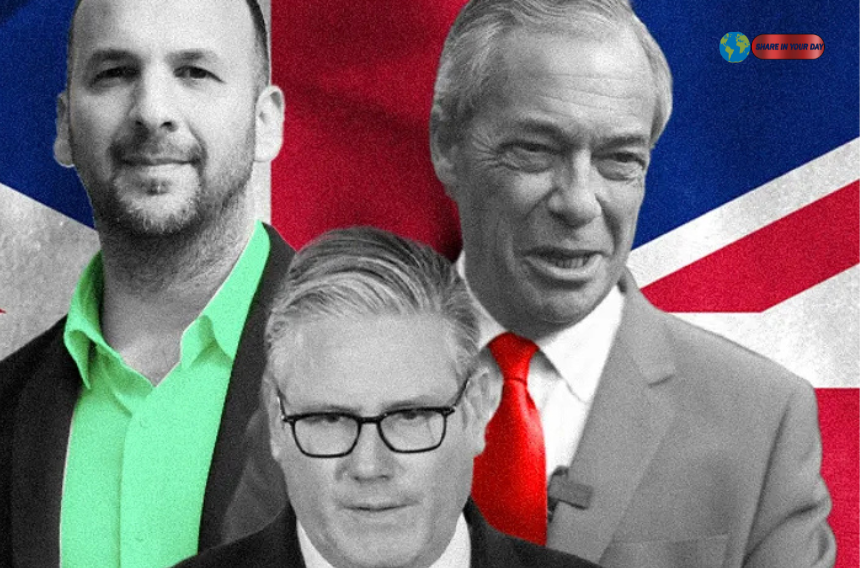
According to recent political analysis and commentary, the United Kingdom is no longer operating within the traditional two-party dominance that defined much of its modern history. Instead, it is transitioning into a more fragmented, unpredictable political environment where power is increasingly distributed across multiple competing parties and movements.
This shift is raising fundamental questions about governance, stability, and the future direction of British democracy.
A Political System Under Strain
The UK political system has historically been anchored by two dominant parties—Labour and the Conservatives. However, this structure has been weakening over the past two decades due to economic shocks, Brexit, and declining public trust in institutions.
As a result, voter loyalty has become more fluid, and election outcomes increasingly unpredictable. Smaller parties are gaining traction, while traditional power bases are eroding in both urban and regional areas.
Meanwhile, analysts argue that economic stagnation, inequality, and repeated political controversies have intensified public frustration, further destabilizing the political landscape.
Fragmentation Replacing the Two-Party Era
One of the most striking developments in British politics is the shift toward a multi-party system.
Instead of a clear Labour-Conservative rivalry, elections now feature a growing number of influential parties competing for influence across different regions of the UK.
This fragmentation has several consequences:
- Coalition-style politics becoming more likely
- Reduced parliamentary majorities
- Increased policy instability
- More frequent leadership crises
In practical terms, governing the UK has become significantly more complex than in previous decades.
Public Disillusionment Driving Political Change
A key driver of this transformation is public disillusionment.
Many voters feel that mainstream political parties have failed to address long-term issues such as cost of living pressures, housing shortages, and uneven regional development.
This dissatisfaction has contributed to declining voter turnout in some areas and rising support for alternative political movements promising systemic change.
However, while new political voices are emerging, they have yet to establish long-term governing stability.
Leadership Pressure on the Government
The current UK government is also facing growing pressure over its economic performance and political decision-making.
Critics argue that leadership has struggled to maintain consistent policy direction amid competing internal and external challenges. This includes economic uncertainty, public spending debates, and ongoing questions about long-term national strategy.
As political competition intensifies, leadership survival is increasingly tied to short-term public opinion shifts rather than long-term policy planning.
The Legacy of Brexit Still Shapes Politics
Even years after the Brexit referendum, its impact continues to define British political dynamics.
Brexit not only reshaped the UK’s relationship with Europe but also fundamentally altered domestic political identities. It created new divisions within parties and reshaped voter priorities around sovereignty, immigration, and economic control.
These divisions remain unresolved and continue to influence election outcomes and policy debates.
Devolution and Internal Political Pressure
Another major factor contributing to political complexity is the increasing push for regional autonomy.
Scotland, Wales, and Northern Ireland continue to assert stronger political identities, with growing calls for greater self-determination and policy independence.
This creates additional pressure on the central UK government, which must balance national unity with regional demands.
Economic Challenges Fuel Political Instability
Economic performance remains a central factor shaping political stability.
Slow growth, inflation pressures, and uneven regional development have contributed to widespread frustration among voters. These economic conditions have weakened trust in governing institutions and increased demand for political alternatives.
As economic uncertainty persists, political volatility is likely to remain high.
Analysts Warn of a New Political Era
Political observers suggest that the UK may be entering a fundamentally new era of governance.
Instead of stable majority governments, future administrations may rely more on coalitions, cross-party agreements, or minority rule arrangements. This would represent a significant departure from the post-1945 political model.
Some analysts describe this shift as a “structural realignment” of British democracy, driven by long-term economic and social change rather than short-term political cycles.
What This Means for the Future
The implications of this political transformation are far-reaching:
- Policy-making may become slower and more negotiated
- Elections may produce less predictable outcomes
- Coalition politics may become the new norm
- Public trust may continue to fluctuate
While this could increase representation for diverse political views, it may also make governance more complex and less stable.
Conclusion: A Defining Moment in UK History
British politics in 2026 appears to be at a critical crossroads.
The combination of economic pressure, institutional fragmentation, and shifting voter behaviour suggests that the traditional political order is undergoing a structural transformation.
Whether this leads to a more representative democracy or prolonged instability will depend on how political leaders, institutions, and voters adapt in the coming years.
One thing is clear: the political system that defined Britain for decades is no longer the same, and its future remains uncertain.