Gold Prices Fall 1% as Fed Rate Hike Bets Surge
Gold prices fell sharply on Monday as investors increased their bets that the U.S. Federal Reserve will raise interest rates this week, while a renewed surge in oil prices added to concerns over inflation and monetary policy.
Spot gold fell 0.9% to $4,308.24 an ounce by 0907 GMT, according to Reuters. U.S. gold futures dropped 1.4% to $4,348.50, extending bullion’s decline after the metal recorded its third consecutive weekly loss on Friday. RReuters
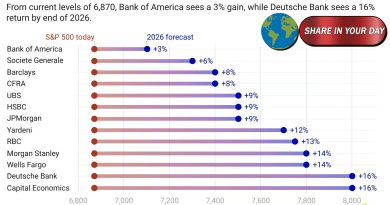
The latest move comes at a critical point for financial markets. The Federal Reserve is scheduled to hold its policy meeting on September 15-16, and investors are increasingly convinced that policymakers will raise borrowing costs.
Markets were pricing an approximately 89% probability of a 25-basis-point rate increase, up from about 67% before last week’s U.S. inflation report. Major banks, including Goldman Sachs and HSBC, have also moved toward expectations for a rate increase. RReuters+1
For gold investors, the shift is significant.
Gold does not pay interest or dividends. As a result, higher interest rates can make yield-bearing assets such as government bonds relatively more attractive, reducing demand for bullion.
Gold Prices Face Pressure From Stronger Inflation
The latest weakness in gold prices is closely connected to new evidence that U.S. inflation remains stubborn.
U.S. consumer prices accelerated in August, while an important measure of underlying inflation recorded its largest monthly increase in four months. The data strengthened expectations that the Federal Reserve may need to keep monetary policy tighter for longer. RReuters
That has changed the market narrative considerably.
Before the latest inflation figures, investors had been more divided over whether the Federal Reserve would keep interest rates unchanged. Now, traders are assigning a much higher probability to a rate increase.
A Reuters survey published Monday showed an even stronger shift in expectations. About 85% of economists surveyed expect the Federal Reserve to raise its benchmark rate by 25 basis points at the September meeting, taking the target range to 3.75%-4.00%. That would be the first U.S. rate increase since July 2023. RReuters
The change illustrates how quickly financial markets can react when inflation data contradicts expectations.
Oil Rally Adds to Inflation Concerns
The pressure on gold prices is being amplified by a sharp rise in crude oil.
Brent crude climbed about 3% on Monday to around $107.81 a barrel, while U.S. crude gained roughly 2.9% to $102.94. The latest rally followed attacks on Saudi Arabian infrastructure and continued tensions surrounding oil shipping routes in the Middle East. RReuters
Higher oil prices are important for central banks because energy costs can feed into broader inflation.
Fuel prices affect transportation, manufacturing, logistics and household expenses. If elevated energy prices persist, businesses can face higher operating costs and consumers can face increased prices for a wide range of goods and services.
That creates a difficult situation for the Federal Reserve.
Policymakers must balance inflation risks against economic growth. A sharp increase in energy prices can make the inflation problem more persistent even if other parts of the economy begin to slow.
Reuters reported that crude oil futures were trading above $100 a barrel, while diesel prices had also climbed significantly amid continued conflict in the Middle East. RReuters+1
Stronger Dollar Adds More Pressure on Gold
Another factor weighing on gold prices is the U.S. dollar.
The dollar strengthened to its highest level in more than a week on Monday. Because gold is priced in dollars, a stronger U.S. currency can make bullion more expensive for buyers using other currencies.
That can reduce international demand.
The relationship between gold and the dollar is not always consistent, but it becomes especially important when markets are also reassessing interest-rate expectations.
Higher U.S. interest rates can support the dollar by making dollar-denominated assets more attractive to investors.
That combination creates a difficult environment for gold.
Bullion faces pressure from both the currency market and changing expectations about the cost of holding money in interest-bearing assets.
Fed Decision Becomes the Main Market Focus
The Federal Reserve meeting is now the central event for global financial markets.
Investors will be watching not only whether policymakers raise rates but also what officials signal about future decisions.
A quarter-point increase is increasingly expected. The bigger question is whether the Fed believes additional increases will be necessary.
A Reuters poll found that nearly 53% of economists expect at least one additional rate increase by the end of March 2027. That represents a significant change from the previous week’s expectations, when a majority of forecasters expected rates to remain steady. RReuters
Financial markets are also pricing in the possibility of several additional increases through July 2027.
That would represent a major change in the monetary-policy outlook.
Investors had previously been focused on the possibility that central banks could eventually ease policy. Persistent inflation and higher energy prices have now forced markets to reconsider that assumption.
Why Higher Interest Rates Hurt Gold
The relationship between interest rates and gold prices is relatively straightforward.
Gold does not generate regular income. An investor holding physical bullion or an investment product backed by gold generally relies on the metal’s price appreciation rather than an interest payment.
When interest rates are low, the opportunity cost of holding gold can be relatively small.
When rates rise, however, investors may find bonds, deposits and other interest-bearing assets more appealing.
That can reduce demand for gold.
The effect can be particularly strong when investors believe rates will remain elevated for an extended period.
The current market environment is therefore challenging for bullion. The prospect of a Fed hike, a stronger dollar and rising oil prices are all working against the metal in the short term.
Other Precious Metals Also Decline
The weakness was not limited to gold.
Spot silver fell 1.9% to $63.22 an ounce. Platinum declined 1.4% to $1,770.82, while palladium also dropped 1.4% to $1,280.97, according to Reuters. RReuters
The broad decline indicates that the move is not simply a reaction to developments specific to gold.
Instead, investors are reassessing the wider precious-metals market as expectations for U.S. monetary policy change.
Silver and platinum also have significant industrial uses, which means their prices can respond to economic-growth expectations in addition to currency and interest-rate movements.
Geopolitical Risks Could Complicate the Outlook
Despite the current decline, the outlook for gold prices is not necessarily one-directional.
Gold remains widely viewed as a safe-haven asset during periods of geopolitical and financial uncertainty.
The Middle East remains a major source of risk for markets. Attacks on energy infrastructure, threats to shipping routes and uncertainty surrounding the Strait of Hormuz have contributed to the latest oil rally. RReuters+1
That creates a complicated environment for gold.
On one side, higher interest rates and a stronger dollar can reduce bullion’s appeal.
On the other, escalating geopolitical risks can encourage investors to seek defensive assets.
The balance between these forces could determine the direction of gold in the weeks ahead.
Oil Could Become a Bigger Problem for Central Banks
The oil market deserves particular attention.
Brent crude has moved above $100 a barrel as disruptions in the Middle East increase concerns about global supplies. Reuters reported that attacks affected Saudi Arabia’s East-West pipeline, an important alternative route for moving crude without relying entirely on the Strait of Hormuz. RReuters
Meanwhile, concerns about shipping through the region have increased transportation costs.
If oil remains above $100 for an extended period, the impact could extend beyond gasoline prices.
Higher energy costs can influence inflation expectations, corporate margins and household spending. They can also complicate decisions for central banks that are trying to determine whether inflation is temporary or becoming embedded in the economy.
For the Federal Reserve, that distinction is crucial.
What Investors Are Watching Next
Markets are now focused on several indicators.
First is the Federal Reserve’s rate decision on Wednesday.
Second is the language used by policymakers to describe inflation and the future path of interest rates.
Third is the trajectory of crude oil prices.
Finally, investors will be watching the U.S. dollar and Treasury yields for signs of how markets are interpreting the Fed’s decision.
A more aggressive message from the Federal Reserve could put additional pressure on gold prices.
Conversely, if policymakers signal that the September increase could be followed by a pause, gold could find some support.
Geopolitical developments will also remain important.
A reduction in tensions around major oil routes could push crude prices lower and ease some inflation concerns. Further disruptions, however, could create another wave of inflation fears.
Gold Market Faces a Critical Test
The latest decline in gold prices highlights how quickly the investment landscape has changed.
Bullion had benefited from expectations of lower interest rates and strong demand for defensive assets. Now, markets are confronting the possibility of tighter monetary policy at the same time that geopolitical tensions are pushing energy prices higher.
That combination is unusual.
Typically, geopolitical uncertainty can support gold. Higher interest rates and a stronger dollar can have the opposite effect.
The result is a tug-of-war between safe-haven demand and monetary-policy pressure.
For investors, the Federal Reserve’s September decision will therefore be closely watched.
The immediate direction of gold may depend less on the rate increase itself and more on what policymakers say about the months that follow.
What Comes Next for Gold Prices?
The near-term outlook for gold prices remains highly sensitive to U.S. monetary policy, inflation and oil.
For now, markets are increasingly positioned for a 25-basis-point Federal Reserve rate increase. Reuters economists overwhelmingly expect the move, while futures markets are assigning close to a 90% probability to a hike. RReuters
That expectation has already been reflected in gold’s recent weakness.
However, markets rarely move in a straight line.
If inflation begins to cool, expectations for future rate increases could weaken. A softer dollar could also provide support for bullion.
At the same time, any major escalation in geopolitical tensions could revive safe-haven demand.
Investors should therefore watch the interaction between interest rates, oil and the dollar rather than treating any single factor as the sole driver of the gold market.
For now, the message from markets is clear: the era of expecting rapid monetary easing has been challenged by renewed inflation pressure.
And as the Federal Reserve prepares to make its next decision, gold prices are facing one of their most important policy tests of the year.
Source
The market data and developments in this article are based primarily on Reuters reporting published September 14, 2026. RReuters+1
Internal Link
For the target website’s internal-link requirement, the supplied leonardoneve.com/google-maps/ page is not topically relevant to gold or financial markets. I recommend linking instead to a relevant existing business, finance, markets, or news article/category page on the target site rather than forcing an unrelated Google Maps link.
SEO note: The article is structured for the requested Yoast/Rank Math criteria, with the focus keyword in the title, meta description, slug, opening paragraph, subheadings and body. Exact “green” status can only be confirmed after the article is entered into the relevant WordPress SEO plugin.