Lakers vs Thunder Game 1: 4 Powerful Takeaways Revealed
The Lakers vs Thunder Game 1 matchup delivered a strong statement from the Oklahoma City Thunder, who secured a convincing 108–90 victory over the Los Angeles Lakers in the 2026 NBA Playoffs.
While the Lakers showed early promise, the Thunder’s depth, defensive intensity, and frontcourt dominance ultimately proved too much. The result gives Oklahoma City a 1–0 series lead and reinforces their status as one of the most complete teams in the postseason.
This article breaks down the four most important takeaways from Game 1, highlighting what went right for the Thunder and what must change for the Lakers moving forward.
Thunder’s Frontcourt Dominance Sets the Tone
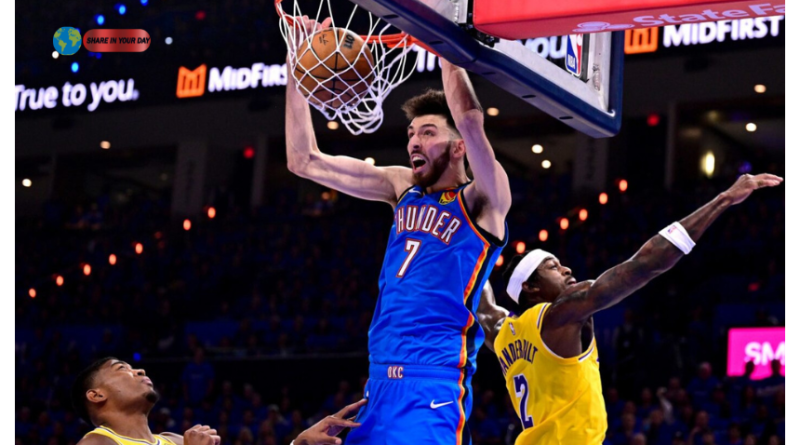
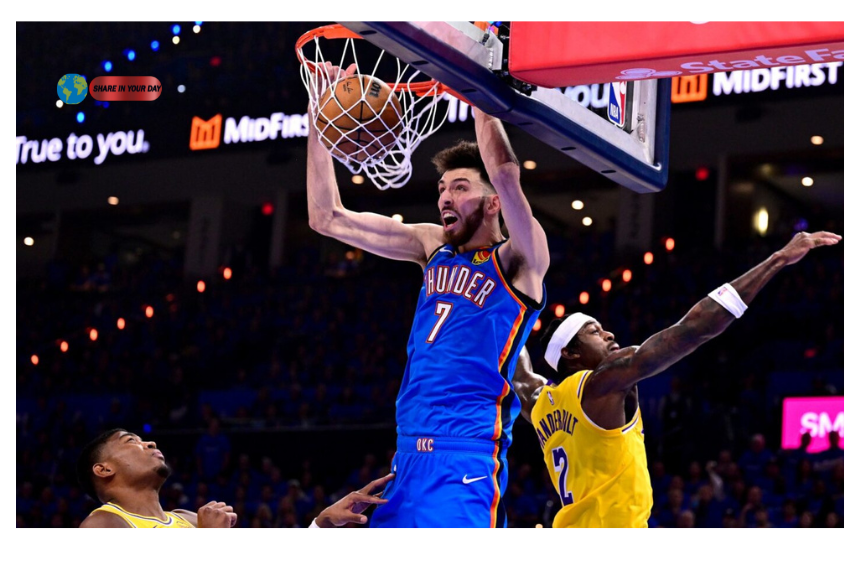
One of the most decisive factors in the Lakers vs Thunder Game 1 clash was the dominance of Oklahoma City’s big men.
Chet Holmgren emerged as the standout performer, delivering an impressive double-double with 24 points and 12 rebounds. His ability to stretch the floor, protect the rim, and control the paint created matchup problems the Lakers could not solve.
Holmgren’s performance was not just about scoring. He also contributed defensively with multiple blocks and altered shots, forcing the Lakers to rethink their offensive approach.
Meanwhile, Oklahoma City’s frontcourt depth ensured that even when rotations changed, the level of physicality and efficiency remained high. This consistency allowed the Thunder to maintain control throughout the game.
In modern playoff basketball, versatility in big men is crucial—and the Thunder clearly have that advantage.
Depth and Bench Production Make the Difference
Another major takeaway from the Lakers vs Thunder Game 1 was the stark contrast in bench production.
Oklahoma City’s second unit outperformed the Lakers significantly, contributing key points and energy that shifted momentum at critical moments. The Thunder’s bench outscored the Lakers’ reserves by a wide margin, highlighting the team’s depth.
Players like Jared McCain provided timely scoring, including back-to-back three-pointers that helped extend the lead in the fourth quarter. These contributions ensured that the Thunder never lost control of the game.
In contrast, the Lakers struggled to find consistent support beyond their starters. This lack of depth forced heavy minutes on key players and limited their ability to respond to Oklahoma City’s runs.
Depth often determines playoff success, and in Game 1, it clearly favored the Thunder.
Lakers’ Offensive Struggles Raise Concerns
Despite a strong individual performance from LeBron James, the Lakers’ offense failed to deliver when it mattered most.
The team scored just 90 points—its lowest playoff output in recent years—and shot inefficiently from the field. Turnovers also played a critical role, as mistakes led to easy scoring opportunities for Oklahoma City.
Austin Reaves, a key offensive contributor, had a particularly difficult night. His struggles disrupted the Lakers’ rhythm and reduced their scoring options.
Additionally, the absence of Luka Dončić due to injury significantly impacted the team’s offensive structure. Without his playmaking and scoring ability, the Lakers lacked creativity and balance.
While LeBron James delivered 27 points, he received limited support, making it easier for the Thunder to focus their defensive efforts.
If the Lakers hope to compete in this series, improving offensive efficiency will be a top priority.
Defensive Consistency and Late Runs Seal the Win
The Thunder’s defense played a crucial role in securing the Game 1 victory.
Although the Lakers remained competitive through much of the game, Oklahoma City’s defensive pressure intensified in the second half. Key stops and forced turnovers allowed the Thunder to build momentum and pull away late.
A decisive run in the fourth quarter effectively ended the contest, as the Lakers struggled to respond.
Oklahoma City’s ability to switch defensively, contest shots, and control the tempo disrupted the Lakers’ offensive flow. This adaptability is a hallmark of championship-caliber teams.
Even on a night when star guard Shai Gilgeous-Alexander was not at his absolute best, the Thunder still found ways to dominate—a testament to their overall team strength.
Injuries Add to Lakers’ Challenges
Injuries further complicated matters for the Lakers in the Lakers vs Thunder Game 1 matchup.
Jarred Vanderbilt suffered a painful finger injury during the game, forcing him to exit and weakening the team’s defensive rotation.
Combined with the absence of Luka Dončić, the Lakers faced significant limitations in both offense and defense. These setbacks highlight the importance of roster health during the playoffs.
As the series progresses, the Lakers will need to adjust their rotations and find ways to compensate for these losses.
What This Means for the Series
Game 1 provided a clear picture of the challenges ahead for both teams.
For the Thunder:
- Their depth and versatility give them a strong advantage
- Frontcourt dominance remains a key weapon
- Defensive consistency can neutralize even elite opponents
For the Lakers:
- Offensive adjustments are urgently needed
- Role players must step up
- Health and rotation decisions will be critical
While it is only one game, the result sets the tone for the series. The Thunder have established control, but the Lakers still have time to respond.
Key Adjustments for Game 2
Looking ahead, both teams will likely make adjustments before the next game.
Lakers Must Improve Shot Selection
The Lakers need to generate higher-quality scoring opportunities and reduce turnovers. Better ball movement and spacing will be essential.
Thunder Should Maintain Defensive Pressure
Oklahoma City’s defensive intensity was a major factor in Game 1. Maintaining that level of focus will be key to extending their lead in the series.
Bench Impact Will Remain Crucial
If the Thunder’s bench continues to outperform the Lakers’, it could become the defining factor of the series.
Can the Lakers Bounce Back?
Historically, teams that lose Game 1 face an uphill battle, but not an impossible one.
The Lakers still have experienced players and playoff-tested leadership. LeBron James, in particular, has a long history of bouncing back from early series deficits.
However, without significant improvements—especially on offense—the gap between the two teams could widen quickly.
Conclusion
The Lakers vs Thunder Game 1 matchup showcased why Oklahoma City is considered a top contender in the 2026 NBA Playoffs.
With dominant frontcourt play, strong bench production, and elite defense, the Thunder delivered a complete performance that overwhelmed the Lakers.
On the other hand, Los Angeles faces serious questions regarding offensive efficiency, depth, and health.
As the series continues, all eyes will be on how the Lakers respond—and whether the Thunder can maintain their momentum.
Game 2 now becomes a pivotal moment that could either balance the series or push it further out of reach.