Arsenal Celebration Debate: 5 Reasons Critics React
The Arsenal celebration debate has become one of the biggest talking points in football following the club’s dramatic victory over Atlético Madrid in the UEFA Champions League semi-final.
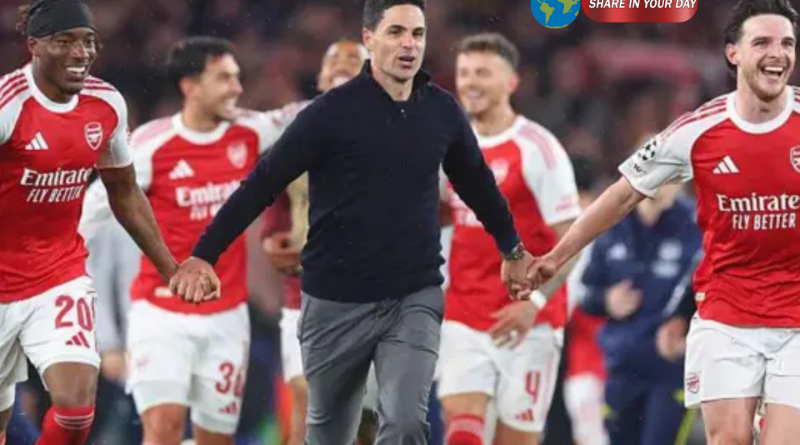
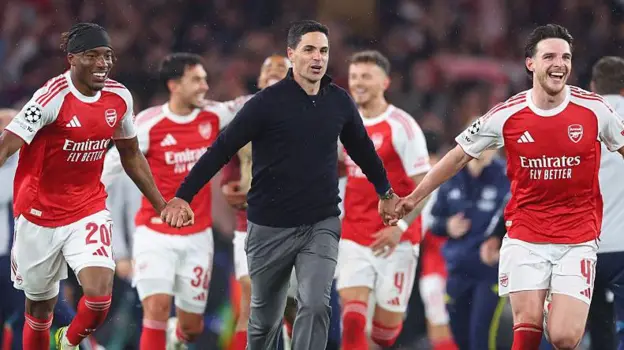
After securing a historic place in the final, players, fans, and staff of Arsenal celebrated passionately—but not everyone was impressed.
Critics, pundits, and former players have questioned whether the reaction crossed the line, sparking a wider discussion about emotion, professionalism, and expectations at the elite level.
Arsenal’s Historic Victory Sparks Emotion
Arsenal’s 1-0 win sealed a 2-1 aggregate triumph, sending them to their first Champions League final in nearly two decades.
The decisive moment came from Bukayo Saka, whose first-half goal proved enough to overcome a resilient Atlético side.
Manager Mikel Arteta described the night as “incredible,” highlighting the emotional significance for players and supporters alike.
For a club that has endured years of near misses in Europe, the result represented more than just progression—it symbolized redemption and renewed belief.
Why the Arsenal Celebration Debate Began
Despite the magnitude of the achievement, some observers felt Arsenal’s celebrations were excessive.
The scenes included:
- Players embracing and celebrating on the pitch
- Fans creating a euphoric atmosphere
- Extended post-match celebrations
Critics argue that such reactions are usually reserved for winning a final—not reaching one.
This perspective has fueled the ongoing Arsenal celebration debate, dividing opinion across the football world.
1. The Weight of History
To understand the celebrations, context is essential.
Arsenal had not reached a Champions League final since 2006. That long wait created emotional pressure that finally released at full-time.
According to reports, this victory ended years of frustration and “near misses” that had defined the club’s European journey.
From this perspective, the celebrations were less about the semi-final and more about overcoming a psychological barrier.
2. Modern Football Culture Has Changed
Football celebrations today are not what they were a decade ago.
In the era of:
- Social media
- Global fanbases
- Instant content sharing
Moments like these are amplified and shared worldwide within seconds.
Clubs are no longer just competing on the pitch—they are also engaging audiences digitally.
Arsenal’s celebrations, therefore, can be seen as part of a broader shift in how football moments are experienced and consumed.
3. Pressure and Release in Elite Sport
Elite footballers operate under immense pressure.
For Arsenal, this season has included:
- Title challenges
- European expectations
- Intense scrutiny
Midfielder Declan Rice noted the team had “turned a corner” after a difficult period, highlighting the emotional journey behind the performance.
The celebrations can be interpreted as a natural release of that pressure rather than an act of overconfidence.
4. Tactical Discipline, Emotional Reward
Interestingly, Arsenal’s performance itself was not flashy.
The match was described as controlled and disciplined, with Arsenal focusing on defensive solidity and minimizing risk.
This contrast—between a cautious game and explosive celebrations—may explain why some critics found the reaction surprising.
However, it also underlines how difficult the victory was to achieve.
5. The Fine Line Between Passion and Perception
At the heart of the Arsenal celebration debate is a simple question:
Where is the line between passion and excess?
Supporters argue that football is about emotion and moments like these should be celebrated fully.
Critics counter that elite teams must maintain focus, especially with a final still to play.
This tension reflects a broader philosophical divide in modern football.
Voices From the Football World
Reactions to the celebrations have been mixed.
Some pundits praised Arsenal’s passion, calling it a sign of unity and belief.
Others suggested it showed a lack of experience, warning that celebrating too early could backfire.
Even within fan communities, opinions vary widely—some embracing the joy, others urging caution.
What This Means for the Final
The debate may continue, but Arsenal’s focus now shifts to the final.
They will face either:
- Paris Saint-Germain
- Bayern Munich
Both opponents present significant challenges, requiring Arsenal to maintain the same discipline that got them this far.
The key question is whether the emotional high from the semi-final will:
- Boost confidence
or - Lead to complacency
A Defining Moment for Arteta’s Arsenal
Under Mikel Arteta, Arsenal has undergone a transformation.
The team now combines:
- Tactical intelligence
- Young talent
- Strong team chemistry
Reaching the Champions League final is arguably the biggest milestone of this project so far.
The celebrations, therefore, can also be seen as a reflection of how far the team has come.
The Bigger Picture: Football as Emotion
Football is not just about results—it is about moments.
From dramatic goals to unforgettable victories, the sport thrives on emotion.
Arsenal’s celebrations captured that essence, even if they divided opinion.
In many ways, the Arsenal celebration debate highlights what makes football so compelling:
- Passion
- Rivalry
- Differing perspectives
Conclusion
The Arsenal celebration debate is unlikely to fade anytime soon.
While critics question the scale of the reaction, supporters see it as a justified outpouring of joy after years of struggle.
Ultimately, the true judgment will come in the final.
If Arsenal lifts the trophy, the celebrations will be remembered as the start of something historic.
If not, they may be viewed differently.
For now, one thing is certain: Arsenal has reignited belief—and reminded the football world just how powerful emotion can be.