Nepal Tunnel Rescue: 2 Workers Saved After 9 Days
A dramatic Nepal tunnel rescue has given families and emergency workers a rare moment of hope after two men were pulled alive from a hydropower tunnel following nine days underground in the aftermath of catastrophic flooding.
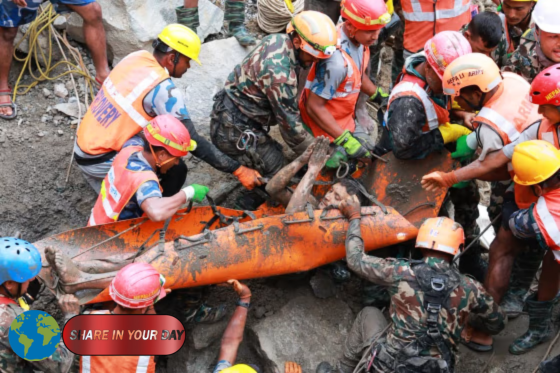
The two workers were rescued from the Upper Trishuli 3A Hydropower Station tunnel in Nepal, where destructive floods and debris had trapped people inside. Their survival came as rescuers continued searching for others feared to be stranded in damaged tunnels and other areas affected by the disaster.
The rescue is being viewed as an extraordinary breakthrough in a disaster that has devastated communities and severely damaged infrastructure across parts of the Himalayan region.
Two Workers Found Alive After Days Underground
The workers were identified in reports as Sanjay Sah and Kabir Maharjan. They were pulled from the hydropower tunnel alive after spending approximately nine days trapped underground.
According to reports, the men were found deep inside the tunnel after rescue teams worked through difficult conditions created by mud, debris and flood damage. Their survival raised hopes that other people who may still be trapped could also be reached.
Rescue operations in such environments are particularly dangerous. Hydropower tunnels can stretch deep underground and may become blocked by large volumes of mud and debris after severe flooding or landslides.
The successful Nepal tunnel rescue therefore represents more than the survival of two workers. It has also provided a crucial morale boost to rescue teams continuing their search.
Catastrophic Floods Created a Massive Rescue Challenge
The disaster followed devastating flooding that struck the region on Aug. 26, causing widespread destruction in Nepal and neighboring areas of the Himalayas.
The floods damaged communities, infrastructure and hydropower facilities, while rescue teams faced an enormous challenge in determining how many people might remain trapped or missing.
Reports have indicated that hydropower tunnels became a major focus of rescue efforts because workers were believed to have been inside several facilities when the disaster occurred. Narrow passageways, unstable debris and limited access have complicated attempts to search the underground structures.
In some cases, rescuers have used advanced technology, including drones, to help search damaged areas. However, conditions inside tunnels can limit the effectiveness of aerial and remote equipment.
Mud-filled passages, darkness and structural damage can prevent drones from traveling far underground. As a result, rescue teams must combine technology with painstaking manual work and careful assessments of tunnel safety.
How the Nepal Tunnel Rescue Offered New Hope
Finding survivors after more than a week trapped underground is an exceptional development in any major disaster.
The two workers’ rescue demonstrated that survival remained possible despite the difficult conditions inside the tunnel. For families waiting for news and for emergency personnel continuing their operations, the discovery offered renewed motivation.
According to reports, the workers were rescued from the Trishuli 3A construction site. Their rescue followed days of intensive efforts to reach people believed to have been trapped after the flooding.
The incident also highlighted the importance of continuing search operations even when conditions become increasingly difficult.
In disaster response, the chances of finding survivors generally decline over time. However, individual circumstances can vary significantly depending on access to air, water, shelter and the physical condition of those trapped.
The Nepal tunnel rescue became a powerful reminder that emergency teams can sometimes achieve breakthroughs long after initial hopes begin to fade.
Rescuers Face Dangerous Conditions Underground
Searching inside a damaged hydropower tunnel is a highly complex operation.
Rescue teams must first determine whether the structure is stable enough to enter. Floodwaters can weaken walls, shift debris and create additional risks of collapse.
At the same time, workers may be located behind massive barriers of mud, rocks or other materials. Reaching them can require extensive excavation and careful coordination between engineers, emergency workers and government authorities.
Reports indicated that the rescued men were found approximately 170 meters inside the tunnel, demonstrating the difficult conditions confronting the teams attempting to reach survivors.
The rescue operation required patience as well as speed. Moving too aggressively through unstable debris can create additional danger for both trapped survivors and rescuers.
This balance between urgency and safety is one of the most difficult challenges in major tunnel rescue operations.
Medical Care Becomes the Next Priority
After being trapped for an extended period, survivors may require immediate medical attention.
People rescued from confined underground environments can suffer from injuries, dehydration, exhaustion and the effects of limited oxygen. Long periods without normal movement can also create serious physical complications.
The two workers rescued in Nepal were transported for medical treatment following their extraction. Reports described injuries affecting the survivors, while medical teams prepared to provide continued care.
Their physical recovery will likely remain an important part of the story in the coming days.
Survival is the first major victory in a rescue operation, but the medical challenges can continue long after a person reaches safety.
Search Continues for Other Possible Survivors
The successful rescue has not ended the broader emergency operation.
Authorities and rescue teams continue to face uncertainty about the fate of other workers and residents affected by the catastrophic floods. Reports have described large numbers of people as missing or potentially trapped across damaged areas and hydropower facilities.
The discovery of two survivors has raised hopes that others could still be alive.
However, every rescue location presents different challenges. Some tunnels may be completely blocked, while others may be inaccessible because of structural damage or continued flooding.
Emergency teams must assess each situation individually while also responding to the broader humanitarian crisis created by the disaster.
The next phase of the Nepal tunnel rescue effort will depend heavily on whether authorities can establish communication with other possible survivors and identify safe routes into damaged underground facilities.
Why Hydropower Infrastructure Is Central to the Disaster
Hydropower plays an important role in Nepal’s energy infrastructure, with many projects located in mountainous regions near powerful rivers.
While these locations can provide significant opportunities for electricity generation, they can also expose infrastructure to natural hazards, including floods, landslides and glacial events.
The recent disaster caused severe damage to multiple facilities, creating an emergency that extended beyond ordinary flood rescue operations.
When workers become trapped inside tunnels, rescue efforts require specialized knowledge of underground structures, engineering risks and confined-space operations.
The destruction has also raised broader questions about infrastructure resilience in areas vulnerable to increasingly severe natural disasters.
For the latest official disaster information and emergency updates, readers can consult credible sources such as Reuters and The Associated Press coverage via ABC News.
A Rare Moment of Relief for Families
For the families of Sanjay Sah and Kabir Maharjan, the rescue brought an emotional end to days of uncertainty.
When people disappear during a major natural disaster, relatives often face an agonizing wait for information. Communication can be disrupted, search areas may be difficult to access and rescue operations can take days or weeks.
The successful Nepal tunnel rescue offered a rare moment of relief amid a much larger tragedy.
Reports on the rescue captured the significance of the moment as the workers were brought out alive after days spent in darkness and isolation. Their survival became one of the most hopeful developments in the ongoing response to the disaster.
However, many families remain waiting for answers about loved ones who are still missing.
What Happens Next?
Rescue teams are expected to continue searching areas where survivors may still be trapped.
The operation will likely depend on several factors, including the stability of tunnels, weather conditions, access to heavy equipment and the availability of information about where workers were located when the flooding began.
Technology may continue to assist the search, but difficult underground conditions mean that human rescue teams and engineers will remain essential.
The successful extraction of the two workers could also provide investigators with valuable information about conditions inside the tunnel and the possible locations of other survivors.
For now, the rescue has delivered something that was increasingly difficult to find after more than a week of disaster: hope.
Nepal Tunnel Rescue Shows the Importance of Persistence
The survival of two workers after nine days underground is a powerful example of why major search-and-rescue operations can require persistence even under extremely difficult circumstances.
The catastrophic floods have left behind widespread devastation, enormous humanitarian needs and a continuing search for missing people.
Yet the successful Nepal tunnel rescue has shown that breakthroughs remain possible.
As emergency teams continue their work, the story of Sanjay Sah and Kabir Maharjan will stand as one of the defining moments of the disaster response.
Their rescue does not erase the scale of the tragedy. Thousands of people have been affected, communities have suffered devastating losses and the search for other missing individuals continues.
But in the middle of a disaster defined by destruction and uncertainty, two workers emerging alive from a dark, damaged tunnel after nine days provided a powerful reminder of human endurance and the determination of those working to save lives.
For continued coverage, your website could add an internal link here to related articles about Nepal floods, Himalayan disasters or international rescue operations.