Strait of Hormuz: Trump Faces New Iran War Test
The Strait of Hormuz has emerged as the most important strategic flashpoint in the continuing U.S.-Iran conflict, with President Donald Trump pressing ahead with an aggressive campaign against Tehran while regional diplomacy focuses on restoring normal shipping through the critical waterway.
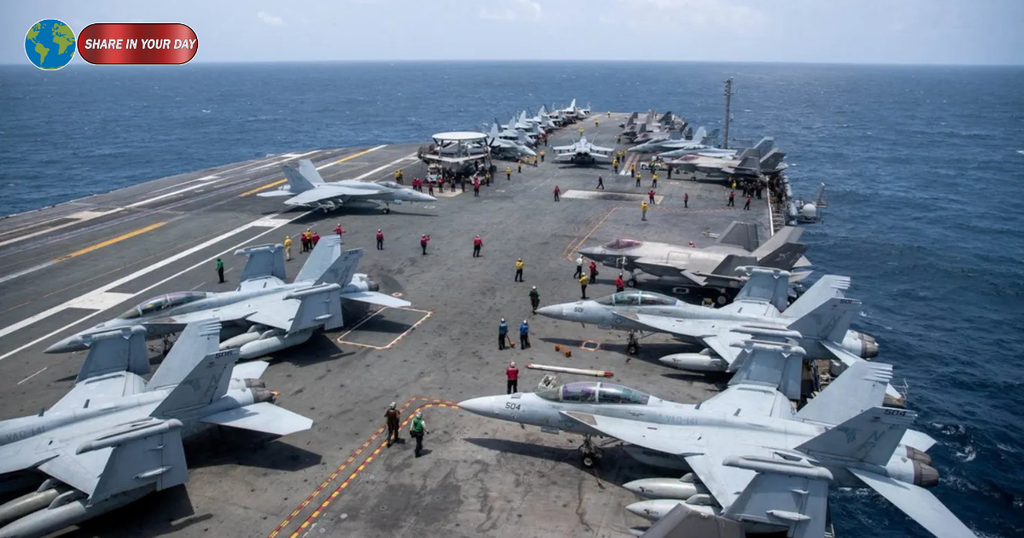
The latest developments come as the United States says its forces have cleared Iranian sea mines from internationally recognized shipping lanes in the strait. U.S. Central Command, or CENTCOM, described the operation as a major military milestone after months of disruption to commercial traffic.
Yet clearing the waterway does not mean the crisis is over.
Commercial traffic remains well below normal levels, while Iran continues to demand conditions for reopening the strait more broadly. At the same time, Oman and other regional powers are trying to find a diplomatic path that could prevent another escalation.
For Trump, the Strait of Hormuz has therefore become both a military objective and a test of his broader strategy toward Iran.
Strait of Hormuz Becomes Central to Trump’s Iran Strategy
The Strait of Hormuz connects the Persian Gulf with the Gulf of Oman and the Arabian Sea. Its importance to global energy markets is enormous because a significant share of international oil and gas shipments traditionally passes through the waterway.
The prolonged conflict has transformed the strait from a major shipping route into a central bargaining chip.
Washington has sought to restore commercial navigation while simultaneously maintaining economic and military pressure on Iran. Tehran, meanwhile, has linked the future of the waterway to wider questions surrounding the war, sanctions and the U.S. naval blockade.
That has created a difficult diplomatic equation.
Reopening shipping requires security and predictability. Iran wants political and economic concessions. The United States wants to maintain pressure on Tehran and prevent Iran from using the waterway as leverage.
The result is a standoff in which the Strait of Hormuz remains open in some respects but far from returning to normal.
CENTCOM Announces a Major Shipping Milestone
U.S. Central Command commander Adm. Brad Cooper said American forces have cleared Iranian sea mines from the internationally recognized shipping lanes.
According to reporting on the announcement, U.S. forces have helped facilitate the passage of nearly 1,500 commercial vessels carrying roughly 750 million barrels of crude oil. More than 20 warships and hundreds of aircraft have participated in the broader operation.
The military achievement is significant because sea mines can create enormous risks for commercial shipping.
Even when mines are not actively exploding, uncertainty about their location can discourage shipping companies from sending tankers through a strategic waterway.
The American demining operation therefore removes one major physical obstacle.
But it does not eliminate the political risk.
Shipping companies must also consider the possibility of attacks, interception, military confrontation or sudden changes in the rules governing transit.
That is why the latest CENTCOM announcement is important, but not necessarily the end of the shipping crisis.
Why Iran Still Has Leverage
Despite the U.S. military’s efforts, Iran retains significant strategic leverage because of the geography of the region.
The Strait of Hormuz is narrow, and Iran controls territory along its northern side. Oman controls territory on the southern side, including the Musandam Peninsula.
That geography makes the waterway difficult to separate from regional politics.
Reuters reported Friday that diplomatic efforts are intensifying around reopening the Strait of Hormuz. Qatar has been involved in mediation, while Iran has discussed conditions for restoring maritime traffic. Tehran has also proposed a designated corridor involving Oman.
Iran’s position has reportedly included demands involving the U.S. blockade, sanctions and the broader war.
This means the shipping issue cannot easily be solved as a stand-alone technical problem.
A ship can physically travel through the strait only if the surrounding political and military environment allows it to do so safely.
Oman Plays a Critical Diplomatic Role
Oman occupies an unusual position in the crisis.
The country has historically maintained relationships with both Washington and Tehran and has frequently served as a discreet channel for diplomatic communication.
That makes Muscat particularly important as the United States and Iran struggle to communicate directly.
Recent negotiations have once again placed Oman in the middle of efforts to reduce tensions.
The country has also been directly affected by the conflict and by the strategic importance of nearby shipping routes.
Its position is delicate.
Oman wants to preserve its role as a neutral regional mediator while also protecting its territorial waters, economy and security interests.
The country’s involvement means any long-term settlement over the Strait of Hormuz is likely to require careful coordination with Muscat.
Trump Has Shifted His Iran Strategy
The latest developments also reflect a significant evolution in Trump’s approach to the war.
When the conflict began, the administration presented the military campaign as something that could be resolved relatively quickly.
Six months later, the conflict remains unresolved.
Trump’s strategy has moved through several stages, including military pressure, diplomacy and increasingly aggressive economic measures. Axios reported Friday that the administration has increasingly emphasized economic warfare and sanctions after earlier efforts to reach a broader agreement failed.
That shift is important because it suggests Washington is preparing for a longer confrontation.
Instead of relying exclusively on military operations, the administration is attempting to weaken Iran economically and pressure its leadership.
The Strait of Hormuz remains central to that strategy because control over shipping and Iranian oil exports gives Washington another source of leverage.
The Global Oil Market Is Watching Closely
The stakes extend far beyond the United States and Iran.
The Strait of Hormuz is one of the world’s most important energy corridors. Any sustained disruption can affect oil prices, shipping costs, insurance rates and inflation far beyond the Middle East.
Reuters reported that the waterway previously handled roughly 20% of global oil supply, underscoring why governments and energy companies are closely watching developments.
Even with U.S. efforts to clear the shipping lanes, traffic remains significantly below normal levels.
That means the market is still operating with a risk premium.
If commercial shipping returns steadily, energy markets could gain confidence.
If tensions escalate again, however, oil prices could quickly respond to fears of renewed disruption.
The economic consequences could therefore become another major factor in diplomatic negotiations.
Shipping Has Improved, But Normality Has Not Returned
One of the most important distinctions in the current situation is the difference between physical access and normal commercial traffic.
The United States says key shipping lanes are clear of Iranian sea mines.
That is a major operational achievement.
However, shipping companies still need confidence that vessels will not face military interference or other dangers.
Reuters reported that traffic through the strait remains at only about 5% to 15% of normal levels despite U.S. efforts to facilitate passage.
That gap shows why reopening the waterway is much more complicated than removing mines.
The maritime industry requires predictable conditions.
Tanker operators must know that they can enter, cross and exit the region without suddenly becoming targets or becoming caught in a new round of military escalation.
Until that confidence returns, the Strait of Hormuz crisis will remain an economic problem as well as a military one.
Iran War Enters a More Complicated Phase
The broader conflict is also entering a new phase.
The Associated Press reported Friday that six months after the U.S. and Israel launched attacks against Iran, the conflict has not produced the decisive political outcome originally envisioned by its architects. Iran’s leadership has survived, while the war has reshaped regional alliances and energy markets.
That reality creates difficult choices for Trump.
Continuing the war carries financial, military and political costs.
Ending the conflict without achieving Washington’s objectives could also create political problems.
The Strait of Hormuz sits directly between those two choices.
If Trump can demonstrate that commercial shipping is returning while maintaining pressure on Iran, the administration could present the operation as a strategic success.
If the waterway remains disrupted, however, the conflict’s economic consequences could undermine that argument.
The Risk of Another Escalation Remains
Despite the latest progress, there is no guarantee that the Strait of Hormuz will remain calm.
Iran has made clear that reopening the waterway is connected to broader political demands.
The United States, meanwhile, continues to maintain significant military pressure.
That creates the possibility that a relatively small maritime incident could trigger another escalation.
A confrontation involving a commercial tanker, military vessel or Iranian forces could rapidly change the diplomatic environment.
The presence of American warships in and around the region also increases the potential consequences of miscalculation.
For that reason, military commanders and diplomats face a difficult balancing act.
They must keep shipping lanes secure without creating conditions that make a wider war more likely.
What Happens Next?
The next stage of the Strait of Hormuz crisis is likely to depend on diplomacy as much as military power.
Iran wants conditions that would allow the waterway to reopen on terms it considers acceptable.
The United States wants to maintain control over the security environment while continuing its pressure campaign.
Oman and Qatar are attempting to bridge those positions.
Meanwhile, global shipping companies are waiting for evidence that the region is genuinely stable.
The most immediate question is whether commercial traffic can gradually return to the levels seen before the war.
The bigger question is whether Washington and Tehran can reach an arrangement that lasts.
If they cannot, the Strait of Hormuz could remain a major source of geopolitical and economic instability for months.
Strait of Hormuz Remains the Key Test
The latest developments demonstrate why the Strait of Hormuz has become the defining strategic issue of the U.S.-Iran war.
American forces have cleared key shipping lanes and demonstrated the ability to protect commercial vessels.
But military control alone cannot restore normal global trade.
Iran still has diplomatic leverage. Oman remains an important intermediary. Shipping companies remain cautious. And the broader war has yet to reach a durable political settlement.
For Trump, the challenge now is turning military pressure into a sustainable outcome.
For Iran, the challenge is preserving leverage without provoking an even wider confrontation.
For the global economy, the priority is simpler: keeping one of the world’s most important energy routes open and predictable.
The coming weeks could determine whether the Strait of Hormuz becomes a symbol of American strategic success or another example of how difficult it is to end a modern Middle Eastern war.
Image Recommendation
Use a high-resolution editorial image showing commercial tankers or naval vessels transiting the Strait of Hormuz.
Suggested image caption: Commercial shipping near the Strait of Hormuz as U.S.-Iran tensions continue.
Suggested Internal Link
Add an internal link to your website’s existing article about the U.S.-Iran war, Trump foreign policy, oil prices or Middle East geopolitics.
Suggested anchor text: latest U.S.-Iran war developments
Suggested External Links
Link to the original CNBC report, CENTCOM’s official updates and reputable international reporting from Reuters or AP for additional context.
Editorial Note
The military and diplomatic situation is developing rapidly. Claims about Iranian actions, U.S. operations and negotiations should remain attributed to the relevant government, military or news organization. The allegations and competing claims surrounding the conflict should not be presented as independently verified facts unless independently confirmed.