Bangkok Flood Disaster: 5 Key Scenes Revealed
The Bangkok flood disaster has transformed parts of Thailand’s capital after days of intense rainfall overwhelmed roads, homes, shops and the city’s extensive canal network. Dramatic images from Bangkok show residents wading through deep water, vehicles stranded on major roads and neighborhoods surrounded by murky floodwater.
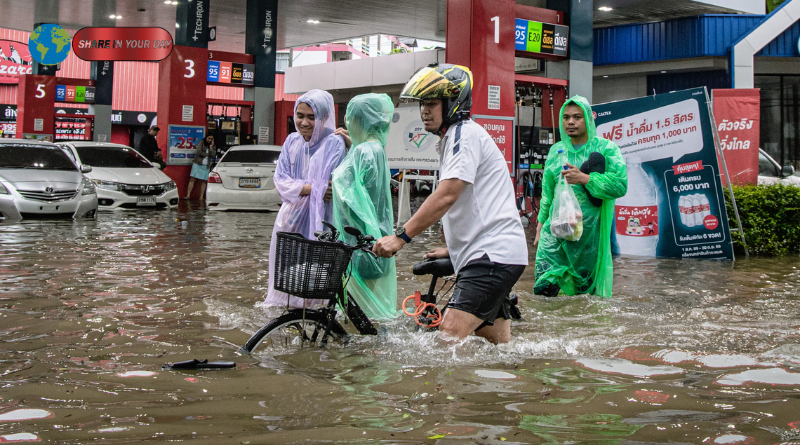
The Guardian’s photo report captured the scale of the flooding on September 27, as authorities dealt with the aftermath of almost two days of exceptionally heavy rain. In some parts of Bangkok, rainfall reached about 300mm over 48 hours, while other reports put the total above 330mm between Thursday and Sunday.
The flooding prompted authorities to declare a disaster across all 50 districts of Bangkok. Thousands of residents were moved into temporary shelters as emergency teams worked to pump water from flooded communities and lower water levels in canals.
Here are five key scenes that illustrate the impact of the Bangkok flood disaster and the challenges facing the city.
1. Bangkok Roads Turned Into Flooded Corridors
One of the clearest signs of the Bangkok flood disaster was the condition of the city’s major roads.
Photographs showed vehicles partially or completely surrounded by floodwater. On Phetchaburi Road, one of Bangkok’s major thoroughfares, cars were left stranded as water covered sections of the road.
For residents, normally routine journeys became difficult or impossible.
People were forced to walk through water to reach safer areas, while others tried to move motorcycles, luggage and household belongings to higher ground.
The flooding was particularly serious in low-lying neighborhoods and areas close to canals. Bangkok’s geography makes the city vulnerable to flooding because large sections sit only slightly above sea level and depend heavily on drainage infrastructure.
Authorities therefore urged residents to avoid unnecessary travel while emergency workers focused on drainage and flood control.
2. Homes and Shops Were Inundated
The Bangkok flood disaster did not stop at streets and transportation routes.
Water entered homes, restaurants, shops and other businesses, particularly in communities located near canals. Guardian photographs showed residents dealing with floodwater inside their properties as they attempted to protect belongings and clear affected areas.
Some residents moved possessions to upper floors before the water rose further. Others had little time to prepare.
One Bangkok resident told the Guardian that his home remained underwater for roughly 30 hours. He also said the water level appeared higher than during the devastating 2011 floods.
Those personal experiences demonstrate why the flooding has become more than a transportation problem.
For families living in affected areas, floodwater can mean damaged furniture, appliances, food supplies and personal possessions. Businesses face additional risks from damaged equipment, spoiled inventory and forced closures.
The disruption can continue even after the water begins to recede.
3. Bangkok’s Canals Reached Critical Levels
Bangkok’s canal network has become one of the central features of the flood emergency.
The city’s canals are an important part of its drainage system. However, when rainfall arrives faster than water can be moved through the network, canals can become saturated.
Bangkok Governor Chadchart Sittipunt said the canals were full as authorities attempted to drain water from flooded communities. Officials also warned residents living near canals to move possessions to higher ground.
This created a difficult situation for emergency crews.
Pumping stations were operating at high capacity, while officials worked with neighboring areas to manage water flows and reduce pressure on Bangkok’s drainage system.
The problem also explains why flooding did not disappear immediately after the rain began to ease.
Authorities said that, if additional heavy rain did not arrive, it could still take several days for floodwater to drain from affected locations.
4. Thousands of Residents Were Moved to Shelters
The human impact of the Bangkok flood disaster has been substantial.
According to the Bangkok Metropolitan Administration, nearly 4,900 people had been evacuated to shelters, while approximately 52,000 households were affected by the flooding. More than 330mm of rainfall was recorded in some parts of the city between Thursday and Sunday.
Earlier emergency reporting put the number of people in temporary shelters at several thousand, reflecting the rapidly changing situation as residents were evacuated from affected communities.
Authorities established hundreds of temporary shelters, including facilities in schools and other public buildings.
Emergency preparations also included support for vulnerable residents. Earlier reports said bedridden people were transferred to hospitals as officials attempted to reduce risks in severely flooded communities.
For many families, evacuation meant leaving home with only essential belongings.
The images from Bangkok show residents carrying bags, walking through water and trying to navigate flooded neighborhoods. They also highlight the uneven nature of the disaster: while some parts of the capital remained relatively accessible, other communities experienced severe inundation.
5. The Flood Emergency Extended Beyond the Water
The Bangkok flood disaster also disrupted daily life across the capital.
As roads became difficult to use, residents faced problems reaching workplaces, schools and businesses. Some supermarkets experienced increased demand as people sought basic supplies.
The government urged residents not to panic-buy food and warned against unjustified price increases, according to reports carried by the Guardian.
Authorities also took steps to reduce travel during the emergency.
Thailand’s cabinet approved special holidays for civil servants in Bangkok and three surrounding provinces on September 28 and 29. The government said the measure was intended to reduce travel and ease traffic disruption while flood-response efforts continued.
The decision illustrates the broader effect of the flooding.
This was not simply a collection of isolated flooded streets. The rainfall created a citywide disruption involving transportation, housing, schools, businesses and emergency services.
Why Was Bangkok Hit So Hard?
Bangkok regularly experiences heavy rainfall during Thailand’s rainy season, with September traditionally among the wettest periods.
However, the amount and concentration of rain during this event created exceptional pressure on the city’s drainage network.
Almost 300mm of rain fell during a 48-hour period in some areas, while meteorological reports cited totals exceeding 330mm in parts of Bangkok over several days.
The city’s physical geography also matters.
Bangkok is a low-lying metropolis built around waterways and former marshland. Large areas are only slightly above sea level, while canals, pumps and drainage infrastructure play major roles in moving excess water away from communities.
When rainfall is prolonged, those systems can become overwhelmed.
The problem becomes particularly serious when canals are already full and additional runoff continues arriving from surrounding areas.
Bangkok Flood Disaster Response Continues
As rainfall eased, authorities shifted their focus toward drainage and recovery.
The Bangkok Metropolitan Administration said it was working to accelerate the removal of floodwater from affected neighborhoods. Some areas began seeing water levels decline as the rain weakened, although low-lying communities continued to face flooding.
Officials warned that the situation could take time to normalize.
The key factor was additional rainfall. If heavy rain returned, already saturated drainage systems and canals could face renewed pressure.
That uncertainty made conditions particularly difficult for residents trying to decide when it was safe to return home.
Meanwhile, municipal workers continued clearing roads and operating pumping infrastructure.
The Human Picture Behind the Bangkok Flood Disaster
The photographs from Bangkok provide something that rainfall statistics alone cannot show.
They reveal residents walking through water to check their homes. They show abandoned cars surrounded by floodwater. They capture shop owners dealing with water inside their businesses and families attempting to protect possessions.
Such images also show how quickly an urban emergency can change everyday routines.
A road normally filled with cars can become impassable within hours. A neighborhood shop can become inaccessible. A family home can require evacuation after water rises above the ground floor.
For Bangkok residents, these are not abstract measurements.
They are disruptions to work, education, transportation, income and daily life.
The Guardian’s visual report documents that transformation through scenes from across the capital.
What Happens Next?
The immediate priority is drainage.
Authorities need to reduce water levels in canals and flooded communities while keeping roads and drainage systems operational. At the same time, residents in the worst-hit areas need access to shelters, food, drinking water and other essential services.
Weather conditions will remain an important factor.
Forecasts indicated additional rain could affect Bangkok and surrounding provinces before conditions improve. Officials have therefore continued to urge residents in vulnerable areas, particularly communities near canals, to remain cautious.
The city also faces the longer-term challenge of preparing for future extreme rainfall.
Bangkok has invested heavily in drainage infrastructure and flood-management systems, but an event that delivers hundreds of millimetres of rain in a short period can put enormous pressure on those defenses.
Bangkok Flood Disaster and the 2011 Comparison
The current flooding has inevitably revived memories of Thailand’s catastrophic 2011 floods.
The 2011 disaster affected large areas of the country, killed more than 500 people and damaged millions of homes.
Several Bangkok residents interviewed during the current emergency compared the water levels with their memories of 2011.
However, the two events are not identical.
The 2011 floods developed into a much broader national disaster lasting for months, while the current emergency has been driven by intense rainfall concentrated over Bangkok and surrounding areas.
The comparison nevertheless explains the concern among residents who experienced the earlier catastrophe.
A City Waiting for the Water to Fall
The most striking images from the Bangkok flood disaster show a capital temporarily transformed by water.
Major roads became channels. Cars were stranded. Homes and businesses were inundated. Residents moved through waist-deep water while emergency workers and volunteers tried to keep communities functioning.
Yet the story is also one of response.
Thousands of people were moved to shelters. Pumping operations continued. Authorities declared a disaster across Bangkok’s 50 districts, allowing local organizations to coordinate emergency measures.
As the rain eased, attention turned toward recovery.
For affected residents, that means cleaning homes, checking belongings, reopening businesses and assessing damage.
For city authorities, it means draining remaining water while preparing for the possibility of more rainfall.
The Guardian’s photographs offer a powerful visual record of the emergency, but the flooding also represents a broader challenge for one of Southeast Asia’s largest cities: how to protect a densely populated, low-lying metropolis when extreme rainfall overwhelms its drainage network.
For now, Bangkok is waiting for the water to recede.
The scale of the recovery will become clearer in the days ahead.