Leipzig Drone Attack Raises New Security Alarm Across Europe
The Leipzig drone attack has triggered a fresh security alarm across Europe after Germany accused Russia of being behind an attempted attack involving an explosives-carrying drone at Leipzig/Halle Airport.
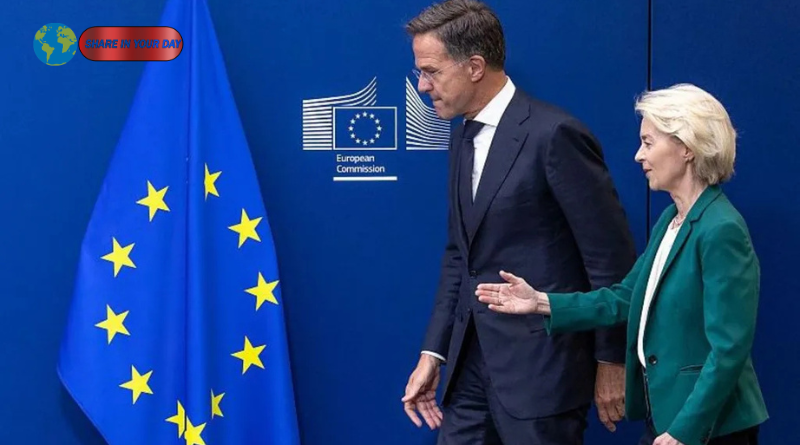
European Commission President Ursula von der Leyen and NATO Secretary General Mark Rutte have condemned the incident and warned that Europe must be prepared for what they describe as a new and increasingly dangerous pattern of Russian activity.
Von der Leyen said the Leipzig incident represented a new escalation on European Union territory. She argued that Europe must respond more quickly to threats against its infrastructure and increase pressure on Moscow. NATO, meanwhile, declared full solidarity with Germany.
The accusations come as European governments remain focused on Russia’s war in Ukraine and a growing number of alleged hybrid operations across the continent.
Russia has rejected the German accusations and described them as unfounded.
What Happened in the Leipzig Drone Attack?
The incident dates back to 4 August, when an explosives-laden drone was discovered at Leipzig/Halle Airport in Germany.
According to reporting surrounding the investigation, the drone was found close to Ukrainian cargo aircraft. German authorities later said the device had been equipped with military-grade components and that its configuration, explosives and detonator were consistent with technology associated with previous Russian hybrid operations.
The explosive device did not detonate. A robot was reportedly used to make it safe.
Investigators also believe another drone may have collided with a cargo aircraft in the area. A third drone was reportedly discovered at the airport about 10 days later.
The airport is strategically important because it is regularly used by Ukrainian Antonov transport aircraft and has connections to NATO-related logistics.
The incident therefore raised concerns that the target may not have been ordinary civilian infrastructure.
Germany did not publicly attribute responsibility immediately. Instead, investigators spent weeks examining evidence before the government announced on 1 September that intelligence findings and police investigations had established Russian responsibility.
Russia has denied involvement.
Germany Takes Action Against Russia
Following the accusation, Germany announced a series of measures against Moscow.
Berlin said it would close the Russian consulate in Bonn and terminate arrangements involving the Russian House in Berlin, a cultural institution that German authorities have long viewed with suspicion.
Germany also indicated that it would seek stronger European restrictions against Russian nationals and push for additional sanctions.
The Kremlin rejected the allegations.
Russia’s Foreign Ministry said Germany had not provided convincing evidence and warned that Moscow would respond to Berlin’s measures.
Russian President Vladimir Putin also criticized the German government’s decision, describing it as damaging to German interests.
The confrontation creates another difficult diplomatic challenge between two countries whose relations have deteriorated dramatically since Russia’s full-scale invasion of Ukraine.
The immediate concern for European governments, however, is not simply the diplomatic dispute.
It is whether the Leipzig drone attack represents part of a much wider campaign.
NATO Warns of Growing Russian Recklessness
NATO Secretary General Mark Rutte joined von der Leyen in Brussels as European officials discussed the security implications of the incident.
Rutte said the alliance stood in full solidarity with Germany.
He also pointed to a broader increase in threats involving drones, missiles and other hostile activity affecting European territory, particularly along NATO’s eastern flank.
European officials have increasingly used the term “hybrid warfare” to describe operations that fall below the threshold of conventional military conflict.
Such operations can include sabotage, cyberattacks, disinformation, arson, espionage, infrastructure disruption and covert attacks.
The concern is that these actions can create pressure on European countries without immediately triggering the kind of military response associated with an open attack.
Rutte said NATO had seen an increase in malign activities targeting European territory directly, including fires at facilities involved in producing defence equipment for Ukraine.
The Leipzig incident therefore carries significance far beyond a single airport.
It could become another example of how the security environment around Europe is changing.
Europe Faces a Wider Hybrid Warfare Threat
Von der Leyen described the Leipzig incident as part of a broader pattern involving drones, interference with critical infrastructure and incursions into European airspace.
That warning comes amid growing concerns about the vulnerability of infrastructure such as airports, electricity networks, communications systems and defence facilities.
Several incidents reported in Germany around the same period have added to those concerns.
German police investigated suspected sabotage involving electricity infrastructure in different parts of the country. In one case, authorities examined damage to power lines near a major power facility and recovered suspected launching devices and explosive material.
Officials stressed that the perpetrators had not yet been established.
In western Germany, investigators were considering multiple possibilities, including foreign-state sabotage and domestic extremism.
That distinction is important.
Not every suspicious incident in Europe has been attributed to Russia, and authorities must establish responsibility through evidence rather than assumption.
Nevertheless, European governments increasingly believe hostile states may attempt to exploit vulnerabilities in critical infrastructure.
Poland Also Investigates Suspected Sabotage
Germany is not the only European country dealing with suspected attacks on facilities connected to Ukraine.
In neighboring Poland, Prime Minister Donald Tusk said a fire at a factory producing combat drones appeared to have been deliberate. Another industrial fire was also being investigated.
These incidents are unfolding against a backdrop of increasing concern about Russian influence operations and sabotage across Europe.
European officials argue that Moscow may seek to weaken Western support for Ukraine by creating uncertainty, increasing economic costs and testing the political limits of NATO and the European Union.
The objective would not necessarily be to defeat European countries militarily.
Instead, hybrid operations could seek to make governments question whether continued support for Ukraine is worth the potential risks.
That is why the response to the Leipzig drone attack is being watched closely.
EU Considers Stronger Sanctions
European officials have signaled that additional economic pressure against Russia could follow.
EU foreign ministers have been discussing ways to strengthen existing sanctions and prevent Moscow from exploiting loopholes.
One area under consideration is Russia’s so-called “shadow fleet” — vessels used to transport oil and other goods while attempting to bypass restrictions.
France and other European governments have expressed support for stronger action against these networks.
EU foreign policy chief Kaja Kallas has also backed tighter enforcement of existing sanctions and discussed additional restrictions affecting Russian nationals.
Some European governments support tougher visa restrictions for Russian travelers, including measures targeting people with military backgrounds.
The challenge is finding measures that impose meaningful costs without creating an uncontrolled escalation between Russia and the West.
Frozen Russian Assets Remain a Major Issue
Another major question is whether Europe can use frozen Russian assets to support Ukraine.
Several EU countries are pushing for more than €193 billion in frozen Russian assets to be used to help Ukraine.
However, Belgium remains opposed to the plan because much of the money is held there and Belgian authorities fear potential legal and financial consequences.
The debate illustrates the difficult choices facing European governments.
On one side, policymakers want to increase the pressure on Russia and provide Ukraine with additional resources.
On the other, governments must consider the legal, financial and geopolitical consequences of taking such unprecedented measures.
The Leipzig drone attack could add momentum to the argument that Europe needs to move faster.
Ukraine Could Receive More Air Defence Support
European leaders are also linking the security debate to Ukraine’s urgent need for air defence.
Von der Leyen said Ukraine had requested additional funding to help purchase PAC-3 air-defence missiles.
Europe is also working with Ukraine on a joint anti-ballistic missile defence initiative known as Freyja.
The emphasis on air defence reflects the changing nature of the war.
Russia continues to use missiles and drones against targets in Ukraine, while Ukraine has expanded its own long-range drone capabilities.
That development has also generated new concerns about aviation safety.
Ukraine’s President Volodymyr Zelenskyy has warned that Russian airspace is becoming increasingly dangerous for commercial aviation as drone warfare expands.
The aviation risks therefore extend beyond Ukraine’s borders.
What the Leipzig Incident Means for Europe
The most important consequence of the Leipzig drone attack may be political rather than military.
European governments are now confronting a difficult question: how should NATO and the EU respond when hostile activity occurs on European soil but remains below the threshold of conventional warfare?
A traditional military response could carry enormous risks.
Doing nothing, however, could encourage additional operations.
This creates a narrow space for policymakers.
The European response is increasingly focused on intelligence cooperation, stronger infrastructure protection, sanctions, air defence and faster reaction capabilities.
Von der Leyen has argued that European infrastructure must be treated as a potential frontline target and protected accordingly.
That approach represents a major shift in how European governments view national security.
Airports and power stations are no longer considered purely civilian concerns. They can also become strategic targets during geopolitical confrontation.
Russia Denies the Accusations
Moscow has rejected Germany’s allegations regarding the Leipzig incident.
The Russian government has argued that Berlin has not presented sufficient evidence publicly and has warned that Germany’s actions could damage bilateral relations further.
Russian officials have also suggested that Moscow could respond to Germany’s measures.
However, the diplomatic relationship between Berlin and Moscow has already deteriorated significantly since the invasion of Ukraine.
The latest dispute could therefore make future diplomatic engagement even more difficult.
At the same time, European leaders insist that their response is defensive.
Von der Leyen said Europe would not be intimidated and that attempts to pressure European governments into reducing support for Ukraine would have the opposite effect.
A New Phase in the Russia-Europe Confrontation?
The Leipzig drone attack has become a symbol of a wider European security problem.
For years, governments have warned about cyberattacks, disinformation and covert Russian operations.
The growing use of drones and suspected sabotage brings that threat into the physical world.
An unsuccessful attack may still have a significant impact if it demonstrates that an adversary can penetrate security systems or disrupt strategically important facilities.
The key question now is whether European governments can strengthen their defenses quickly enough.
NATO has considerable military capabilities, while the EU possesses enormous economic and regulatory power.
But both organizations must coordinate their responses across dozens of countries with different political priorities.
The coming months could therefore determine whether the Leipzig incident becomes an isolated case or part of a much larger confrontation.
Europe Signals It Will Not Back Down
European officials have delivered a clear political message following the Leipzig drone attack: support for Ukraine will continue.
Von der Leyen said Europe and NATO would not simply maintain pressure on Russia but increase it.
The European Union is considering further sanctions, stronger infrastructure protection and additional support for Ukrainian air defence.
NATO, meanwhile, has emphasized solidarity with Germany and warned about the broader security environment.
The situation remains volatile.
Germany’s accusation against Russia is strongly disputed by Moscow, and investigations into other suspected acts of sabotage remain ongoing.
Still, the Leipzig incident has forced European governments to confront a reality that would have seemed extraordinary only a few years ago.
The security battle surrounding the war in Ukraine is no longer confined to the battlefield.
It increasingly involves airports, power networks, factories, borders and critical infrastructure across Europe.
For NATO and the EU, the challenge will be to deter further attacks without allowing a series of covert incidents to spiral into a direct confrontation with Russia.
The response to Leipzig may therefore become an important test of Europe’s ability to defend itself in an era of hybrid warfare.