Nepal Flood Aid Comes Under Growing Scrutiny
Nepal flood aid has become the focus of an increasingly heated international debate after a catastrophic disaster along the Nepal-China border left more than 1,200 people dead and thousands more missing.
The United States initially announced $500,000 in emergency assistance for the disaster. The amount was later increased to $3.6 million. However, humanitarian experts and former U.S. aid officials have argued that the response remains far below what would traditionally have been expected from Washington during a major disaster in Nepal. TThe Guardian+1
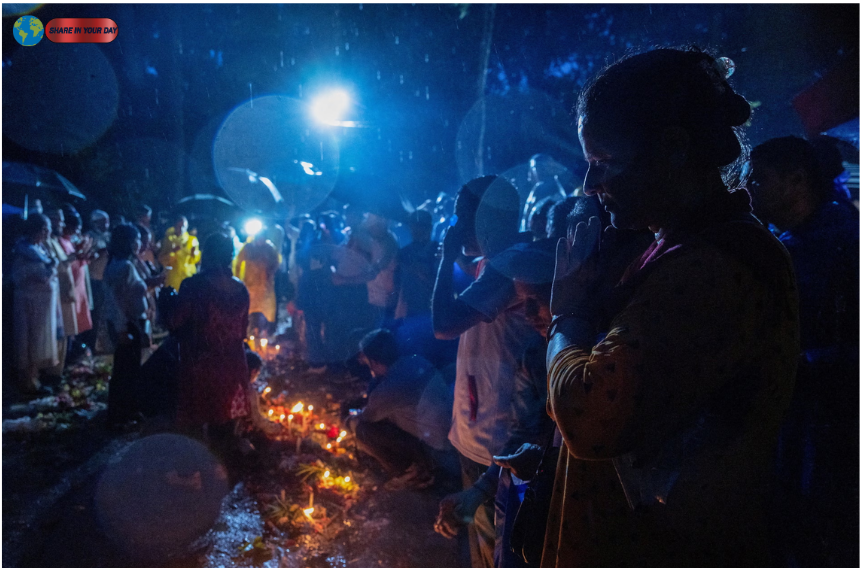
The criticism comes as rescue teams continue searching for survivors in some of the country’s hardest-hit mountain regions. Communities have been cut off by destroyed roads, bridges and other infrastructure, while hundreds of workers are believed to remain trapped in hydropower tunnels.
The disaster has also placed a spotlight on the changing role of the United States in international humanitarian assistance.
Suggested editorial image: Nepalese security personnel deliver emergency supplies in a flood-affected mountain area. Image licensing should be confirmed before publication.
Nepal Flood Aid Rises From $500,000 to $3.6 Million
The first U.S. announcement of $500,000 in emergency assistance quickly attracted criticism from humanitarian specialists.
The initial contribution was intended to help begin emergency operations while officials assessed the scale of the disaster. According to the U.S. State Department, the response was designed to remain flexible and expand as more information became available.
The United States subsequently increased its commitment to $3.6 million.
Officials said the funding would support food assistance for about 10,000 affected households for as long as three months. It would also help provide emergency supplies, including blankets, mosquito nets and shelter materials. TThe Guardian
The increase was welcomed as an expansion of immediate support. Yet critics say the initial figure revealed a significant change in the way Washington approaches major overseas disasters.
Former U.S. disaster-response officials argued that the United States once had stronger systems for quickly evaluating humanitarian emergencies and directing substantial resources toward them.
Mark Ward, a former USAID disaster-response official, described the original announcement as embarrassing for the United States. George Ingram, a former congressional foreign affairs staff member and Brookings Institution fellow, also questioned the decision to announce such a small initial contribution. TThe Guardian
Why Nepal Flood Aid Is So Important
Nepal is particularly vulnerable to natural disasters because of its geography.
The country sits in the Himalayas, where steep terrain, unstable slopes, powerful rivers and seasonal monsoon rains can combine to produce deadly floods and landslides. Remote settlements can also become isolated when roads and bridges are destroyed.
The current disaster has demonstrated those risks on an extraordinary scale.
A glacier collapse near the Nepal-China border sent a massive torrent of water, mud and debris through river valleys. The flooding devastated communities along waterways including the Trishuli and Bhotekoshi rivers.
The destruction has made rescue operations exceptionally difficult.
In some areas, responders must rely on helicopters because conventional ground routes have disappeared. Hydropower infrastructure has also become a major focus because workers may be trapped inside tunnels following the flooding. Reuters reported that rescue operations were continuing around several hydropower projects, with oxygen being pumped into areas believed to contain survivors. RReuters
For families waiting for missing relatives, every hour is critical.
Rescue Teams Face Dangerous Conditions
Nepalese authorities have mobilized security personnel and other responders to search for victims and survivors.
However, the geography of the affected region is slowing the operation. Landslides, unstable slopes and destroyed transportation routes have created additional dangers for rescue workers.
The scale of the missing-persons crisis is also complicating identification efforts.
Authorities have begun using DNA samples to identify recovered bodies and connect them with relatives. Hospitals and morgues have faced pressure as the number of unidentified victims has increased.
The situation is particularly difficult for families whose relatives disappeared in remote areas.
The Guardian has reported that authorities are urging relatives, including those living abroad, to provide DNA samples to support identification efforts. TThe Guardian
Meanwhile, international rescue teams are contributing specialist assistance.
India and China have played major roles in the regional response, while other countries have provided humanitarian funding and technical support. Australia has also expanded its assistance following concerns about citizens missing after the disaster. TThe Guardian+1
Nepal Flood Aid Highlights Changing U.S. Disaster Response
One of the biggest questions surrounding the U.S. response is whether the restructuring of American foreign assistance has affected Washington’s ability to respond rapidly to disasters.
The Trump administration dismantled USAID as an independent agency in 2025, transferring its functions into the State Department. Critics of the current system say the change weakened institutional capacity and removed longstanding relationships between U.S. disaster specialists and vulnerable countries.
Nepal was one of the countries frequently cited as having benefited from long-term disaster-preparedness cooperation.
Former USAID officials told the Guardian that American specialists had previously worked closely with Nepalese authorities on disaster planning because of the country’s exposure to earthquakes, floods and landslides.
That history matters during an emergency.
Disaster response is not simply about writing a check after a catastrophe. Effective humanitarian assistance often depends on having people who already understand local institutions, geography, supply chains and emergency procedures.
The U.S. State Department disputes the idea that the restructuring slowed its response.
A department spokesperson said the current model was designed to be “fast, flexible” and based on conditions on the ground rather than predetermined funding targets. Officials said the United States would continue assessing the situation and adjust its response if necessary. TThe Guardian
India and China Take Leading Roles
The debate over Nepal flood aid extends beyond the amount of U.S. assistance.
It also raises questions about which countries will lead humanitarian operations in South Asia.
India and China, Nepal’s two largest neighbors, have both been heavily involved in the response. Their geographic proximity gives them significant advantages when sending equipment, specialists and supplies into affected areas.
India has dispatched emergency supplies and technical teams. China has also provided assistance, including specialist personnel and resources for search and identification operations. RReuters+1
For Washington, that shift carries strategic implications.
Humanitarian assistance has historically been an important part of U.S. international engagement. Disaster relief can strengthen diplomatic relationships while demonstrating American capacity to respond during moments of crisis.
Critics therefore argue that reducing U.S. involvement could have consequences extending beyond the immediate emergency.
Former disaster officials cited in the Guardian warned that allowing other major powers to dominate relief operations could reduce American influence in a strategically important region. TThe Guardian
International Support Continues to Grow
The United States is not the only country providing assistance.
The European Union has allocated €2 million in emergency humanitarian funding for Nepal. The money is intended to help meet immediate needs involving food, healthcare, clean water and sanitation. The EU has also activated its Copernicus satellite service to support mapping of affected areas. EEuropean External Action Service
Other countries and international organizations have also mobilized.
The United Kingdom previously committed millions of pounds in assistance, while South Korea pledged emergency funding. International humanitarian organizations have deployed medical supplies and emergency teams.
Direct Relief, for example, has dispatched medical supplies to Nepal for treatment of waterborne illnesses, dehydration and chronic conditions. DDirect Relief
The growing international response reflects the scale of the emergency.
Yet aid organizations face a fundamental challenge: delivering assistance to people who are difficult to reach.
Relief Efforts Must Continue Beyond the Rescue Phase
The immediate priority remains finding survivors.
However, the humanitarian crisis will not end when search-and-rescue operations are completed.
Thousands of people have lost homes, livelihoods and access to essential services. Damaged roads and bridges will need to be rebuilt. Water and sanitation systems must be restored. Schools and health facilities require repairs.
There are also serious concerns about disease, food insecurity and the protection of vulnerable people.
The destruction of communities can leave children particularly exposed to exploitation and trafficking. Aid agencies have warned that displaced families need more than emergency food and shelter. They also require healthcare, clean water, psychological support and safe places to live. TThe Guardian
The financial cost will be enormous.
Nepal is a developing country with limited resources for rebuilding large sections of damaged infrastructure. The recovery could therefore depend heavily on international assistance.
That makes sustained Nepal flood aid essential even after global media attention begins to fade.
A Disaster With Wider Climate Implications
The catastrophe has also renewed discussion about climate change and the increasing risks faced by Himalayan communities.
Glacial lakes, glaciers and mountain ecosystems are highly sensitive to changes in temperature. Scientists and international organizations have increasingly warned that warming conditions can contribute to hazards involving glaciers and glacial lakes.
The precise causes of any individual disaster require careful scientific investigation. However, the broader trend is clear: Himalayan communities face growing exposure to complex climate and geological risks.
The September disaster demonstrates how quickly a mountain hazard can become a regional humanitarian emergency.
A single event can destroy roads, cut communications, damage energy infrastructure and leave thousands of people stranded.
That is why disaster preparedness is just as important as emergency funding.
What Happens Next for Nepal?
For Nepal, the next stage will involve three interconnected challenges: rescue, relief and reconstruction.
First, authorities must continue searching for missing people and identifying victims.
Second, humanitarian organizations need to reach survivors with food, clean water, medicine, shelter and other essential supplies.
Third, the government must begin planning a long-term rebuilding effort.
International donors will play an important role in each stage.
The Nepalese government has also been raising domestic funds. Radio Nepal reported that nearly 7.9 billion Nepalese rupees had been deposited into the Prime Minister’s Disaster Rescue and Relief Fund by September 2, with money being distributed to affected municipalities. RRadio Nepal Online
That domestic effort could help fill some immediate gaps, but the scale of destruction means international assistance is likely to remain critical.
For the United States, meanwhile, the controversy surrounding its contribution may continue long after the immediate emergency has passed.
Nepal Flood Aid Debate Could Shape Future U.S. Policy
The argument over Nepal flood aid is ultimately about more than one funding announcement.
It is a test of how the United States intends to conduct humanitarian diplomacy after the restructuring of its foreign-assistance system.
Supporters of the new approach argue that aid should be targeted according to immediate needs rather than automatically following historical funding patterns.
Critics counter that disaster response requires expertise, relationships and preparedness that cannot easily be rebuilt once institutional capacity has been lost.
Nepal provides a particularly important case study because the country has a long history of natural disasters and has worked closely with international partners on disaster preparedness.
As rescuers continue their work, the central concern remains the people affected by the floods.
Families are still waiting for news. Communities are still cut off. Survivors need shelter, food and medical care.
The international response will therefore be judged not only by how much money is pledged, but by how quickly and effectively that assistance reaches the people who need it.
The latest disaster has shown just how high the stakes can be.