Mogami Frigate Export: Japan Expands Warship Sales
Japan is entering a new era of defense policy, using the Mogami frigate export strategy as a blueprint to expand its global warship sales. Once known for its pacifist stance and strict arms export controls, Tokyo is now positioning itself as a serious player in the international defense market.
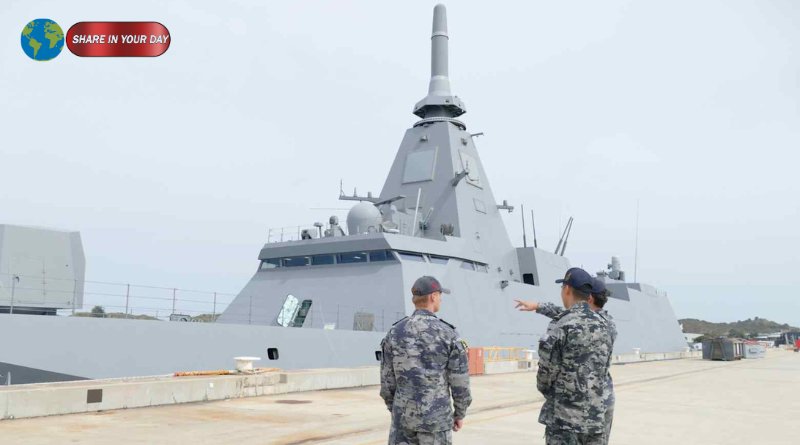
The move is not only economic—it reflects shifting geopolitical realities in the Asia-Pacific region. With rising security tensions and growing demand for advanced naval capabilities, Japan sees an opportunity to scale up its defense industry through strategic exports.
A Turning Point in Japan’s Defense Policy
For decades after World War II, Japan maintained tight restrictions on military exports. However, recent policy reforms have gradually opened the door for overseas sales of defense equipment.
In 2026, Tokyo implemented its most significant overhaul of export rules in decades, allowing the sale of warships, missiles, and other military systems under carefully reviewed conditions.
This shift is driven by multiple factors. First, Japan’s domestic defense market is limited, with the government as the primary buyer. Second, maintaining advanced manufacturing capabilities requires scale—something exports can provide.
The Mogami frigate export initiative represents the clearest example of how Japan plans to execute this strategy.
What Makes the Mogami-Class Frigate Attractive
The Mogami-class frigate, also known as the 30FFM, is designed as a multi-mission, stealth-capable warship. It integrates advanced technologies with efficiency-focused design.
Key features include:
- Reduced crew requirement of around 90 personnel
- Advanced stealth and automation systems
- Multi-role capabilities including anti-ship and anti-submarine warfare
- Compatibility with modern missile systems and helicopters
These ships are highly automated, allowing smaller crews compared to traditional vessels, which significantly reduces operational costs.
Additionally, upgraded versions offer extended range, vertical launch systems, and the ability to operate helicopters like the MH-60R Seahawk.
This combination of affordability, capability, and flexibility makes the Mogami-class particularly appealing to countries seeking modern naval solutions without the high cost of larger destroyers.
Australia Deal: A Historic Breakthrough
Japan’s ambitions took a major leap forward with its landmark agreement with Australia. The deal involves supplying an initial batch of Mogami-class frigates as part of a broader fleet modernization program.
Australia plans to acquire up to 11 frigates, with the first three to be built in Japan and delivered starting in 2029.
The agreement is valued at billions of dollars and marks Japan’s largest defense export contract in its postwar history.
This deal is significant for several reasons:
- It demonstrates trust in Japanese defense technology
- It establishes Japan as a viable alternative to traditional suppliers like the U.S. and Europe
- It strengthens strategic ties between Japan and Australia
Moreover, the partnership includes plans for local production in Australia, signaling a long-term industrial collaboration rather than a simple export transaction.
Indonesia and Southeast Asia Opportunities
Japan is also targeting Southeast Asia as a key market for its warship exports. Indonesia, in particular, has emerged as a major potential partner.
Reports indicate that Japan plans to export four Mogami-class frigates to Indonesia, with an additional four to be built domestically under a large-scale contract worth hundreds of billions of yen.
This model—combining direct export with local production—mirrors the approach used in the Australia deal. It allows Japan to:
- Build deeper defense relationships
- Support local industries in partner countries
- Increase competitiveness against rivals
Southeast Asia’s growing maritime security concerns make it a natural target for Japan’s export expansion.
Strategic Drivers Behind the Expansion
The Mogami frigate export push is not just about business. It is deeply tied to Japan’s broader strategic goals.
1. Countering Regional Threats
Rising military activity in the Indo-Pacific, particularly from China, has heightened demand for advanced naval capabilities. Japan’s exports help strengthen allied maritime forces.
2. Strengthening Alliances
Defense exports create long-term partnerships. Countries that buy Japanese equipment often engage in joint training, maintenance, and technology sharing.
3. Supporting Domestic Industry
Japan’s defense sector has long struggled with high costs and limited scale. Expanding exports provides new revenue streams and sustains technological innovation.
Challenges and Risks
Despite the opportunities, Japan faces several challenges in expanding its warship exports.
Limited Export Experience
Unlike the United States or European defense firms, Japan has relatively little experience in large-scale military exports. This can complicate negotiations and project execution.
Cost Competitiveness
Japanese systems are often seen as high-quality but expensive. Competing with lower-cost alternatives from countries like South Korea may prove difficult.
Political Sensitivities
Japan’s shift toward arms exports remains controversial domestically and internationally. Critics argue it could undermine the country’s pacifist principles.
Complex Production Arrangements
Deals involving local manufacturing, such as in Australia or Indonesia, add logistical complexity and risk delays or cost overruns.
A New Global Defense Player
Japan’s push into the global arms market is already reshaping perceptions of its role in international security.
The success of the Mogami-class frigate has attracted interest from other countries, including potential buyers like New Zealand.
As more nations seek alternatives to traditional defense suppliers, Japan’s reputation for reliability, technological sophistication, and political stability could become a competitive advantage.
Future Outlook: Scaling the Mogami Model
The Mogami frigate is more than just a product—it is a template for Japan’s future defense exports.
Key elements of this model include:
- Modular, adaptable designs
- Competitive lifecycle costs
- Partnerships involving co-production
- Integration with allied defense systems
If successful, Japan could apply this approach to other platforms, including submarines, aircraft, and missile systems.
Conclusion
The Mogami frigate export strategy marks a historic shift in Japan’s defense posture. By leveraging advanced naval technology and forming strategic partnerships, Tokyo is positioning itself as a major player in the global arms market.
The deals with Australia and Indonesia highlight both the opportunities and challenges ahead. While competition remains fierce and risks persist, Japan’s entry into warship exports reflects a broader transformation—one driven by economic necessity, technological ambition, and evolving security dynamics.
As the Indo-Pacific continues to emerge as a focal point of global geopolitics, Japan’s growing role as a defense exporter is likely to shape the region’s balance of power for years to come.