
Sabastian Sawe 2-Hour Marathon: A Historic Breakthrough in London
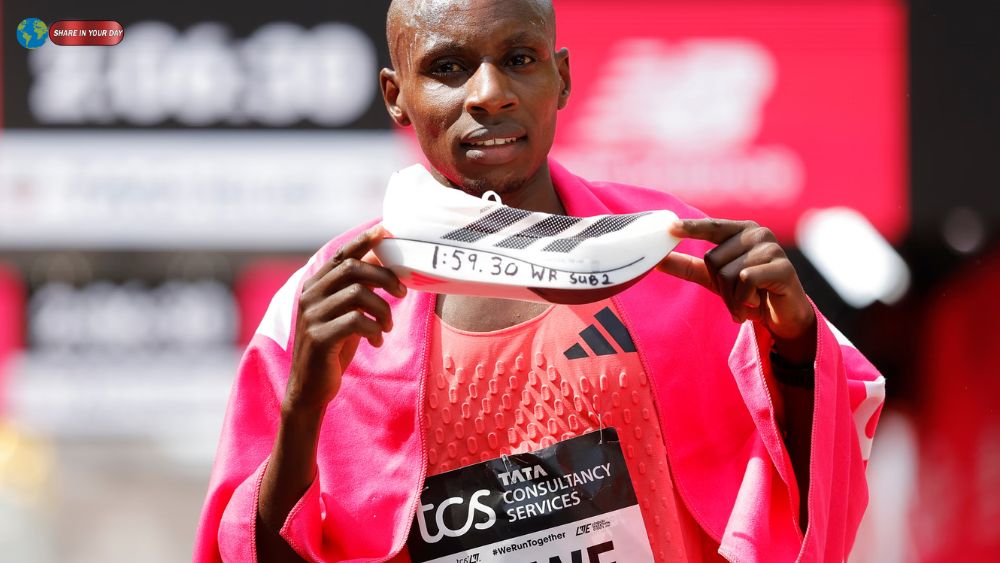
The phrase Sabastian Sawe 2-hour marathon will now be remembered as one of the greatest milestones in sports history. On April 26, 2026, Kenya’s Sabastian Sawe stunned the world by completing the London Marathon 2026 in 1:59:30, officially breaking the long-standing two-hour barrier for the first time in a sanctioned race.
For decades, the idea of running a marathon in under two hours was considered nearly impossible. Yet Sawe not only achieved it—he did so in dominant fashion, redefining the limits of human endurance.
A Barrier Once Thought Impossible
The concept of a sub-2-hour marathon has fascinated athletes, scientists, and fans for generations. The marathon distance of 42.195 kilometers demands an extraordinary balance of speed, stamina, and strategy.
For years, experts predicted that breaking this barrier might not happen until the 2030s.
Although Eliud Kipchoge famously ran 1:59:40 in 2019 during a controlled event, that performance was not recognized as an official record due to non-standard race conditions.
That distinction is what makes Sawe’s achievement so significant. His time was recorded in a fully competitive race, under official rules, against elite opponents.
How Sabastian Sawe Dominated the Race
Sawe’s performance at the London Marathon was nothing short of extraordinary. From the early kilometers, he maintained a relentless pace that pushed the limits of what seemed physically possible.
He completed the race with an average pace of roughly 2 minutes and 49 seconds per kilometer, a speed that most runners cannot sustain even for short distances.
Even more impressive was his negative split—running the second half of the marathon faster than the first. This strategy is widely regarded as one of the most difficult feats in endurance racing.
By the time he crossed the finish line, Sawe had beaten the previous world record by more than a minute, an enormous margin at the elite level.
A Record-Shattering Day in London
The 2026 race will go down as one of the greatest days in marathon history. Sawe was not the only athlete delivering a historic performance.
Ethiopia’s Yomif Kejelcha also ran under two hours, finishing in 1:59:41, making it the fastest non-winning marathon ever recorded.
Meanwhile, Tigst Assefa set a new women’s-only world record with a time of 2:15:41.
The event drew massive crowds and global attention, with hundreds of thousands of spectators lining the streets of London to witness history unfold.
The Role of Technology and Training
Sawe’s success was not just about raw talent—it was also the result of meticulous preparation and cutting-edge advancements in sports science.
Reports indicate that he followed an intense training regimen, running up to 150 miles per week.
He also benefited from next-generation “super shoes,” designed to maximize energy return and reduce fatigue.
Nutrition played a critical role as well. During the race, he used advanced carbohydrate fueling strategies to maintain energy levels deep into the final kilometers.
Together, these factors created the perfect conditions for a historic performance.
From Rural Beginnings to Global Stardom
Sawe’s journey to greatness is as inspiring as his record-breaking run. Growing up in rural Kenya, he began running with limited resources but immense determination.
His talent was recognized early by a schoolteacher, which set him on a path toward professional training and international competition.
Under the guidance of experienced coaches, he steadily rose through the ranks, winning major marathons and building a reputation as one of the sport’s most promising athletes.
The 2026 London Marathon marked only his fourth marathon appearance—making his achievement even more remarkable.
Why This Moment Matters in Sports History
The Sabastian Sawe 2-hour marathon is more than just a record—it is a turning point in athletics.
Much like the breaking of the four-minute mile in 1954, Sawe’s achievement changes what athletes believe is possible. Once a barrier is broken, it often leads to a wave of new performances that push the limits even further.
Experts now believe that even faster times could follow in the coming years, especially on courses designed for speed.
Addressing Questions and Skepticism
Whenever a performance of this magnitude occurs, questions inevitably arise—particularly in a sport that has faced doping controversies in the past.
In response, Sawe reportedly underwent extensive testing, with his team emphasizing transparency and compliance with anti-doping regulations.
While scrutiny is expected, there is currently no evidence suggesting any wrongdoing, and his achievement is widely celebrated across the global athletics community.
What Comes Next for Marathon Running?
With the two-hour barrier officially broken, the future of marathon running looks more exciting than ever.
Coaches, scientists, and athletes will now study Sawe’s performance in detail, searching for insights that could lead to further breakthroughs.
There is already speculation that the next milestone could be a 1:58 marathon, especially on faster courses such as Berlin or Chicago.
For now, however, Sawe stands alone as the first athlete to achieve what was once considered impossible.
Conclusion
The Sabastian Sawe 2-hour marathon achievement represents a defining moment in sports history. By completing the 2026 London Marathon in 1:59:30, Sawe has rewritten the limits of human endurance and inspired a new generation of athletes.
His performance is a reminder that even the most daunting barriers can be broken—with the right combination of talent, preparation, and belief.
As the world reflects on this extraordinary feat, one thing is certain: marathon running will never be the same again.