Pope Leo Europe Democracy: A Powerful New Message
Pope Leo Europe democracy became a central theme of the pontiff’s latest address as he called on the continent to defend freedom, democracy, equality and the rule of law during a four-day visit to France.
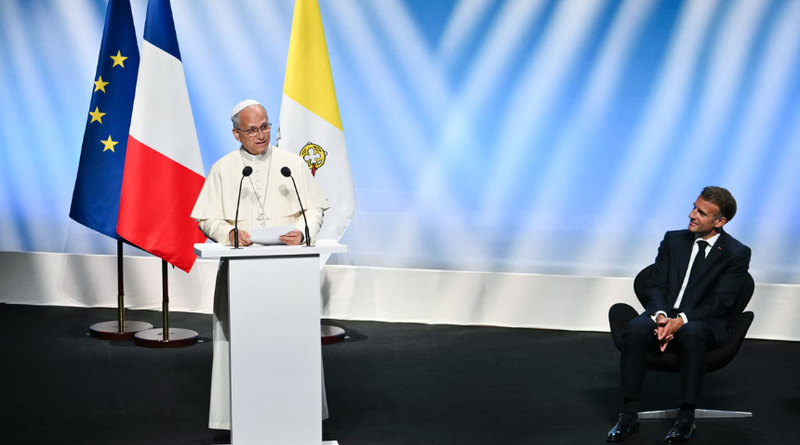
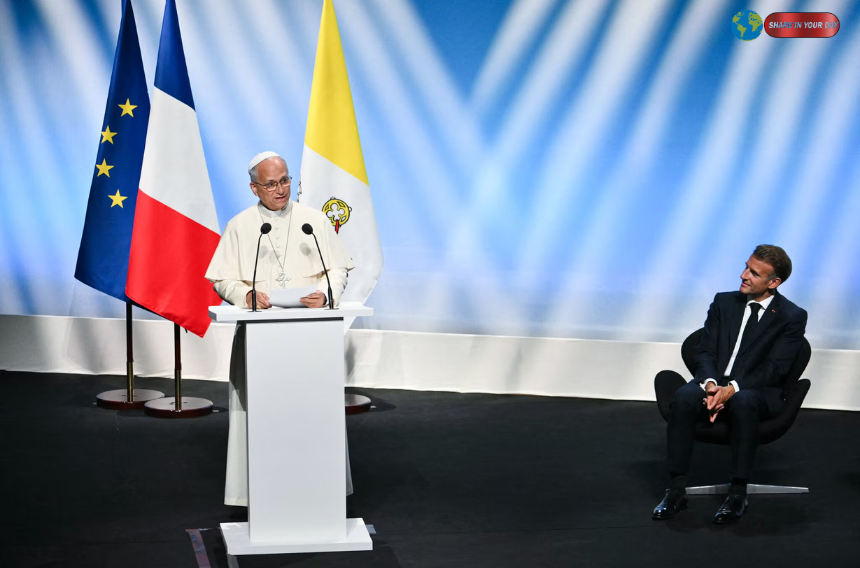
Speaking in Metz on Monday, September 28, Pope Leo XIV delivered one of his clearest statements yet on Europe’s political and social direction. He praised European integration, highlighted the continent’s Christian heritage and urged European leaders to give practical meaning to democratic principles.
The speech came at a politically sensitive moment. Europe is dealing with war in Ukraine, debates over migration, disagreements about defense and the future of international institutions. At the same time, President Donald Trump has repeatedly challenged aspects of Europe’s approach to security, NATO and international cooperation.
Pope Leo did not directly name Trump in his Metz address. However, his emphasis on democracy, multilateralism, international law and European cooperation has drawn attention because some of his themes differ from positions associated with the Trump administration. Reuters described the speech as Leo’s clearest political vision for Europe to date.
Pope Leo Europe Democracy Message From Metz
Leo delivered the address at the Robert Schuman Congress Centre in Metz, a location chosen for its connection to the history of European integration.
Robert Schuman, a French statesman and one of the figures regarded as a founding father of the European Union, lived in the region. His 1950 declaration helped establish the political vision that eventually contributed to the creation of European institutions.
The Vatican transcript shows that Leo used Schuman’s legacy as a starting point for discussing Europe’s past, present and future. He argued that understanding Europe requires examining both its historical roots and its ability to engage with other cultures and traditions.
The pope specifically connected European values with freedom, democracy, equality and the rule of law.
He also stressed the importance of dialogue in a multicultural society. Rather than treating Europe’s history and modern diversity as competing ideas, Leo presented them as elements that could be brought together through political and social engagement.
That approach formed the foundation of his message.
Leo Highlights Democracy and the Rule of Law
A major element of the speech was Leo’s discussion of democratic institutions.
The pope pointed to the values contained in the European Union’s founding documents, including the protection of human dignity, freedom, democracy, equality and the rule of law.
He argued that these principles require more than symbolic support.
For Leo, the challenge is to give those concepts practical substance in contemporary European society.
The Vatican transcript also shows that Leo connected democracy with a broader understanding of human rights and responsibilities. He argued that Europe must protect the dignity of individuals while maintaining a balance between rights and duties.
His comments came as European governments continue to debate immigration, national identity, security and the role of international institutions.
The pope did not propose a specific electoral program or endorse a political party.
Instead, his speech focused on the principles that he believes should guide public life.
Pope Leo and Europe’s Christian Heritage
Religion was another important component of Leo’s argument.
The pope said Europe’s Christian history remains relevant to understanding the continent’s development. He referred to the influence of Christianity on concepts surrounding human dignity, fraternity, law and responsibility.
At the same time, Leo acknowledged Europe’s contemporary multicultural character.
His argument was not that modern Europe should return to a single religious identity. Instead, he presented European history and contemporary dialogue as connected parts of the continent’s development.
The Vatican transcript notes Leo’s reference to the European Union’s legal framework concerning dialogue with churches and religious communities. He also emphasized the importance of religious freedom and cooperation between civil authorities and religious organizations.
That balance was central to his message.
Leo presented Christian heritage as one historical influence while also emphasizing dialogue with people from different backgrounds.
A Warning About Political Domination
Leo also addressed the dangers of political domination.
In Metz, he argued that international law and multilateralism can help prevent powerful states from imposing their will on others.
He described international cooperation as a means of recognizing the equality of states and reducing the conditions that can contribute to conflict.
That message is especially significant as Europe faces continuing security challenges.
Russia’s war in Ukraine remains unresolved, while European governments are debating defense spending, military preparedness and the future of transatlantic relations.
Leo argued that Europe’s experience after World War II demonstrated that countries with different interests can work together through negotiation rather than conflict.
He pointed to European integration as an example of that process.
Pope Leo Calls for Peace in Europe
The pope’s comments about democracy were closely connected to his broader appeal for peace.
In a separate portion of his Metz visit, Leo said that negotiators attempting to end wars must have the courage to make compromises for the greater goal of peace.
Reuters reported that he made the remarks as efforts to end Russia’s war in Ukraine continued to struggle. He described the return of war to Europe as a devastating development that has resulted in civilian deaths.
Leo did not directly identify Ukraine in every part of his remarks, but the context was clear.
He argued that successful negotiations require governments to consider the broader objective of peace rather than refusing every concession.
That position places diplomacy at the center of his approach to international conflict.
Pope Leo, Trump and Different Visions for Europe
The pope’s remarks have attracted particular attention because of his relationship with the Trump administration.
Leo is the first American-born pope, and his public disagreements with Trump have already become part of his papacy.
However, the Metz speech did not directly mention the U.S. president.
Instead, Leo described a European vision centered on international law, multilateral cooperation, democratic values and European integration.
Trump has taken different positions on several of these issues, particularly regarding European defense responsibilities and the role of traditional international alliances.
The Washington Post reported that Leo has increasingly adopted the role of an international statesman, particularly through his emphasis on peace, international law and cooperation.
That does not mean every part of Leo’s European message was intended as a direct response to Trump.
The pope’s speech was broader and focused primarily on Europe’s own history and future.
Still, the timing and subject matter have made the contrast difficult to ignore.
Europe’s Response to a Changing World
Leo’s address came during a period of uncertainty for Europe.
The continent is facing questions about security, migration, economic pressures and the future of its relationship with the United States.
European governments are also confronting the continuing effects of Russia’s war against Ukraine.
Against that background, Leo presented European integration as a historical achievement that should not be taken for granted.
His argument was rooted in the idea that Europe’s postwar transformation demonstrated the possibility of cooperation between countries that had previously been divided by conflict.
The pope encouraged Europeans to draw lessons from that history.
He also argued that Europe should continue developing through encounters with other cultures rather than closing itself off.
Migration and Multicultural Europe
Migration was another important theme during Leo’s French visit.
The pope has spoken about the need for legal pathways for migrants and better conditions in countries of origin. In France, he also emphasized the importance of integrating newcomers into European societies.
His approach combines humanitarian concerns with an emphasis on social cohesion.
Rather than treating migration as a single political question, Leo has discussed it in terms of human dignity, integration and the responsibilities of governments and communities.
The Washington Post reported that in France he called for newcomers to be integrated while also supporting efforts to improve conditions in countries from which migrants leave.
The issue remains politically contentious across Europe.
Different governments and political movements have proposed substantially different approaches to border control, asylum and integration.
Leo’s role is different from that of an elected leader. His comments are intended as moral and diplomatic guidance rather than as a legislative program.
Why Robert Schuman Was Central to the Speech
The location of Leo’s speech carried symbolic importance.
Robert Schuman is closely associated with the creation of the European project after World War II.
The Vatican said Leo wanted to honor Schuman and use his legacy as a way to examine Europe’s roots and future.
Schuman’s vision was based on cooperation among European nations after decades of devastating conflict.
By speaking in a center bearing Schuman’s name, Leo placed his own message within that historical tradition.
The pope’s central question was therefore not simply about current European politics.
It was about whether the continent can continue the process of cooperation that emerged after the Second World War.
Leo’s Emerging Role as a Global Statesman
The Metz speech also reflects the changing public role of Pope Leo XIV.
Since becoming pope, Leo has increasingly spoken about international conflict, diplomacy, migration and global institutions.
His French trip reinforced that role.
The Washington Post described the visit as an important demonstration of Leo’s emergence as an international statesman, while Reuters highlighted the political dimensions of his European message.
His approach has generally focused on dialogue and negotiation rather than direct political confrontation.
That distinction matters.
Although Leo sometimes addresses highly controversial subjects, he generally frames his arguments around broad principles such as human dignity, peace, religious freedom and international law.
What Pope Leo’s Europe Message Means
The Metz address offered a clear picture of the values Leo wants to emphasize in his engagement with Europe.
Democracy was one of those values.
So were freedom, equality, the rule of law, religious freedom, international cooperation and peace.
His message also placed considerable importance on history.
Leo argued that Europe can learn from its Christian heritage and from the postwar process that produced greater cooperation between European states.
At the same time, he called for openness to dialogue with people from different cultural and religious backgrounds.
The combination of historical continuity and modern pluralism was one of the defining themes of the speech.
A Significant Speech at a Sensitive Moment
Pope Leo’s address in Metz came at a moment when Europe is reconsidering many of the assumptions that shaped the continent after World War II.
The war in Ukraine has challenged European security arrangements. Migration has intensified political disagreements. Relations between Europe and the United States have also faced new pressures.
Against this backdrop, Leo used the history of European integration to make a broader appeal for cooperation.
He did not endorse a particular party or candidate.
Instead, he called attention to principles that he said have helped Europe develop: democracy, freedom, equality, human dignity, international law and dialogue.
His remarks about peace also emphasized the difficult choices involved in ending wars.
For European leaders, the speech offers a moral argument for preserving cooperation while navigating serious disagreements.
For the Vatican, it further establishes Leo as a pope willing to engage directly with some of the central political and diplomatic questions facing the modern world.
And for Europe, his message was ultimately a reminder of the historical choices that shaped the continent after decades of conflict.
Leo’s words in Metz suggested that the future of Europe will depend not only on its economic and military strength, but also on how effectively its leaders and citizens preserve the principles of democratic government, cooperation and peaceful dialogue.