Russia NATO Drone Threat: Europe on Alert as Leaders Warn of Wider Security Risks
Europe is facing growing concern over the Russia NATO drone threat as a series of drone incidents, suspected hybrid attacks and warnings from European governments raise questions about how far the conflict surrounding Ukraine could spread.
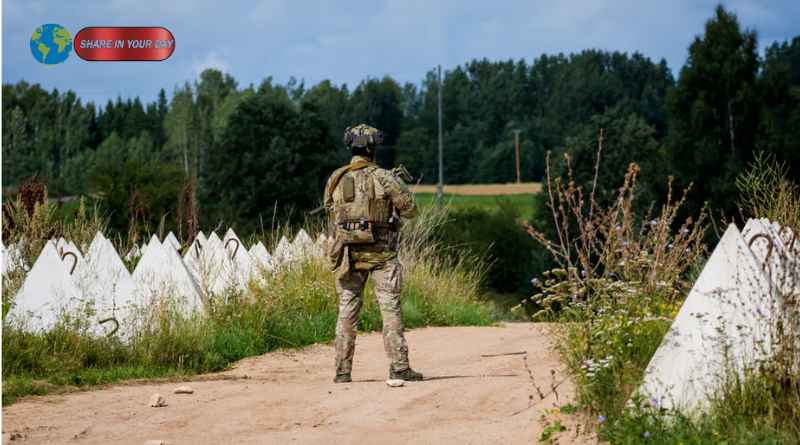
The latest warnings come after several incidents close to NATO territory, including a Russian drone strike near the Ukraine-Poland border and the downing of a suspected Russian drone over Lithuania. European officials have increasingly described the pattern as part of a broader security challenge involving drones, sabotage, cyber operations and other forms of pressure.
At the same time, NATO has stressed that there is no evidence that an immediate full-scale Russian attack on a NATO member is underway. The alliance is instead increasing attention to airspace security, resilience and deterrence while continuing to support Ukraine.
Russia NATO Drone Threat Is Raising European Security Concerns
The Russia NATO drone threat has become more prominent as incidents increasingly occur close to European Union and NATO territory.
One of the most closely watched incidents took place near the Ukraine-Poland border on Sept. 13, when a Russian drone struck a passenger train in western Ukraine. The attack occurred shortly after a train carrying several European figures and security advisers had passed through the area.
Ukrainian Railways said the earlier train was carrying former British Prime Minister Boris Johnson and former Swedish Prime Minister Carl Bildt, while former CIA Director David Petraeus was on another train at Yahodyn station when the strike occurred. The rail operator said the earlier train may have been the intended target, although that assessment has not been independently established.
The strike was part of a much larger Russian attack on Ukraine. Ukrainian officials said more than 450 drones and missiles were involved overnight, with at least six people killed and more than 40 injured. Poland issued air-raid warnings as the attacks took place close to its border.
The incident has intensified concerns that the geographical boundaries of the war are becoming increasingly difficult to separate from the security environment of neighboring NATO countries.
Putin NATO Warning Comes Amid Rising Tensions
Russian President Vladimir Putin has repeatedly rejected claims that Moscow intends to attack NATO countries. At the same time, his government has issued increasingly forceful warnings against deeper European involvement in the Ukraine conflict.
Putin recently warned European governments that deploying peacekeeping forces to Ukraine would amount to war with Russia. He also argued that Russia does not pose a threat to European countries and blamed NATO expansion for the broader confrontation.
Those statements have been made against a backdrop of increasingly serious warnings from European governments.
Polish Prime Minister Donald Tusk said Russia could attempt hybrid strikes using drones or rockets against European countries supporting Ukraine. According to reporting by The Washington Post and AP, Tusk warned that Moscow could portray such attacks as accidents in an effort to complicate NATO’s response.
The Polish warning is particularly significant because Poland is both a NATO member and one of Ukraine’s most important logistical gateways.
Any attack that crossed into Polish territory would therefore carry consequences beyond the immediate damage caused by a drone or missile.
NATO Drone Incidents Are Testing Europe’s Defenses
The recent incidents are not limited to Poland.
On Sept. 15, an Italian fighter jet operating under NATO command shot down a suspected Russian drone over Lithuanian airspace. Lithuanian officials said the drone entered from Belarus and was destroyed near Pratkunai, north of Kaunas.
Lithuanian authorities said the device appeared to be carrying explosives, although investigators were still examining the debris to establish its origin.
The episode came only days after other incidents across the region.
EU foreign policy chief Kaja Kallas told the European Parliament that recent events included a Russian warship firing flares at a Danish helicopter, NATO jets shooting down a drone over Lithuania, a strike on a passenger train near the Ukrainian border and the recovery of a drone from Polish waters.
European governments do not necessarily classify every incident in exactly the same way. Questions of attribution, intent and whether an incident constitutes an armed attack remain important.
Nevertheless, the accumulation of incidents has changed the security discussion across Europe.
Russia’s Hybrid Campaign Is Becoming a Major Concern
The debate over the Russia NATO drone threat is broader than conventional military attacks.
European governments increasingly use the term “hybrid” to describe activities that can include cyberattacks, sabotage, arson, disinformation, interference operations, infrastructure attacks and drone incidents.
NATO Secretary-General Mark Rutte said in early September that Russia had become increasingly reckless, pointing to drones and missiles crossing into allied airspace as well as suspected hostile activities against European territory. He also referenced the suspected Russian hybrid attack involving Leipzig Airport in Germany.
Germany formally attributed an August incident at Leipzig/Halle Airport to Russia after its intelligence services concluded that an explosive-laden drone was linked to Russian technology. Russia has rejected such accusations.
The dispute illustrates one of the central difficulties surrounding hybrid warfare: attribution can be complicated, while the consequences of an incident may be significant even when it falls below the threshold of conventional warfare.
Europe Is Preparing for More Drone and Cyber Threats
European governments are responding by strengthening defenses around critical infrastructure.
France, for example, announced plans to develop measures to protect important infrastructure from drone and cyberattacks. President Emmanuel Macron said the Russian hybrid threat facing France and Europe had intensified in recent weeks. Russia has rejected European allegations concerning hybrid attacks as baseless.
The European Union is also discussing new mechanisms to coordinate responses.
European Commission President Ursula von der Leyen has proposed a European Security Council involving EU countries and partners including Britain, Norway, Ukraine and Canada. She has also called for a new European emergency mechanism to coordinate responses to hybrid incidents that fall below the threshold of conventional armed conflict.
The proposals reflect a growing concern that existing institutions may not always provide a sufficiently rapid response to attacks that are serious but difficult to classify.
However, European officials have also stressed that new EU structures should complement rather than replace NATO.
Estonian Foreign Minister Margus Tsahkna, for example, said NATO remains the cornerstone of European security and that European defense initiatives should strengthen the alliance.
NATO Is Strengthening Its Eastern Flank
The alliance has simultaneously increased its focus on the eastern flank.
NATO Secretary-General Mark Rutte said Germany is playing a major role in strengthening European defense, including through a German brigade stationed in Lithuania and additional aircraft and naval assets supporting NATO deterrence and defense.
NATO is also placing greater emphasis on resilience.
On Sept. 17, the alliance published new baseline requirements intended to help governments protect essential civilian services and recover quickly from disruptions. The framework covers areas such as energy, food, water, healthcare and communications.
That approach reflects an important change in the European security debate.
Modern conflict is no longer viewed solely through the lens of tanks, aircraft and conventional armies. A hostile campaign can also target transportation networks, communications systems, energy infrastructure and public confidence.
What the Russia NATO Drone Threat Could Mean for Europe
The immediate question is whether the current pattern represents preparation for a direct military confrontation between Russia and NATO.
Publicly available evidence does not establish that Russia is preparing an imminent full-scale invasion of a NATO country.
The Institute for the Study of War has noted that Russia could potentially conduct drone or missile attacks, or a limited incursion, against Baltic states, but it also reported that there was no evidence of the kind of large-scale military buildup seen before Russia’s 2022 invasion of Ukraine. Baltic officials have similarly said their immediate assessments have not fundamentally changed.
That distinction is important.
A drone entering NATO airspace does not automatically mean that a broader war has begun. Nor does every act of sabotage necessarily represent preparation for conventional military action.
Instead, European governments are increasingly focused on the possibility that Moscow could exploit ambiguous incidents to test defenses, create uncertainty or influence political decisions.
Why Poland Is Particularly Important
Poland occupies a central position in the current security environment.
Its territory borders Ukraine and Belarus, while the country has become a major route for Western military and humanitarian assistance heading toward Ukraine.
That makes Polish infrastructure strategically important.
The recent strike near the Ukraine-Poland border demonstrated how quickly an attack inside Ukraine can generate security concerns in a neighboring NATO country. Polish authorities have warned that future incidents could deliberately or accidentally affect NATO territory.
Poland has consequently pushed for stronger preparedness and closer coordination with its NATO allies.
The country’s warnings also illustrate why European governments are increasingly discussing scenarios that sit between peace and conventional war.
European Leaders Face a Difficult Security Balance
The political challenge for European governments is significant.
They must protect their populations and infrastructure without automatically treating every incident as the beginning of a larger war.
At the same time, failing to respond to repeated incursions or attacks could create uncertainty about how Europe would react to future incidents.
NATO’s Article 4 provides a mechanism through which member countries can request consultations when their security or territorial integrity is threatened. Article 5, by contrast, concerns collective defense following an armed attack against one or more members.
Not every drone incident triggers Article 5.
That distinction is central to the current debate because Russia and NATO remain heavily armed nuclear powers, making escalation management a major consideration.
European governments are therefore attempting to strengthen deterrence while maintaining mechanisms for consultation and crisis management.
The Ukraine War Is Increasingly Shaping European Defense
The developments also show how deeply the war in Ukraine has transformed European security planning.
NATO says its members have increased defense investments and are adapting their forces to a more demanding security environment. The alliance has also continued to provide military assistance to Ukraine.
Rutte said in September that allies had agreed to provide substantial additional support for Ukraine, including critical air-defense capabilities.
European governments, meanwhile, are expanding efforts to protect infrastructure, improve intelligence sharing and prepare for hybrid attacks.
The EU’s Kallas has argued that intelligence cooperation is essential because Russia’s methods vary depending on the target. Her comments cited threats ranging from information manipulation to attacks on military and civilian infrastructure.
These measures are designed not only for a possible military confrontation but also for a prolonged period of pressure below the threshold of open warfare.
What Happens Next?
The coming weeks are likely to remain closely watched across Europe.
The most important indicators will include further drone incursions, attacks near NATO borders, sabotage investigations, cyber incidents and changes in Russian military activity.
European governments will also be watching whether incidents remain isolated or form a sustained pattern.
For NATO, the challenge will be maintaining credible deterrence while avoiding unnecessary escalation. For the EU, the challenge will be coordinating national responses while working alongside NATO’s existing security structures.
For Ukraine, continued European military and financial support remains central to its ability to defend itself.
The Russia NATO drone threat therefore represents more than a question about individual drones. It is part of a wider debate over European security, the boundaries of hybrid warfare and how NATO and the EU should respond to increasingly complex threats.
For now, European officials are preparing for a more uncertain security environment while emphasizing that a direct Russia-NATO war is not an established reality.
The recent incidents nevertheless demonstrate how quickly the conflict can create risks beyond Ukraine’s borders. As NATO strengthens its eastern defenses and European governments improve their resilience, drones and other forms of hybrid activity are likely to remain a major focus of the continent’s security agenda.