Russian Ship Seized in Arctic as Norway Enforces Ukraine Claim
The Russian ship seized in Arctic waters has become the center of a growing dispute between Norway, Russia and Ukraine after Norwegian authorities detained the vessel Professor Molchanov in Svalbard.
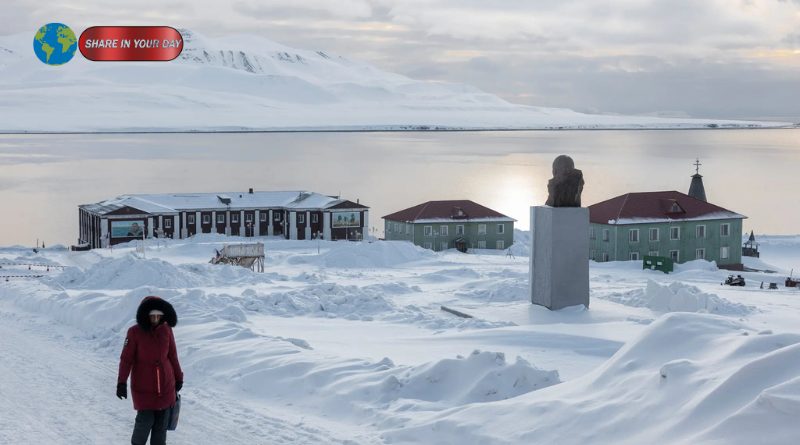
Norwegian authorities took control of the Russian state-owned research vessel on Sept. 2 after a local court authorized the action at the request of Ukraine’s state energy company Naftogaz. The move is part of an international effort to recover billions of dollars that Ukraine says Russia owes following the seizure of Ukrainian assets in Crimea.
The development is significant beyond the financial dispute. Svalbard is Norwegian territory, but its unusual international treaty gives Russia and other countries specific rights in the Arctic archipelago. That makes the detention particularly sensitive at a time when relations between Moscow and Western countries remain deeply strained.
Norway’s governor of Svalbard confirmed that the vessel had been arrested following an order from the Nord-Troms District Court. The ship was ordered to remain in Barentsburg while Norwegian authorities and the courts determine the next steps.
Russian Ship Seized in Arctic Over $4.22 Billion Claim
The immediate reason behind the seizure is a long-running compensation dispute between Naftogaz and Russia.
Naftogaz has been pursuing enforcement of an international arbitration award worth approximately $4.22 billion. The award relates to Russian actions involving the Ukrainian company’s assets in Crimea after Moscow’s annexation of the peninsula in 2014.
Russia has rejected the award and has not paid the compensation. As a result, Naftogaz has been looking for Russian assets outside Ukraine that could potentially be seized to satisfy the judgment.
The Professor Molchanov became one such target.
The vessel is owned by the Russian government and is operated as a research and expedition ship. According to Norwegian authorities, the seizure was not initiated as a Norwegian political action against Russia but was carried out after a Norwegian court granted Naftogaz permission to enforce its claim.
That distinction is important because Norway’s government has emphasized that the underlying dispute is between Naftogaz and Russia.
What Happened to the Professor Molchanov?
The Professor Molchanov was docked in Barentsburg, a small settlement on Svalbard with a long-standing Russian presence, when Norwegian authorities moved to detain it.
According to reports, Norwegian police boarded the vessel after tracking its movements around the archipelago. The ship is roughly 200 feet long and began its life as an oceanographic research vessel before being adapted for Arctic expedition cruises.
The ship had recently been transporting tourists through Arctic waters while also carrying Russian scientists.
Norway ordered the vessel to remain in Barentsburg. The governor’s office said it would take responsibility for the crew and passengers in cooperation with Trust Arcticugol, the Russian-linked organization operating in the settlement.
No reports indicate that the crew members were arrested as individuals. Instead, the legal action is directed at the vessel itself.
That difference could become important in any future court proceedings.
Why Svalbard Makes the Dispute More Sensitive
The location of the Russian ship seized in Arctic waters is almost as important as the legal dispute behind it.
Svalbard sits far north in the Arctic Ocean and is under Norwegian sovereignty. However, the 1920 Svalbard Treaty created a special legal framework governing the archipelago.
Russia has maintained a presence on Svalbard for decades, particularly in Barentsburg. The settlement has Russian institutions, workers and commercial activities, giving Moscow a visible foothold on Norwegian-controlled territory.
That arrangement makes Svalbard different from most other Norwegian territory.
The archipelago has also become increasingly important in the broader geopolitical competition surrounding the Arctic. Climate change is opening new shipping possibilities, while the region’s natural resources and strategic location are attracting greater attention from Russia, NATO countries and China.
The seizure therefore risks becoming more than a straightforward asset-recovery case.
It has the potential to become another flashpoint in the increasingly complicated relationship between Moscow and Oslo.
Russia Condemns Norway’s Action
Moscow reacted angrily to the detention.
Russian officials described Norway’s decision as unlawful and accused Oslo of effectively engaging in piracy. Russian President Vladimir Putin also condemned the action, using especially strong language and warning that incidents of this kind could complicate wider diplomatic efforts.
Russian authorities have argued that the vessel was carrying out legitimate scientific and environmental activities rather than serving as an ordinary commercial asset.
Moscow has also challenged the legal basis for the seizure, arguing that the international arbitration process does not justify the confiscation of Russian state property.
Reuters reported that Russia summoned Norway’s ambassador over the dispute, while Norwegian officials maintained that the seizure followed a Norwegian court order connected to Naftogaz’s enforcement effort.
The contrasting positions show why the dispute could take time to resolve.
Norway views itself as enforcing a court-approved legal process. Russia views the action as an illegitimate seizure of state property.
Norway Says It Was Following a Court Order
Norwegian authorities have sought to keep the issue focused on the legal process.
The Governor of Svalbard said the vessel was seized after the Nord-Troms District Court ruled that Naftogaz could take action against the ship. The governor’s office then acted as the enforcement authority.
The court ruling was issued on Aug. 31, with the physical seizure taking place on Sept. 2.
The vessel has been ordered to remain in Barentsburg until the governor or court decides otherwise.
That means the next phase is likely to be fought through the Norwegian legal system.
Russia has indicated that it intends to challenge the decision.
Meanwhile, Naftogaz has welcomed the seizure as part of its campaign to recover compensation from Russia.
The Bigger Fight Over Russian Assets
The Russian ship seized in Arctic is relatively small compared with the amount at stake.
The vessel itself represents only a fraction of the billions of dollars Naftogaz is seeking.
But its seizure could have symbolic importance because it demonstrates how international arbitration awards can potentially be enforced against Russian assets in jurisdictions outside Ukraine.
Naftogaz has pursued Russian property in multiple countries as part of its efforts to collect the compensation.
The strategy reflects a broader trend that has emerged since Russia’s invasion of Ukraine: governments and companies have increasingly looked at Russian assets abroad as potential sources of compensation or leverage.
However, seizing assets owned by a sovereign state can raise complicated questions about immunity, jurisdiction and international law.
Those issues are likely to become central if Russia challenges Norway’s action in court.
Why the Arctic Is Becoming a Geopolitical Pressure Point
The timing of the seizure is also notable.
The Arctic has become an increasingly important security and economic region. Russia has extensive military infrastructure along its Arctic coastline and regards the region as strategically vital.
At the same time, NATO has increased its focus on northern Europe and the Arctic as concerns about Russian military activity have grown.
Norway occupies a particularly sensitive position because it shares a land border with Russia in the far north and is a member of NATO.
The two countries have historically maintained practical cooperation in parts of the Arctic despite political disagreements. But Russia’s war against Ukraine has sharply reduced that cooperation.
The detention of a Russian vessel on Svalbard adds another layer to those tensions.
Reuters recently reported that Russia has criticized increased NATO activity in the Arctic, describing the alliance’s growing presence as a security threat.
Against that background, even a legal dispute involving one research vessel can attract substantial geopolitical attention.
Could the Ship Be Sold?
One of the major questions now is what happens to the Professor Molchanov.
The vessel remains under detention while the legal process develops. If Naftogaz ultimately succeeds in enforcing its claim, the ship could potentially become part of a process designed to recover money owed under the arbitration award.
However, the legal route is not necessarily straightforward.
Russia can challenge the seizure, while questions surrounding state ownership could complicate any attempt to sell the vessel.
The ship’s value is also far below the amount Russia allegedly owes.
According to reporting on the case, the vessel’s eventual sale would therefore not come close to satisfying the full compensation award. Instead, the seizure is better understood as one piece of a much broader international asset-recovery campaign.
What Happens Next?
The immediate future of the Professor Molchanov will likely depend on Norwegian court proceedings.
For now, the vessel is staying in Barentsburg. The crew and passengers are being handled by local authorities while the legal dispute continues.
Several developments could follow.
First, Russia could challenge the Norwegian court’s decision and argue that the vessel is protected from seizure because it is state-owned.
Second, Naftogaz could continue seeking enforcement against additional Russian assets in other countries.
Third, the dispute could prompt further arguments over the interpretation of the Svalbard Treaty and the legal rights of Russian entities operating in the archipelago.
The treaty itself is unlikely to disappear from the debate.
Svalbard’s special legal status has long required Norway to balance its sovereignty with treaty-based rights enjoyed by other countries, including Russia.
A New Test for Arctic Relations
The Russian ship seized in Arctic waters is now at the intersection of three major disputes: Russia’s refusal to pay compensation over Ukrainian assets, international efforts to enforce arbitration awards, and the increasingly tense geopolitical environment surrounding Svalbard.
For Norway, the case presents a difficult balancing act.
Oslo must enforce its court system while managing relations with a neighboring nuclear power that maintains a significant presence in the Arctic.
For Russia, the seizure is another example of what Moscow considers hostile Western efforts to target Russian property.
For Ukraine, meanwhile, the case represents a practical attempt to turn an international legal victory into actual compensation.
The Professor Molchanov may not be worth billions of dollars, but its detention carries significance far beyond the value of the ship.
It shows how the legal and geopolitical consequences of the war involving Russia and Ukraine continue to reach far beyond the battlefield.
And in Svalbard, where Norwegian sovereignty, Russian activity and international treaty rights overlap in one of the world’s most strategically sensitive regions, the dispute could become an important test of how those competing interests are managed.