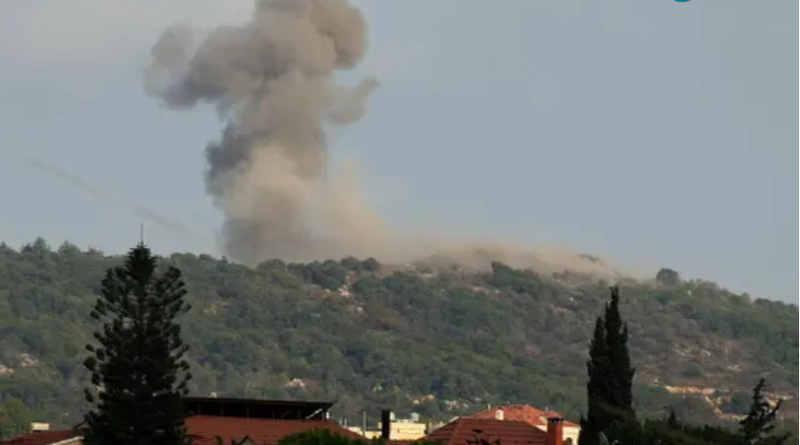
US Iran War Escalates Around Strait of Hormuz
The US Iran war has entered another dangerous phase as American and Iranian forces exchange attacks around the Strait of Hormuz, raising fresh concerns about regional security, commercial shipping and global energy supplies.
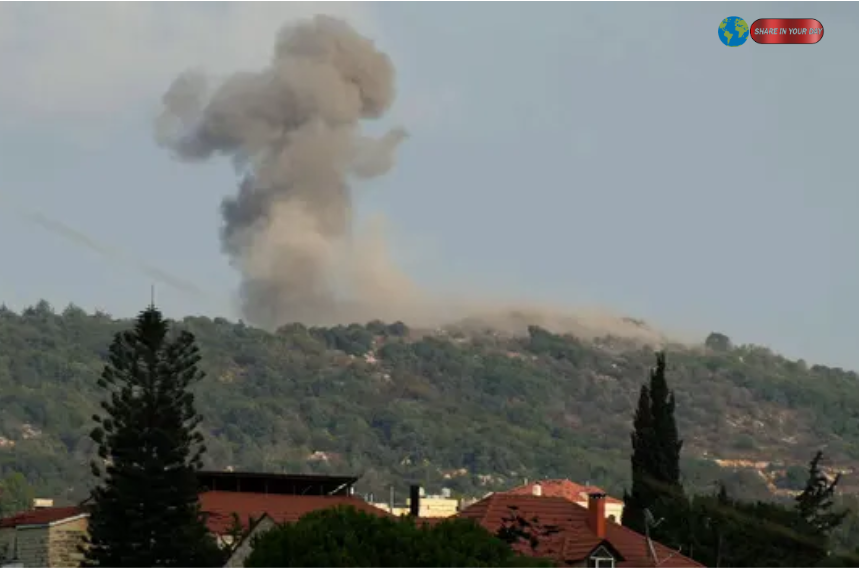
The latest escalation follows a new series of U.S. strikes against Iranian military targets and Iranian retaliatory attacks against American and allied positions across the Middle East. The fighting has also placed the strategically vital Strait of Hormuz at the center of the confrontation.
Fox News’ latest live coverage reported continuing developments as U.S. and Iranian forces traded strikes and tensions mounted around the waterway. Fox News+1
The situation has become increasingly complicated because the Strait of Hormuz is one of the world’s most important energy corridors. Any prolonged disruption could affect oil prices, shipping costs and economies far beyond the Middle East.
Meanwhile, Washington and Tehran continue to send conflicting signals about the possibility of further military action and negotiations.
US Iran War Enters Another Dangerous Phase
The latest round of fighting represents a significant escalation after a period of relative calm.
U.S. Central Command said American forces recently completed a wave of strikes against Islamic Revolutionary Guard Corps targets in Iran. The targets reportedly included air-defense systems, radar installations, maritime assets, mine-laying capabilities and communications infrastructure. Fox News+1
According to U.S. officials, the operation was connected to Iranian attempts to threaten commercial shipping and American personnel.
The military campaign has therefore focused heavily on Iran’s ability to interfere with traffic through the Strait of Hormuz.
That strategic objective is important.
The strait connects the Persian Gulf with the Gulf of Oman and the Arabian Sea. It is a narrow maritime passage through which large quantities of oil and other energy products traditionally move.
When military activity threatens the waterway, shipping companies face difficult decisions.
Even if a vessel is technically able to sail through the strait, operators may decide that the potential danger is too high.
Strait of Hormuz Becomes the Main Flashpoint
The Strait of Hormuz has become one of the clearest symbols of the current confrontation.
U.S. officials have said American forces are working to prevent Iran from disrupting commercial shipping. Iran, meanwhile, has continued to assert its influence over the waterway and has warned that conditions for navigation have changed.
Recent reports indicate that shipping activity remains substantially below normal levels.
Al Jazeera reported that ship-tracking data showed significantly fewer vessels moving through the strait than the number cited by President Donald Trump. Al Jazeera
That discrepancy highlights one of the central problems surrounding the crisis.
Control of the waterway is not simply a military question. It is also a question of whether commercial operators believe the route is safe enough to use.
Insurance costs, crew safety, vessel security and the possibility of attack can all influence whether ships enter the area.
Iran Retaliates Against US and Allied Positions
Iran has responded to the latest U.S. strikes with attacks extending beyond Iranian territory.
Reports say Iranian missiles and drones targeted American or allied positions in several countries across the region, including Kuwait, Bahrain, Jordan and the United Arab Emirates. Several attacks were intercepted by regional air-defense systems. The Washington Post+1
The expansion of attacks has increased concerns that the conflict could spread.
For Washington, protecting American personnel and military installations has become a central challenge.
For regional governments, the danger is equally serious.
Countries hosting U.S. forces can become targets even when they are not directly participating in offensive operations against Iran.
Kuwait, Bahrain, Jordan and other U.S. partners therefore face the difficult task of supporting American security interests while attempting to avoid becoming major battlefields themselves.
Civilian Casualties Add to the Pressure
The latest escalation has also generated controversy over civilian casualties.
Iran has accused the United States of striking a wedding gathering in southern Iran. Reuters reported that the incident killed civilians and injured dozens of people, while the U.S. military position is that its operations were directed at military targets and that the incident is being investigated. Reuters
The allegations have intensified political pressure surrounding the conflict.
U.S. officials have said civilian deaths are not intentional and that investigations are necessary to establish exactly what happened.
The incident has nevertheless become an important part of the wider information battle between Washington and Tehran.
Each side is attempting to shape international opinion about the legitimacy and consequences of the military campaign.
For civilians living in areas surrounding military targets, however, the consequences are immediate regardless of competing narratives.
Oil Prices Rise as Shipping Risks Increase
One of the most immediate global effects of the US Iran war has appeared in energy markets.
Oil prices climbed sharply as investors assessed the possibility of further disruption around the Strait of Hormuz.
Reuters reported that Brent crude rose to roughly $97 a barrel on Sept. 3, while U.S. West Texas Intermediate also moved higher. The increase reflected concerns about renewed military escalation, shipping disruptions and the potential impact on global oil supplies. Reuters
The Strait’s importance explains why financial markets react so quickly to developments in the region.
Even rumors of prolonged disruption can influence oil prices.
If shipping companies avoid the waterway for an extended period, exporters and importers may have to use alternative routes or wait for safer conditions.
That can increase transportation costs and tighten energy markets.
For consumers, prolonged increases in crude prices can eventually contribute to higher fuel and transportation costs.
Trump Signals the Fight Could Continue
President Donald Trump has continued to project confidence in the U.S. military position while warning Iran about further consequences.
Fox News reported that Trump said the United States remained prepared to strike Iran and discussed the situation around the Strait of Hormuz. Fox News
At the same time, Vice President JD Vance has declined to establish a fixed timeline for the conflict.
That matters because the administration previously emphasized the possibility of a relatively limited military campaign.
The absence of a clear end date creates uncertainty for U.S. forces, regional allies and global markets.
A prolonged campaign would also raise questions about military resources, troop deployments and the political consequences of continued fighting.
US Military Targets Iranian Maritime Capabilities
The focus on Iran’s maritime capabilities is one of the defining elements of the latest U.S. campaign.
American forces have targeted systems that Washington says are connected to Iran’s ability to threaten shipping.
Previous U.S. operations also struck Iranian launchers on Larak Island, near the Strait of Hormuz, after American officials said Iranian forces were preparing systems that could threaten shipping or deploy mines. LiveNOW+1
Mines are particularly significant in a maritime conflict because they can threaten vessels long after the forces that deployed them have moved away.
Clearing suspected minefields can also take considerable time.
That makes mine-laying capabilities a strategic priority for any force attempting to keep a major shipping corridor open.
Why the Strait of Hormuz Matters to the World
The Strait of Hormuz is important far beyond the countries directly involved in the conflict.
The waterway is a major route for energy shipments leaving the Persian Gulf.
As a result, any sustained disruption can affect countries in Asia, Europe and elsewhere.
Asian economies are particularly exposed because many rely heavily on Middle Eastern energy supplies.
A serious interruption could therefore create a chain reaction:
- Shipping companies could face higher insurance premiums.
- Oil tankers could delay or reroute journeys.
- Crude prices could rise.
- Refiners could face higher input costs.
- Fuel prices could increase in importing countries.
- Inflationary pressure could return to already-sensitive economies.
This is why governments around the world are closely watching developments even when their own military forces are not directly involved.
US Iran War Raises Global Economic Concerns
The economic consequences could become more serious if the conflict continues.
The first impact is likely to be energy prices.
Higher oil prices increase costs throughout the economy because petroleum remains deeply connected to transportation, manufacturing and logistics.
The second concern is shipping.
A prolonged security crisis around Hormuz could encourage shipping companies to reduce traffic through the waterway.
The third issue is insurance.
War-risk insurance can become dramatically more expensive when vessels operate in an active conflict zone. Some operators may decide that the commercial return is no longer worth the security risk.
That creates a feedback loop.
Fewer ships can mean tighter supply. Tighter supply can push prices higher. Higher prices can create additional pressure on governments to intervene diplomatically.
Diplomacy Remains Possible Despite the Fighting
Military escalation does not necessarily mean diplomacy has ended.
Reports indicate that diplomatic channels remain active despite the renewed attacks.
Pakistan, which has played a role in efforts to facilitate communication, has indicated that it remains engaged and hopes the United States and Iran can return to negotiations. Sky News
That possibility could become increasingly important as the economic and military costs rise.
Neither side has an obvious incentive to allow an uncontrolled regional war to continue indefinitely.
However, reaching an agreement will be difficult.
Washington wants guarantees concerning Iran’s military and strategic capabilities, while Tehran continues to resist pressure and demands relief from sanctions and other economic restrictions.
The Strait of Hormuz has added another layer to those negotiations.
Could the Conflict Spread Further?
The biggest immediate risk is regional expansion.
Iran has already launched attacks toward countries hosting American military facilities. Regional governments have responded by activating air-defense systems and attempting to protect their territory.
Any attack that causes significant casualties in another country could create pressure for a stronger response.
That could produce a cycle of retaliation.
The United States could launch additional strikes. Iran could respond against U.S. forces or regional allies. Israel and other actors could potentially become more deeply involved.
The result could be a much wider Middle East conflict.
For now, however, the most immediate flashpoint remains the Strait of Hormuz.
What Happens Next in the US Iran War?
The coming days could determine whether the latest escalation remains limited or develops into a longer confrontation.
Three developments will be particularly important.
First, analysts will watch shipping traffic through the Strait of Hormuz.
A sustained recovery in commercial traffic could indicate that companies believe security conditions are improving. Continued declines would suggest that the crisis remains serious.
Second, markets will monitor oil prices.
A rapid increase could signal that traders are becoming more concerned about supply disruptions.
Third, governments will watch diplomatic activity.
Even limited negotiations could reduce the likelihood of additional attacks.
On the other hand, another major strike against military or civilian targets could push the conflict in a more dangerous direction.
The World Watches the Strait of Hormuz
The US Iran war has moved beyond a conventional confrontation between two countries.
It now affects shipping, energy markets, regional security and international diplomacy.
The Strait of Hormuz sits at the center of those concerns.
The United States says its military operations are intended to protect American forces and commercial shipping while degrading Iranian capabilities that threaten the waterway. Iran, meanwhile, continues to resist American pressure and has demonstrated its ability to strike U.S. and allied positions across the region. Fox News+1
The longer the fighting continues, the greater the possibility that military calculations will begin producing global economic consequences.
For markets, the key question is whether ships can safely continue using Hormuz.
For governments, the question is whether diplomacy can prevent another escalation.
And for civilians across the region, the most urgent question is whether the violence will finally begin to recede.
For now, there is no clear answer.
The latest strikes have shown that the confrontation remains active, while the continued uncertainty around the Strait of Hormuz means the consequences of the conflict could extend well beyond the battlefield.