Saudi Nuclear Agreement Reaches Congress
The Saudi nuclear agreement has entered a critical new phase after President Donald Trump’s administration formally submitted the 30-year nuclear cooperation pact with Saudi Arabia to Congress for review. The move brings the controversial agreement into the U.S. legislative process while leaving unresolved a major political condition: Trump still insists that Saudi Arabia must normalize relations with Israel before the agreement can move forward.
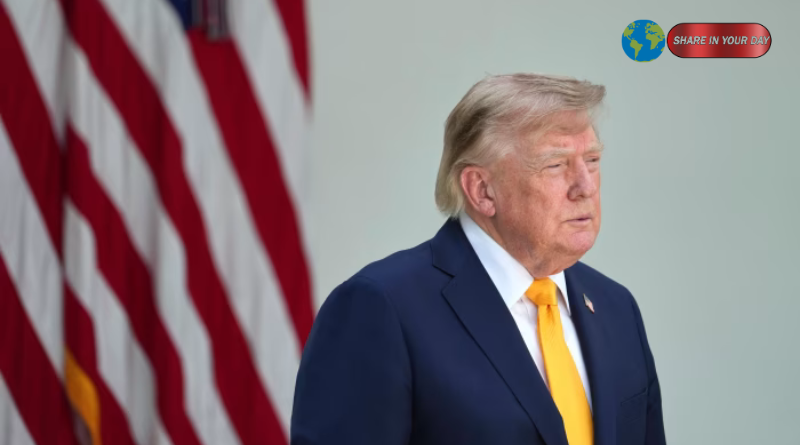
The submission marks an important procedural step in a deal designed to expand U.S. participation in Saudi Arabia’s civilian nuclear industry. It could give American companies a central role in developing the kingdom’s nuclear infrastructure while attempting to limit the involvement of foreign competitors.
However, the agreement has also generated concern among nuclear nonproliferation experts. At the center of the debate is whether the framework could eventually permit uranium enrichment on Saudi territory.
Under the agreement, U.S. and Saudi officials would conduct a two-year study examining whether it would be commercially viable for American companies to construct a uranium-enrichment facility in Saudi Arabia. If the project is deemed necessary, U.S. companies could build and operate the facility under an arrangement intended to prevent Saudi Arabia from obtaining sensitive enrichment technology.
That possibility has made the Saudi nuclear agreement one of the most closely watched U.S. foreign-policy issues in the Middle East.
Why the Saudi Nuclear Agreement Matters
Saudi Arabia has long sought access to civilian nuclear technology as part of its strategy to diversify its energy system and reduce its reliance on oil.
The kingdom possesses uranium resources that it says could support a domestic nuclear industry. Saudi officials argue that nuclear power could provide additional electricity for domestic consumption, allowing more oil production to be directed toward exports.
That economic argument is particularly important as Saudi Arabia pursues its broader diversification strategy.
A civilian nuclear program could also support the kingdom’s ambitions in advanced technology, industrial development and long-term energy security. The U.S. agreement therefore has significance beyond nuclear power itself.
For Washington, meanwhile, the agreement offers an opportunity to deepen economic and strategic ties with one of the most influential countries in the Arab world.
The Trump administration has also emphasized the importance of keeping American companies at the center of Saudi Arabia’s nuclear development. According to the agreement’s framework, U.S. businesses would have a major role in building and developing the kingdom’s nuclear infrastructure, potentially limiting opportunities for competitors from countries such as China and Russia.
That makes the pact both an energy agreement and a geopolitical competition issue.
Saudi Nuclear Agreement Faces Enrichment Debate
The biggest controversy surrounding the Saudi nuclear agreement is uranium enrichment.
Enrichment is a normal part of the civilian nuclear fuel cycle. However, the same technology can be used to produce highly enriched uranium, which can potentially be used in nuclear weapons.
Saudi Arabia has repeatedly expressed interest in developing a complete domestic nuclear fuel cycle. That ambition has worried U.S. officials and nonproliferation specialists because Saudi Arabia operates in a region where nuclear competition is already a major strategic concern.
Under the current framework, the United States and Saudi Arabia would first examine the commercial feasibility of a potential enrichment facility. The arrangement would reportedly give American companies responsibility for the facility while restricting the transfer of sensitive technology to Saudi officials.
Supporters argue that direct American involvement could provide Washington with greater oversight of Saudi nuclear activities.
Critics see a different risk.
Andrea Stricker of the Foundation for Defense of Democracies has argued that allowing enrichment in Saudi Arabia could undermine decades of U.S. nonproliferation policy.
The concern is not necessarily that Saudi Arabia would immediately seek nuclear weapons. Rather, critics worry that establishing enrichment capabilities could create a precedent for other countries in the Middle East.
If one major regional power gains access to sensitive nuclear technology, neighboring countries could eventually seek similar capabilities.
That could increase the risk of a wider nuclear competition.
Trump Adds Israel Condition to Nuclear Deal
The Saudi nuclear agreement is also tied to a much broader diplomatic question: Saudi Arabia’s relationship with Israel.
Trump has maintained that the nuclear agreement will only proceed if Saudi Arabia joins the Abraham Accords and normalizes relations with Israel. That condition was added after the nuclear agreement had already been negotiated and signed, creating additional uncertainty around its implementation.
The Abraham Accords were brokered by the United States during Trump’s first administration and established diplomatic relations between Israel and several Arab countries, including the United Arab Emirates and Bahrain.
Saudi Arabia, however, has not followed the same path.
Before the October 2023 Hamas attack and subsequent war in Gaza, Riyadh appeared to be moving toward a possible normalization agreement with Israel as part of a broader package involving U.S. security commitments and civilian nuclear cooperation.
The Gaza war dramatically changed that calculation.
Saudi leaders have linked normalization with Israel to progress toward Palestinian statehood, while Israel’s current government has opposed Palestinian statehood under the terms sought by Riyadh.
That leaves the Trump administration’s new condition as a major obstacle.
The nuclear agreement may therefore face two separate challenges: congressional scrutiny in Washington and diplomatic resistance in Riyadh.
Congress Now Has a Role
The transmission of the Saudi nuclear agreement to Congress does not mean the deal is automatically approved.
Under U.S. law, Congress receives an opportunity to review nuclear cooperation agreements. Lawmakers can scrutinize the proposed arrangement, raise concerns over nuclear safeguards and attempt to block the agreement.
However, preventing the pact from taking effect could be difficult.
According to The Wall Street Journal, Congress would need to pass a joint resolution opposing the agreement, and a presidential veto could then require a two-thirds majority to override.
That creates a significant political hurdle for opponents.
Still, the review process could produce months of debate.
Lawmakers are likely to focus heavily on the potential enrichment provisions, the level of U.S. oversight, the role of American companies and the broader implications for nuclear proliferation in the Middle East.
Several members of Congress have already raised concerns about the agreement. In early August, Democratic lawmakers including Reps. John Garamendi and Don Beyer and Sens. Edward Markey and Jeff Merkley warned that the deal could contribute to a nuclear arms race in the region.
Those concerns could become more prominent as lawmakers examine the agreement’s actual terms.
What the Deal Could Mean for U.S. Companies
The Saudi nuclear agreement could create substantial opportunities for American nuclear companies.
The Trump administration has promoted the pact partly as a way to expand the U.S. nuclear industry and strengthen American influence over Saudi Arabia’s nuclear development.
The agreement would give U.S. firms a central position in the construction and development of Saudi nuclear infrastructure. That could include reactors and potentially other parts of the civilian nuclear fuel cycle.
For Washington, keeping American companies involved has a strategic advantage.
Saudi Arabia has alternatives.
Other major nuclear powers, including China and Russia, have extensive experience building nuclear infrastructure overseas. If the United States refuses to provide the technology or financing Saudi Arabia wants, Riyadh could potentially deepen its nuclear relationship with another major power.
That possibility makes the agreement part of a broader contest for influence in the Gulf.
Saudi Arabia Wants Nuclear Power for Energy Diversification
For Riyadh, the economic case remains central.
Saudi Arabia has enormous oil reserves, but much of its domestic energy demand has historically relied on hydrocarbons. Nuclear power could provide another source of electricity while allowing more oil to be exported.
Saudi officials have said the nuclear program would support energy diversification and allow the kingdom to make use of domestic uranium resources.
The agreement could therefore complement Saudi Arabia’s wider economic transformation program.
Nuclear energy could also become increasingly important as the kingdom invests heavily in data centers, advanced technology and industrial infrastructure, all of which require reliable electricity.
The United States has a strong interest in being part of that development.
Nonproliferation Concerns Remain
Despite the economic and strategic arguments, the Saudi nuclear agreement faces a fundamental question: How can Washington ensure that civilian nuclear cooperation does not create a pathway toward military nuclear capabilities?
That question has become especially sensitive because of Saudi Arabia’s regional security environment.
Iran’s nuclear program has already produced years of international concern. Israel also maintains a sophisticated military and technological capability, while other Middle Eastern countries have explored nuclear energy programs.
A Saudi enrichment capability could therefore have consequences far beyond Saudi Arabia.
Nonproliferation experts have argued that Washington should maintain strong safeguards and verification requirements. Other analysts believe that keeping Saudi Arabia within a U.S.-led nuclear framework could actually give Washington more leverage over the kingdom than leaving it to pursue nuclear cooperation elsewhere.
The debate is likely to continue throughout the congressional review.
A Two-Year Study Could Delay a Final Decision
One important feature of the agreement is that an enrichment facility would not necessarily be built immediately.
The framework calls for a two-year U.S.-Saudi study to determine whether an American-built enrichment facility would be commercially viable and appropriate.
That gives both governments time to address technical, commercial and political questions.
It also gives Congress and U.S. policymakers additional time to evaluate the potential risks.
The study could ultimately conclude that enrichment is unnecessary. Alternatively, it could recommend moving ahead with a facility under American control.
Either outcome would carry major implications for the future of U.S.-Saudi nuclear cooperation.
The Israel Question Could Determine the Deal’s Future
The most immediate obstacle may not be nuclear technology at all.
It may be diplomacy.
Trump has made clear that he continues to view Saudi normalization with Israel as a condition for the agreement to proceed.
That creates a complicated situation.
Saudi Arabia wants civilian nuclear technology and deeper cooperation with Washington, but Riyadh has maintained that normalization with Israel requires meaningful progress on the Palestinian issue.
The Trump administration, meanwhile, sees Saudi participation in the Abraham Accords as a major strategic objective.
As a result, the nuclear agreement has become linked to a much larger Middle East diplomatic strategy.
If Saudi Arabia eventually agrees to normalization, the nuclear pact could become a cornerstone of a broader U.S.-Saudi-Israeli arrangement.
If Riyadh refuses, the agreement could remain politically constrained even after completing the congressional review process.
What Happens Next
The immediate next step is congressional review.
Lawmakers will examine the agreement, its nuclear safeguards and the potential role of uranium enrichment. The debate could intensify as Congress evaluates whether the framework adequately protects U.S. nonproliferation objectives while preserving American commercial and strategic interests.
At the same time, Saudi officials will have to weigh the diplomatic cost of Trump’s Israel condition.
The kingdom has not shown a willingness to abandon its position on Palestinian statehood simply to secure nuclear cooperation.
That means the Saudi nuclear agreement is likely to remain closely tied to the broader politics of the Middle East.
The pact could eventually produce a deeper U.S.-Saudi partnership in civilian nuclear energy, create new opportunities for American companies and strengthen Washington’s influence over Riyadh’s nuclear ambitions.
But it could also trigger a difficult debate about uranium enrichment and the future of nuclear nonproliferation.
For now, sending the agreement to Congress represents a major step forward — but not the end of the negotiations.
The 30-year framework still faces political scrutiny in Washington and a potentially difficult diplomatic test in Riyadh. Whether it ultimately becomes a landmark example of peaceful nuclear cooperation or another stalled Middle East initiative will depend on how those two challenges are resolved.
Suggested external sources: The Wall Street Journal for the original report; the U.S. Department of Energy for official U.S. nuclear cooperation information; the International Atomic Energy Agency for nuclear safeguards and verification information.
Suggested internal links: Add links to related articles on U.S.-Saudi relations, Donald Trump’s Middle East policy, the Abraham Accords, and Saudi Arabia’s energy strategy on the target website.
Image ALT Text: Saudi nuclear agreement between Trump administration and Saudi Arabia