Trump Energy Truce Faces Early Test as Strikes Continue
A proposed Trump energy truce between Russia and Ukraine is facing an immediate test after fighting continued despite Donald Trump’s claim that both countries had agreed to stop attacks on energy infrastructure.
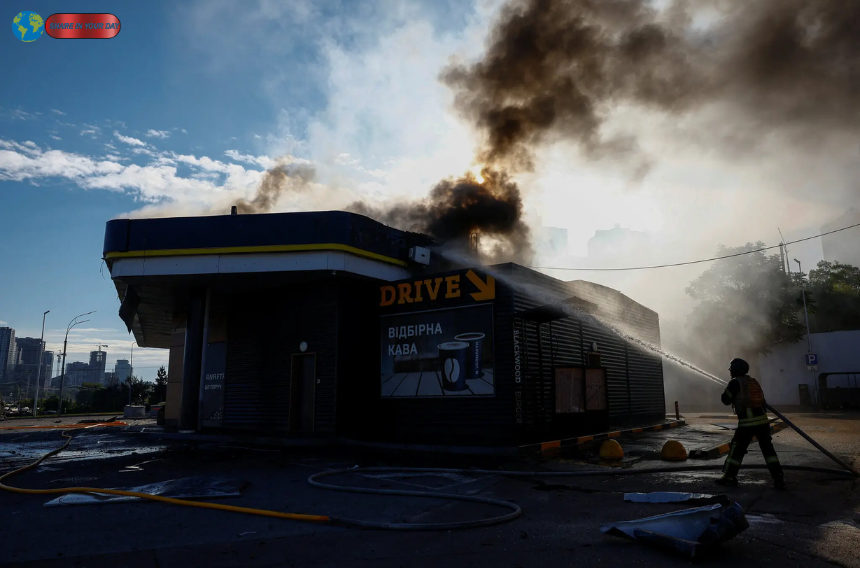
Trump said Russia and Ukraine had accepted a pause in strikes against energy targets, presenting the move as a potential step toward reducing pressure on global fuel markets. However, Ukraine has not described the arrangement as a completed agreement, while Russia has called for the proposal to be turned into concrete action.
The uncertainty has raised fresh questions about whether the energy truce can become a meaningful part of wider efforts to end the war.
Trump Energy Truce Comes Amid Fuel Price Pressure
Trump’s push for an energy pause comes as fuel prices have become a major political and economic concern.
The U.S. president has increasingly blamed attacks on Russian oil facilities for contributing to higher diesel prices. He has urged Ukrainian President Volodymyr Zelenskyy to stop targeting Russian diesel and refinery infrastructure, arguing that the strikes are worsening shortages in international markets.
Trump has also rejected the idea that the Middle East conflict is primarily responsible for rising diesel prices.
His comments have put Ukraine’s campaign against Russian energy facilities under greater scrutiny. Kyiv has used long-range drone attacks against refineries and other infrastructure as part of an effort to weaken Russia’s ability to finance and sustain its war effort.
At the same time, Russia has repeatedly attacked Ukraine’s electricity network and other critical infrastructure, particularly during periods when Kyiv’s power system is vulnerable.
Ukraine Wants Guarantees Before a Truce
Zelenskyy has indicated that Ukraine is willing to stop attacks on Russian energy infrastructure, but only if Moscow genuinely agrees to do the same.
That distinction is important.
Kyiv has not treated Trump’s announcement as proof that a finalized agreement is already in place. Instead, Ukrainian officials have emphasized the need for specific terms and credible guarantees.
Zelenskyy has said Ukraine would reciprocate if its partners could ensure that Russia stops attacking Ukraine’s electricity system, energy facilities, critical infrastructure and food supply routes.
For Kyiv, the issue is not simply whether attacks stop for a few days. Ukrainian officials want any arrangement to be reliable and long-lasting.
That caution reflects the history of failed or short-lived ceasefires during the war.
Russia Welcomes the Proposal
Moscow has responded more positively to Trump’s proposal, although the Kremlin has also indicated that declarations must eventually be translated into action.
The Russian government has welcomed the idea of stopping attacks on energy infrastructure. However, Moscow has also linked the broader energy situation to sanctions and other restrictions affecting Russian exports.
That creates another obstacle.
Even if Russia and Ukraine stopped attacking each other’s energy facilities, global fuel markets would continue to face pressure from other sources.
The war in Ukraine is only one part of a much larger energy crisis affecting international markets.
Why Russian Refineries Matter
Ukraine’s attacks on Russian refineries have become an increasingly important part of Kyiv’s military strategy.
Russia remains one of the world’s major oil producers and refined-fuel exporters. Damage to refineries can reduce the country’s ability to process crude oil into gasoline, diesel and other products.
Repeated strikes have therefore created problems for Russia’s domestic fuel system while also affecting international supply.
Russia has responded with restrictions on some fuel exports as it tries to protect supplies at home.
The consequences have extended beyond the battlefield.
Diesel is essential for trucks, agriculture, construction, shipping and industrial activity. Any prolonged reduction in available supplies can quickly raise transportation and production costs.
The Energy Truce Does Not End the War
Even if the Trump energy truce becomes operational, it would represent a limited agreement rather than a full ceasefire.
Missile attacks, drone strikes and fighting along the front could continue under such an arrangement.
The proposed pause is instead focused on critical energy infrastructure. That could include oil refineries, electricity facilities and other installations whose destruction affects civilian life and energy markets.
For Ukraine, protecting the electricity system ahead of another difficult winter is particularly important.
For Russia, reducing attacks on its refineries could help stabilize domestic fuel supplies and potentially ease pressure on its energy industry.
For Washington, a reduction in energy disruptions could provide economic relief at a time when high fuel costs are becoming politically sensitive.
Global Markets Are Watching Closely
The proposal is also being watched by energy traders.
A sustained reduction in attacks on Russian refineries could help improve fuel availability. However, analysts have warned that an energy truce alone would not solve the broader global diesel shortage.
International fuel markets are being affected by several factors at once, including refinery disruptions, seasonal demand, reduced inventories and instability in the Middle East.
That means any immediate improvement could be limited.
Still, markets can react quickly to expectations. Even the prospect of fewer attacks can influence prices if traders believe supplies will become more reliable.
The challenge is turning expectations into reality.
What Happens Next?
The biggest question surrounding the Trump energy truce is whether Russia and Ukraine can agree on clear rules and actually follow them.
Trump has presented the proposal as an important development. Ukraine, however, wants evidence that Russia is prepared to respect a reciprocal arrangement. Moscow has welcomed the concept but has also raised broader demands.
Meanwhile, strikes have continued.
That makes the coming days crucial. If attacks decline, the energy arrangement could become a rare area of cooperation between the two sides. It could also provide a foundation for broader negotiations.
If strikes continue at the same pace, the proposal could quickly lose credibility.
For now, the Trump energy truce remains more of a diplomatic opening than a settled peace agreement. Its success will depend not on announcements, but on whether Russia and Ukraine are prepared to stop targeting the energy systems that have become an increasingly important part of the war.