Ukraine Long-Range Missile Production Gets UK Boost
KYIV/LONDON — Ukraine long-range missile production is set to receive a major boost from Britain as Prime Minister Andy Burnham travels to Kyiv for his first overseas visit since taking office. The move will support efforts by Ukraine and France to establish local assembly lines for the SCALP long-range cruise missile, strengthening Kyiv’s ability to produce advanced weapons closer to home.
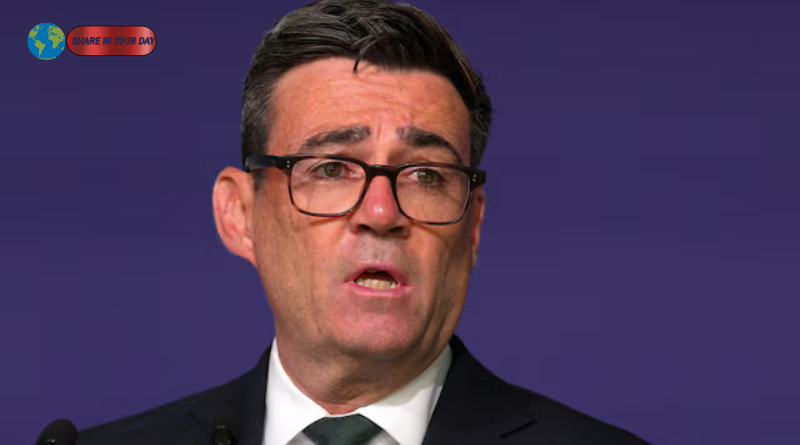
Burnham’s visit comes on Ukraine’s 35th Independence Day and carries both military and diplomatic significance. The British prime minister is scheduled to meet Ukrainian President Volodymyr Zelenskiy and co-chair a meeting of the “Coalition of the Willing,” a group of countries working together to support Ukraine.
The British government says the new initiative reflects a long-term commitment to Ukraine’s security rather than a short-term response to the latest battlefield developments. London has also stressed that its support will continue during the war and into Ukraine’s eventual reconstruction.
Ukraine Long-Range Missile Production Gets New Support
At the center of the announcement is the SCALP cruise missile, a French-produced weapon that shares technology with Britain’s Storm Shadow system.
According to Downing Street, Britain has agreed to allow European missile manufacturer MBDA to release classified information concerning British-made components used in SCALP. The information is intended to help France and Ukraine move forward with plans for local missile assembly in Ukraine.
The decision is important because missile production involves complex supply chains, specialized components and strict controls over technical information. Allowing relevant British information to be shared can remove one of the barriers to establishing a production capability involving Ukrainian facilities.
The initiative does not mean that Ukraine will immediately manufacture every part of the missile independently. Instead, it represents a step toward creating a broader European-Ukrainian defence industrial network capable of producing and maintaining long-range weapons closer to the battlefield.
That distinction matters. Building a sophisticated missile industry takes time, investment and technical expertise. However, local assembly could eventually make Ukraine less dependent on finished missile deliveries from foreign partners.
What the SCALP Missile Means for Ukraine
SCALP and Storm Shadow are long-range cruise missiles designed for precision strikes. Their capabilities have made them important components of Ukraine’s efforts to hit military and infrastructure targets at significant distances.
Britain was among the first Western countries to provide Ukraine with long-range strike weapons during the war. The UK government says it has committed £25 billion in support to Ukraine, including military and non-military assistance.
The shift toward local production could therefore represent an evolution in the relationship between the two countries.
Rather than simply supplying weapons manufactured abroad, Britain and its European partners are increasingly looking at ways to help Ukraine develop its own defence-industrial capacity.
That could provide several advantages.
First, Ukraine could gain greater control over its supply of long-range weapons. Second, production inside Ukraine could reduce some logistical pressures associated with moving finished weapons across European borders. Third, Ukrainian engineers and manufacturers could gain additional experience working with advanced Western defence technology.
The broader goal is resilience.
Andy Burnham Signals Long-Term British Commitment
Burnham’s visit is also intended to send a strong political message.
The British prime minister has repeatedly said that the UK will continue supporting Ukraine despite Russian warnings over Britain’s involvement in the conflict. Earlier in August, Burnham said Britain would support Ukraine “100%” and rejected the idea that London would reduce its backing because of pressure from Moscow.
During the Kyiv visit, Burnham is expected to reinforce the same position.
The UK government said the prime minister would tell Ukrainians that Britain stands firmly behind their independence and security. It also described the relationship between the two countries as extending beyond the current war and into Ukraine’s future reconstruction.
Burnham has framed the relationship in direct security terms, saying that Ukraine’s security is also Britain’s security.
That argument reflects a wider European concern that Russia’s war has consequences beyond Ukraine’s borders. European governments increasingly view Ukraine’s ability to defend itself as an important part of the continent’s broader security architecture.
Coalition of the Willing Meets in Kyiv
Missile production is only one part of Burnham’s agenda.
He will also co-chair a meeting of the Coalition of the Willing during his trip. The group, led by Britain and France, has become an important platform for European discussions about Ukraine’s security and the future of international support for Kyiv.
The meeting comes at a difficult moment for Ukraine.
Russian missile and drone attacks have continued, while Ukraine has sought additional air-defense systems from European partners. France, for example, has recently pledged to accelerate deliveries of military equipment and missile-defense capabilities to Ukraine.
European governments are therefore facing a dual challenge.
They must help Ukraine withstand immediate Russian attacks while also building a longer-term defence system that does not rely exclusively on supplies from the United States.
The push for Ukrainian missile production fits into that broader strategy.
Britain Is Expanding Its Long-Range Strike Strategy
The latest announcement also follows a separate British effort to develop new long-range strike weapons.
In June, the UK government announced progress on Project Brakestop, a programme designed to rapidly develop lower-cost long-range strike systems for Ukraine. Three British-designed systems had completed flight tests only months after the competition was launched.
The programme calls for weapons capable of striking targets more than 500 kilometers away while carrying a substantial warhead. Britain has also awarded additional development contracts as it moves toward the next stage of the programme.
Project Brakestop demonstrates that London is not viewing long-range weapons solely through the traditional model of purchasing and delivering established systems.
Instead, Britain is trying to accelerate innovation, production and testing.
That approach could complement the SCALP assembly initiative.
While SCALP is an established Anglo-French system, newer British programmes could eventually provide Ukraine with additional options and greater diversity in long-range strike capabilities.
Why Local Production Matters
For Ukraine, domestic production could become increasingly important as the war continues.
Reliance on foreign deliveries creates uncertainty. Weapons must be manufactured, transported and allocated by partner governments. Political changes in supporting countries can also affect the pace and scale of military assistance.
A stronger domestic defence industry could reduce some of those vulnerabilities.
Ukraine has already developed significant expertise in drones and other military technologies. The country has increasingly combined domestic innovation with Western equipment and technical assistance.
Expanding that model into long-range missile production would be considerably more challenging, but potentially more consequential.
Missiles require sophisticated propulsion systems, guidance technology, electronics and precision manufacturing. Establishing a secure production environment during an ongoing war would also present major risks.
Still, the decision by Britain to allow the release of relevant technical information represents a significant step toward making the broader ambition possible.
Russia Warns Against Deeper Western Involvement
The announcement is likely to increase tensions between Britain and Russia.
Moscow has repeatedly warned Western countries against increasing their military involvement in Ukraine. Russian officials have recently issued warnings specifically concerning Britain’s support for Ukrainian long-range capabilities and reports that British-made drones have been used in strikes against targets inside Russia.
The UK has rejected the idea that such warnings should determine its policy.
Reuters reported that Burnham recently reaffirmed Britain’s support for Ukraine after Moscow warned London of potential consequences over alleged British involvement in Ukrainian drone strikes.
The missile-production initiative therefore arrives at a sensitive time.
By supporting local assembly of a long-range weapon, Britain is moving beyond simply providing financial assistance or conventional military equipment. It is helping Ukraine strengthen the industrial infrastructure behind its future strike capabilities.
That could make the UK-Russia relationship even more strained.
A Broader European Defence Shift
The Ukraine long-range missile production initiative also highlights a larger change in European defence policy.
For years, many European countries relied heavily on the United States for high-end military capabilities. Russia’s full-scale invasion of Ukraine has accelerated efforts to strengthen European defence industries and expand domestic weapons production.
France and Britain have increasingly sought to coordinate their support for Ukraine. Their cooperation through the Coalition of the Willing is part of that effort.
The SCALP programme provides another example.
Instead of treating missile production as a purely national capability, France, Britain and Ukraine are exploring ways to combine technology, manufacturing and industrial capacity.
Such cooperation could become increasingly important if European governments seek to build a more self-reliant defence system.
Ukraine’s Independence Day Carries Added Meaning
Burnham’s arrival in Kyiv on August 24 is particularly symbolic because it coincides with Ukraine’s Independence Day.
The visit is his first international trip since becoming prime minister and follows Zelenskiy’s visit to Britain in July, when the Ukrainian president became Burnham’s first international guest. The two leaders discussed military cooperation and Ukraine’s future security.
The timing allows Burnham to combine diplomatic symbolism with concrete defence announcements.
He is expected to participate in Independence Day events, meet Ukrainian officials and lead discussions with international partners.
The UK government has described the visit as a demonstration that British support will continue despite the ongoing war and pressure from Russia.
For Kyiv, that message is important.
Ukraine needs continued access to weapons, ammunition, air defense and financial assistance. It also needs confidence that European partners are prepared to invest in its long-term ability to defend itself.
What Happens Next?
The immediate impact of the announcement will depend on how quickly the technical and industrial arrangements can be implemented.
Allowing MBDA to release classified information is only one stage of a much larger process. France and Ukraine will still need to establish suitable facilities, secure supply chains, train personnel and develop production procedures.
Security will also be a major concern.
Any missile-production facility in Ukraine could become a target for Russian attacks. Protecting industrial infrastructure would therefore require strong air defenses and other security measures.
Even so, the political direction is clear.
Britain is backing a model in which Ukraine becomes increasingly capable of producing advanced weapons itself, while European partners provide technology, expertise and industrial support.
That could reshape the way Western military assistance is delivered over the coming years.
A Strategic Message Beyond the Battlefield
The significance of Burnham’s Kyiv visit extends beyond the SCALP missile itself.
The announcement sends a message that Britain intends to remain deeply involved in Ukraine’s security strategy under its new government. It also signals that London sees Ukraine’s defence industry as an important part of Europe’s future security.
For Ukraine, the potential ability to assemble long-range missiles domestically could strengthen its military resilience.
For Britain and France, cooperation with Ukrainian manufacturers could provide valuable battlefield-driven experience and accelerate defence innovation.
And for Europe as a whole, the initiative reinforces the emerging push toward greater defence-industrial independence.
The road from an agreement to full-scale domestic missile production will not be short. Yet the decision to unlock British technical information for the SCALP programme marks a notable step.
As Burnham visits Kyiv, the message from London is unmistakable: British support for Ukraine is moving beyond the delivery of individual weapons toward helping build the industrial capabilities needed for the country’s long-term defense.
Source & Further Reading
Primary reporting is based on Reuters, with additional verification from the UK government’s official statements on Burnham’s Kyiv visit, British support for Ukraine and Project Brakestop.