World’s Oldest Shipwreck Discovered Off Turkey, Revealing 4,700-Year-Old Trade Routes
Archaeologists have uncovered the remains of what may be the world’s oldest known shipwreck off the Mediterranean coast of Turkey, revealing new evidence of maritime trade nearly 5,000 years ago. The discovery near Kekova Island, in the southern province of Antalya, dates to the Early Bronze Age, when Egypt’s Great Pyramid of Giza was being constructed.
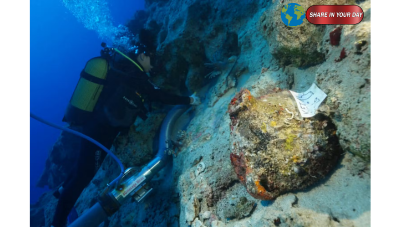
Although the vessel’s wooden structure has disappeared, its surviving cargo offers an extraordinary glimpse into the lives of ancient merchants and sailors. Researchers recovered ceramic storage vessels and stone anchors from the seabed, providing important clues about the movement of goods across the eastern Mediterranean.
The discovery could reshape understanding of early seafaring and the commercial connections that linked communities across the ancient world.
Ancient Shipwreck Dates Back Nearly 4,700 Years
The wreck is estimated to be between 4,400 and 4,700 years old, placing it among the earliest known examples of a sunken trading vessel. Underwater archaeological investigations identified the remains near Kekova Island, where artifacts were found scattered across the seabed approximately 30 meters below the surface.
The excavation was led by Hakan Öniz, an underwater archaeologist and associate professor at Akdeniz University. Researchers examined the distinctive pottery recovered from the site to establish its approximate age and investigate where the vessel might have originated.
The artifacts indicate that the ship sank during the Early Bronze Age, a period when expanding communities were developing increasingly complex systems of production, exchange and transportation.
The discovery is particularly significant because the wooden hull has not survived. Instead, archaeologists have relied on the cargo and associated objects to reconstruct the vessel’s history.
According to reports published following the announcement, the discovery could surpass the previously recognized ancient shipwreck near Dokos, Greece, which dates to approximately 4,200 years ago.
Ceramic Jars Preserve Clues to Ancient Commerce
Among the most important finds are ceramic storage containers known as amphorae. These vessels were designed to hold and transport goods, making them valuable evidence for understanding ancient commercial activity.
More than 30 ceramic containers were reported at the Turkish site, alongside three stone anchors. The jars’ shapes, handles and decorative features helped researchers compare them with pottery discovered at other archaeological sites across the eastern Mediterranean.
Some of the containers reportedly retain visible residues, offering scientists an unusual opportunity to investigate what they carried before the ship sank.
Researchers believe the cargo may have included olive oil or wine. However, further examination is needed to establish the contents with greater certainty.
Analysis of the pottery’s clay suggests that at least some vessels were manufactured in workshops in the Jordan Valley, indicating that the ship may have transported goods westward from the eastern Mediterranean.
Similar pottery forms have been identified at sites in Egypt, Troy and Crete. These parallels suggest that communities separated by considerable distances were connected through networks of exchange long before the emergence of many better-documented ancient civilizations.
Did the Ship Sail Toward Troy or Crete?
Archaeologists believe the vessel may have been traveling toward Troy, in present-day Turkey, or Crete, the Greek island associated with the ancient Minoan civilization.
These destinations would place the ship within a wider network of maritime connections linking the Levant, Anatolia, the Aegean and Egypt.
The precise route remains uncertain, and researchers have not established the ship’s final destination. Nevertheless, the distribution of comparable pottery provides evidence that goods and manufacturing traditions traveled between distant coastal communities.
Such exchanges would have required practical knowledge of navigation, vessel construction, weather conditions and coastal geography.
The wreck therefore offers more than a snapshot of a lost cargo. It could help researchers investigate how early maritime traders organized voyages, transported valuable products and connected societies through the Mediterranean.
A Rare Opportunity to Study Ancient Sailors’ Lives
One particularly unusual vessel has attracted attention because of markings and holes that may indicate a specialized use. Researchers have suggested that it could have been associated with producing dairy products, such as butter or cheese.
That interpretation remains tentative, but it raises interesting questions about how sailors provisioned themselves during long journeys.
Archaeological discoveries often reveal the products that ancient people traded while providing fewer details about the everyday experiences of those transporting them. The cargo from Kekova could help researchers investigate both aspects of maritime history.
Every surviving object potentially contributes information about the people who made the containers, loaded the goods, organized the voyage and depended on the ship reaching its destination.
The loss of the vessel would have represented a serious setback for those involved in its journey. Thousands of years later, however, its cargo has become a valuable archaeological record.
Preserving the Underwater Discovery
Recovering artifacts from the seabed presents considerable challenges. Objects exposed to seawater for thousands of years can deteriorate rapidly when removed from their underwater environment, making careful conservation essential.
Researchers must document the location and condition of the finds, stabilize the recovered materials and examine them without destroying evidence that could answer future questions.
The surviving pottery and anchors may also help scientists better understand early anchoring practices, cargo transportation and the development of maritime technology.
Further research could establish more precise dates, clarify the origin of individual vessels and determine whether chemical residues reveal the products once stored inside them.
The discovery near Kekova Island demonstrates how underwater archaeology can transform apparently ordinary objects into evidence of far-reaching historical connections.
Although the ship itself has largely vanished, its surviving cargo has endured for millennia. Continued investigation could reveal more about the people who sailed these waters, the goods they carried and the trading relationships that helped shape the ancient Mediterranean.
For archaeologists, the wreck represents a rare opportunity to investigate maritime commerce at a time when written records are limited. Its significance lies not only in its possible age but also in the evidence it preserves about how early societies interacted across the sea.