San Francisco Mountain Lion Safely Captured in 2026
A San Francisco mountain lion was safely captured Friday after roaming through the Outer Sunset neighborhood, triggering a major response from police, wildlife officers and animal-control personnel. The young animal was eventually tranquilized, examined by wildlife officials and released back into the wild.
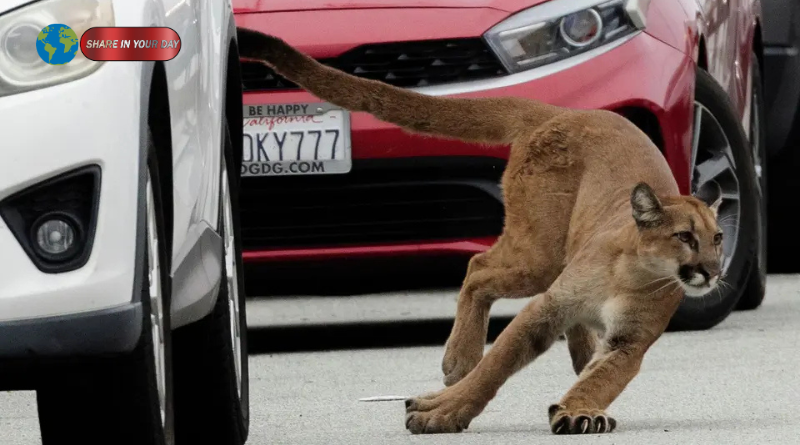
The unusual encounter unfolded near 44th Avenue and Ulloa Street, just north of the San Francisco Zoo. Residents were warned to remain indoors as officials established a perimeter and worked to locate the animal.
The incident ended without reported injuries to residents or the mountain lion. According to the San Francisco Chronicle, the animal was transferred to the California Department of Fish and Wildlife after being tranquilized and was checked before being released.
The episode was the latest in a series of mountain lion sightings in San Francisco this month, raising renewed attention around how wild animals move through increasingly urbanized parts of the Bay Area.
San Francisco mountain lion spotted in Outer Sunset
The San Francisco mountain lion was reported Friday morning in the Outer Sunset, where residents noticed the animal moving through a residential area.
San Francisco officials issued an emergency alert warning people about the sighting. Police subsequently established a perimeter around the area near 44th Avenue and Ulloa Street while wildlife and animal-control personnel attempted to contain the animal.
The situation developed quickly.
According to the Chronicle, the mountain lion had been sheltering along 44th Avenue between Ulloa and Taraval streets. At about 10:30 a.m., officials decided to use a tranquilizer dart to safely capture it.
However, the animal did not immediately become incapacitated.
After being darted, the mountain lion moved away from officials, ran along 44th Avenue and turned onto Ulloa Street. It eventually took refuge in a bush near a home.
When the tranquilizer began taking effect, the animal suddenly bolted toward the surrounding area, prompting officials to clear people from its path.
A video report from CBS Bay Area also showed the animal running as wildlife officers attempted to contain it before the capture was completed.
Residents told to stay inside
The response brought an unusual level of activity to the normally residential neighborhood.
Police officers used bullhorns to warn residents to remain inside while officials searched for the mountain lion. Some people were temporarily prevented from reaching their homes while authorities secured the area.
The situation also drew curious residents and onlookers who gathered near the police perimeter.
The Chronicle reported that one resident described hearing a large disturbance involving birds before realizing a mountain lion was moving through the neighborhood.
The response demonstrated why authorities treat sightings differently depending on the animal’s location.
A mountain lion in a remote or natural area may be given an opportunity to move away on its own. In this case, however, the animal was in a densely populated residential neighborhood, creating a different set of safety concerns.
San Francisco Animal Care and Control said the decision to tranquilize and remove the animal was made with the safety of residents, pets and the mountain lion in mind.
San Francisco mountain lion captured after tense chase
The capture was completed before noon.
Once the tranquilizer took effect, officials were able to secure the mountain lion and carry it away from the neighborhood.
Photographs from the scene showed wildlife officers transporting the sedated animal on a stretcher.
The California Department of Fish and Wildlife then examined the mountain lion before releasing it back into the wild. NBC Bay Area reported that the animal was a male estimated to be between 2 and 3 years old and weighed approximately 78 pounds.
The animal was also fitted with a GPS satellite tracking collar, according to CBS Bay Area.
That collar is expected to provide researchers with information about the animal’s movements after its release. CBS reported that the mountain lion became part of the Santa Cruz Puma Project’s tracking and research program.
The Santa Cruz Puma Project is a collaboration involving UC Santa Cruz and the California Department of Fish and Wildlife. Its researchers use telemetry collars to collect movement and location information from mountain lions and study their habitat use and movement corridors.
This means Friday’s encounter could provide scientists with more than a single unusual urban-wildlife story. The tracking data may also help researchers understand how mountain lions navigate landscapes that contain both natural habitat and heavily developed neighborhoods.
Could this be the same mountain lion seen elsewhere in San Francisco?
Friday’s sighting came less than two weeks after another mountain lion was seen in San Francisco’s Panhandle.
That earlier animal was reportedly observed in a tree near Fell and Baker streets. Another reported sighting later occurred near 44th Avenue and Fulton Street, close to the western edge of Golden Gate Park.
Officials said the Outer Sunset animal could be the same mountain lion seen previously in the city, but there was no way to confirm that at the time.
The timing nevertheless caught residents’ attention.
San Francisco Animal Care and Control said the circumstances surrounding the two incidents were different. The earlier Panhandle mountain lion was located in a natural area where it had a potential route toward more suitable habitat.
The Outer Sunset animal, by contrast, was hiding beneath a bush in a residential neighborhood.
That distinction was important in determining how authorities responded.
The latest encounter also comes after a mountain lion was captured in San Francisco’s Pacific Heights neighborhood in January. That animal was tranquilized and subsequently returned to habitat on the Peninsula.
Internal link suggestion: Related Story: Previous San Francisco Mountain Lion Sightings Explained
Why mountain lions enter urban areas
Mountain lions are native to California and occupy a wide variety of environments.
The California Department of Fish and Wildlife says mountain lions can live in forests, foothills, coastal areas and wildlife-urban interfaces. They are generally solitary and elusive animals that usually avoid people.
Their presence near developed areas is therefore not necessarily evidence that an animal is deliberately seeking out people.
Urban and suburban landscapes can sometimes intersect with wildlife movement corridors. Mountain lions may travel through these areas while searching for habitat, prey or routes between larger natural areas.
The challenge is particularly significant in California, where human development overlaps with mountain lion habitat in many parts of the state.
CDFW notes that mountain lions generally pose little threat to humans and typically avoid human interaction. The agency also says that sightings do not automatically mean an animal represents an imminent public-safety threat.
At the same time, officials can intervene when circumstances create a significant safety concern.
What residents should do after a mountain lion sighting
The latest San Francisco mountain lion encounter also serves as a reminder of what people should do if they encounter a cougar or mountain lion.
California wildlife officials advise people not to run.
Instead, people should remain calm, face the animal, make themselves appear larger and make loud noises. People should also avoid turning their backs or approaching the animal.
People with small children should keep them close rather than allowing them to run ahead.
Dogs should also be kept on a leash in areas where mountain lions may be present.
If a mountain lion appears, officials recommend giving it an escape route rather than attempting to corner, approach or capture it.
The California Department of Fish and Wildlife also recommends reducing conditions around homes that could attract or provide hiding places for mountain lions. These measures include removing dense vegetation around buildings, using outdoor lighting and taking steps to avoid attracting deer, which are an important mountain lion food source.
Residents should not attempt to intervene themselves.
Instead, a sighting should be reported to the appropriate authorities, particularly when the animal is in a populated area or presents an immediate safety concern.
Mountain lions remain an important part of California’s ecosystem
Although a mountain lion appearing on a San Francisco residential street can seem extraordinary, the species plays an important ecological role in California.
CDFW describes mountain lions as ecosystem contributors that help regulate prey populations. Their diet can include deer and other animals, while their movements connect different parts of the landscape.
California has also developed extensive protections and research programs around the species.
According to CDFW, mountain lions became specially protected mammals under California’s Proposition 117 in 1990. The state’s Mountain Lion Conservation Program was formally established in 2015 to coordinate research, health monitoring and conservation efforts.
In February 2026, the California Fish and Game Commission also voted to list mountain lion populations in parts of Southern California and the central coast as threatened under the California Endangered Species Act. The commission cited threats including habitat loss, fragmentation and isolation of small populations.
The San Francisco sightings therefore occur against a broader backdrop of research into how mountain lions survive in landscapes increasingly shaped by human development.
The tracking collar could reveal where the lion goes next
The GPS collar placed on the Outer Sunset mountain lion could make the latest incident particularly useful for researchers.
The Santa Cruz Puma Project uses tracking collars to collect continuous movement and location data from mountain lions. Researchers analyze those movements to better understand habitat requirements and the corridors animals use between different areas.
For an animal that has already traveled into the heart of San Francisco, that information could help researchers understand its route through the urban landscape.
It may also provide insight into whether the animal remains near developed areas or returns toward more suitable habitat.
For residents, meanwhile, the tracking information could help wildlife officials better understand potential future movement.
A dramatic morning ended safely
The San Francisco mountain lion encounter began with an animal moving through front yards and residential streets and ended with the mountain lion safely removed from the neighborhood and returned to the wild.
For residents, the sighting was startling. For wildlife officials, it presented a complicated urban-wildlife situation requiring police coordination, animal-control expertise and assistance from state wildlife authorities.
The animal’s successful release also means the story does not end with its capture.
With a GPS tracking collar now attached, researchers may be able to follow its movements and learn more about how mountain lions navigate the Bay Area.
The incident is also a reminder that San Francisco’s urban landscape exists alongside a much larger natural environment.
Mountain lions are elusive, and encounters remain uncommon. But when one does appear in a densely populated neighborhood, the safest response is to give wildlife professionals room to work and follow official instructions.
For now, the Outer Sunset visitor has left the neighborhood.
Its next destination, thanks to the tracking collar, may be something researchers can follow.