Trump Tariffs Hit Canada’s Dairy Farmers as US Sales Stall
Trump Tariffs Disrupt Canadian Dairy Exports
Canadian dairy farmers are facing growing uncertainty after steep US tariffs disrupted exports and threatened to leave producers with fewer options for selling their milk.
A 50 percent US tariff on a range of Canadian goods took effect on August 22, including dairy products. The measure followed the collapse of trade negotiations between Washington and Ottawa and has sharply changed conditions for Canadian producers that depend on an integrated North American supply chain.
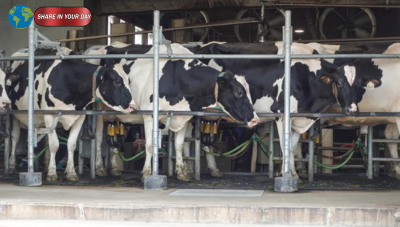
In Abbotsford, British Columbia, dairy farmer Casey Pruim is among those watching the situation closely. His farm has about 330 cows, which are milked three times a day. Roughly 28,000 litres of raw milk leave the farm every second day, entering a distribution system that ultimately connects farmers with processors and consumers.
Much of that milk is consumed in Canada, but some of the resulting dairy products have historically been sold to the United States.
That cross-border business has now been severely disrupted.
Pruim, who also represents dairy farmers in British Columbia, told Al Jazeera that individual farmers do not decide where their milk is exported. Instead, producers sell through the province’s milk-marketing system, which allocates supplies to processors according to demand.
If processors lose access to American customers, they may reduce the amount of milk they purchase. That reduction can then affect farmers throughout the supply system.
Farmers Cannot Quickly Reduce Milk Production
The problem is particularly serious for dairy producers because milk production cannot simply be stopped when demand falls.
Cows continue producing milk every day, regardless of changes in international trade policy. Farmers therefore need processors and buyers to absorb production on a consistent basis.
Pruim warned that if processors can no longer sell products profitably in the United States because of the 50 percent tariff, Canadian farmers could ultimately face reduced demand. In an extreme situation, producers could be forced to dispose of excess milk or reduce their herds.
The immediate impact remains uncertain.
Dylan Kruger of BC Dairy said it is too early to determine the full consequences of the tariffs or whether products previously destined for the United States can be redirected successfully to other markets.
The challenge is that finding alternative buyers is not an overnight process. Dairy products are often perishable, while new export markets require buyers, transportation arrangements, regulatory approvals and competitive pricing.
Bryan Yu, chief economist at Central 1 credit union, told Al Jazeera that producers could experience significant short-term pressure because replacing an important market takes time.
Canada’s Dairy System at the Center of the Dispute
The latest tariff conflict is also tied to a longstanding disagreement over Canada’s supply-management system.
Canada regulates the production and importation of dairy, poultry and eggs through a supply-management framework. The system uses production quotas and import controls to provide Canadian farmers with more predictable market conditions.
US officials and dairy industry representatives have long criticized aspects of the Canadian system, particularly its treatment of American dairy imports.
The Trump administration has argued that Canadian policies disadvantage US farmers. In its September 8 presidential proclamation, the White House said Canada had maintained measures it characterized as discriminatory toward US dairy commerce. The administration subsequently ordered certain Canadian dairy products to be excluded from the US market beginning September 29.
Canadian dairy representatives dispute Washington’s characterization of the system and point to existing trade arrangements that already provide US dairy products with access to the Canadian market.
Trade figures cited by the Dairy Processors Association of Canada show that the imbalance in dairy trade has actually widened since the Canada-US-Mexico Agreement took effect in 2020. Canadian dairy exports to the United States increased from 241.3 million Canadian dollars in 2020 to 308.7 million Canadian dollars in 2025. Over the same period, Canadian dairy imports from the US more than doubled to about 1.355 billion Canadian dollars.
Canada Responds With Retaliatory Tariffs
Ottawa has responded to Washington’s measures with its own tariffs.
Canada introduced new counter-tariffs on US goods beginning September 8. The measures cover billions of dollars in American products and include dairy, steel, agricultural equipment, appliances and other goods. Canada’s official tariff list includes a 50 percent rate on several categories of imported milk and cream products.
The Canadian government has described the measures as a dollar-for-dollar response to the US tariffs.
Prime Minister Mark Carney has also said Canada needs to strengthen its economic resilience and reduce its dependence on the US market. Ottawa is encouraging businesses affected by the dispute to explore alternative export destinations and make use of available government assistance and trade resources.
However, retaliatory tariffs can create additional costs for businesses and consumers on both sides of the border.
The wider dispute has already moved beyond tariffs. On September 8, the US announced that certain Canadian dairy products, alcoholic beverages and motorcycles would be excluded from the US market beginning September 29.
Uncertainty Remains for Canadian Farmers
For Canadian dairy farmers, the central issue is no longer simply the size of the tariff. It is whether products that previously moved through established US supply chains can find alternative buyers.
The US market is geographically close, making transportation relatively practical for many Canadian products. Finding distant markets could require additional logistics, regulatory approvals and investment while producers continue to deal with existing production levels.
For farmers such as Pruim, that uncertainty makes the current trade dispute particularly difficult.
The Canadian dairy industry remains closely connected to both domestic and international markets, meaning decisions made in Washington and Ottawa can eventually reach individual farms.
As negotiations remain strained, farmers are waiting to see whether the two countries can restore stable trade conditions or whether the tariff dispute will become a longer-term disruption for North American agriculture.
For now, Canadian dairy producers face a difficult combination of reduced US market access, uncertain demand and limited ability to rapidly change production — putting the future of cross-border dairy trade under renewed pressure.