YouTube Music AI Labels: 5 Key Changes Revealed
YouTube Music is introducing new labels to help listeners identify songs created primarily with generative artificial intelligence, marking another major step in the streaming industry’s response to the rapid growth of AI-generated music.
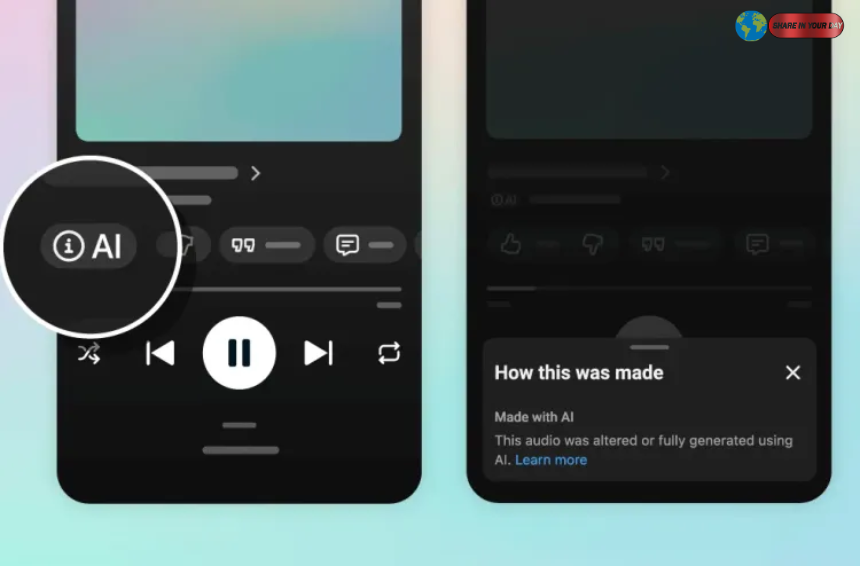
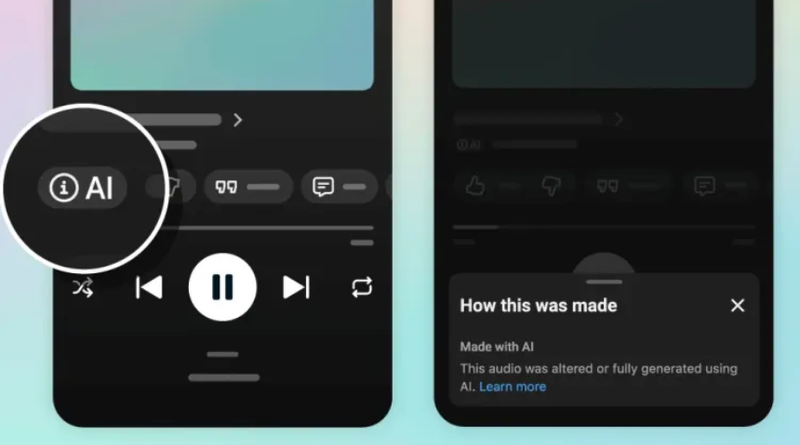
The new “Made with AI” label began rolling out on October 14, 2026. It appears on the player page for tracks in which artificial intelligence played a significant role in the creative process, including music generated using AI models for composition and vocals.
The change aims to give listeners clearer information about how their music was produced. It also reflects growing pressure on streaming platforms to improve transparency as AI-generated songs become increasingly common.
YouTube says it will work with music industry partners and use its own detection tools to identify tracks that require disclosure. The labeling system is also expected to expand to the main YouTube app.
1. YouTube Music AI Labels Appear on the Player Page
The new YouTube Music AI labels are designed to make information about a song’s creation more accessible.
When a track qualifies for the label, listeners can see a “Made with AI” notice directly on the player page. Tapping the label provides additional information about the role of artificial intelligence in producing the music.
This approach places the disclosure alongside the listening experience rather than requiring users to search through separate information pages.
For listeners, the change could make it easier to distinguish between traditional recordings and music generated substantially with AI tools.
However, the label does not necessarily mean that every element of a song was created by a machine. Some tracks combine AI-generated components with human performances, lyrics, production decisions, or other creative contributions.
The goal is to provide more context about the music rather than treat every use of AI as identical.
2. What Counts as AI-Generated Music?
YouTube’s policy distinguishes between music created entirely with generative AI and recordings that incorporate AI-generated elements.
A song produced by entering prompts into an AI music generator and downloading the resulting track is an example of fully AI-generated content.
Partly AI-generated music can include recordings where artists use AI to create a bassline, instrumental arrangement, melody, or other component before adding their own performances.
The distinction matters because artificial intelligence can support many different stages of music production.
For example, an artist might generate an instrumental arrangement using an AI model before recording live vocals. Another musician might use AI to develop a melody but perform the finished composition with traditional instruments.
YouTube’s disclosure guidance also distinguishes generative AI from ordinary production tools. Standard pitch correction, such as Auto-Tune used to correct minor tuning errors, does not automatically make a recording AI-generated under its stated classifications.
These distinctions are intended to help the platform and its music partners classify content more consistently.
3. YouTube Will Combine Partner Disclosures With Detection Tools
Identifying AI-generated music across a large streaming catalog presents a significant technical challenge.
YouTube is working with music partners to identify tracks that contain substantial generative AI contributions. The company will also use its own detection tools to supplement information supplied by those partners.
Music distributors and partners can provide metadata identifying content as fully AI-generated, partly AI-generated, or not AI-generated.
If a partner does not provide this information, YouTube says it may rely on other signals to determine whether a track should receive an AI designation.
The process could help identify content that might otherwise appear indistinguishable from conventional recordings.
Nevertheless, determining how much AI contributed to a song is not always straightforward. Modern production workflows can combine human performances, machine-generated audio, digital effects, and AI-assisted editing.
The accuracy of the labeling system will therefore depend on disclosure practices, available technical signals, and how consistently the classifications are applied.
4. AI Music Labels Do Not Automatically Ban Songs
The introduction of YouTube Music AI labels does not amount to a blanket ban on AI-generated music.
Instead, the policy focuses on informing listeners about the creative process. AI involvement alone does not automatically make a track ineligible for monetization under YouTube’s stated approach.
This distinction separates transparency requirements from broader questions about copyright, artist consent, distribution rights, and fraudulent activity.
A properly disclosed AI-assisted song can still have legitimate creative contributions from musicians and producers. By contrast, deceptive uploads, unauthorized imitation, or artificial streaming activity can raise separate concerns.
For artists and independent creators, the new system could make disclosure an increasingly important part of distributing music.
It may also encourage record labels and distributors to improve the information they provide when delivering tracks to streaming services.
The long-term impact will depend on how the rules are enforced and whether listeners find the labels useful.
5. Streaming Platforms Are Taking Different Approaches
YouTube is not the only music platform responding to the growth of generative AI.
Spotify has introduced a voluntary AI disclosure approach and has announced measures aimed at limiting the promotion of certain AI personas. Apple Music has also been reported to be preparing AI transparency labels.
Deezer has taken additional steps to identify fully AI-generated tracks and has explored ways for listeners to filter them out. The service has also raised concerns about fraudulent streams involving AI-generated music.
These different approaches reflect an industry debate about how AI-generated content should be treated.
Some platforms emphasize disclosure and listener choice. Others are exploring stronger restrictions on recommendation systems or distribution.
YouTube’s strategy currently focuses on making AI involvement visible rather than automatically excluding qualifying songs from the service.
The differences could influence how artists choose distribution platforms and how listeners discover music in the years ahead.
What the New Labels Mean for Artists and Listeners
The introduction of YouTube Music AI labels reflects a broader change in how music is created and distributed.
Generative AI tools can help musicians experiment with arrangements, explore new sounds, and develop ideas more quickly. At the same time, the technology raises questions about originality, transparency, compensation, and the role of human creativity.
For listeners, labels provide additional context when choosing what to hear. They do not determine whether a song is good, authentic, or artistically valuable, but they can help audiences make more informed decisions.
For musicians and distributors, accurate disclosure may become increasingly important as streaming services develop more detailed policies for AI-assisted content.
YouTube’s next challenge will be applying its labels consistently across a growing catalog while keeping the listening experience straightforward.
The rollout also signals that transparency is becoming a central issue in digital music. As generative AI continues to evolve, streaming platforms will need to balance innovation with the expectations of artists, rights holders, and listeners.
Ultimately, the success of YouTube Music AI labels will depend on whether they provide reliable information and help users understand how the songs they hear are made.