Oracle invokes force majeure over New Mexico project
Oracle has issued a force majeure notice involving a massive data center project in New Mexico, seeking protection against potential financial consequences if the facility faces delays in securing power and fails to begin operations as planned.
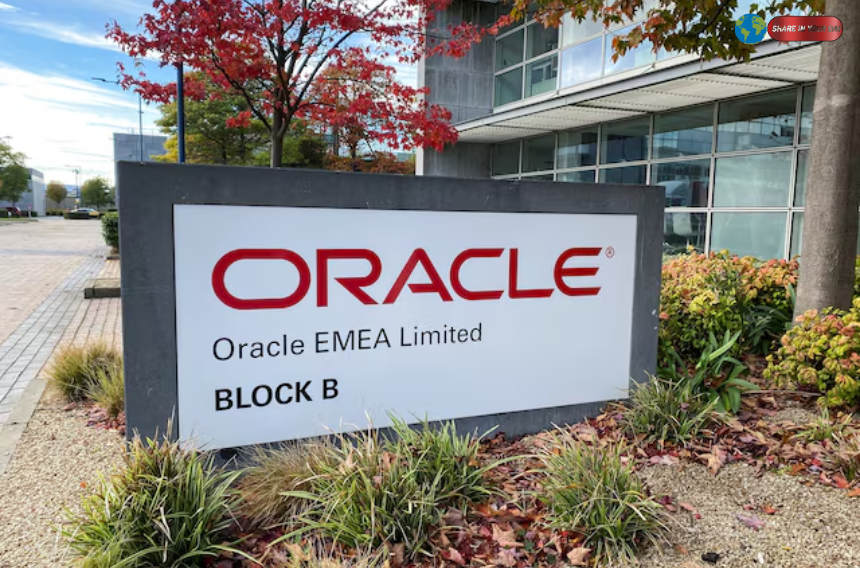
The notice concerns Project Jupiter, a 1,400-acre data center campus being developed by a unit of Blue Owl Capital. The project is closely tied to Oracle’s broader agreement to provide computing capacity for OpenAI as demand for artificial intelligence infrastructure continues to surge.
According to a person familiar with the matter cited by Reuters, the potential problem centers on securing power for the site. The source said that responsibility for obtaining power falls to Oracle under the project’s contract. RReuters
Oracle has maintained that Project Jupiter remains on schedule. The company said it remains committed to the New Mexico development, even as the force majeure notice introduces another layer of uncertainty around the project.
What Oracle’s force majeure notice means
Force majeure is a contractual provision that can protect a party from certain obligations when circumstances beyond its control prevent a project from proceeding as expected.
In this case, the notice does not appear to represent an attempt by Oracle to abandon Project Jupiter. Instead, Reuters reported that Oracle is seeking to delay certain payments if the facility is unable to meet its planned 2028 operational target. RReuters
The distinction is important because Oracle remains the project’s main tenant. A source familiar with the matter said Oracle cannot simply terminate the lease under the current arrangement.
That leaves Oracle exposed to costs if construction or infrastructure problems push the project beyond its planned timeline. The force majeure notice could provide the company with additional protection while those issues are addressed.
Blue Owl, meanwhile, has said the notice does not change the financial commitments associated with the multi-year project.
Project Jupiter carries billions in financing
Project Jupiter is one of the largest pieces of infrastructure associated with the current artificial intelligence expansion.
The campus has secured about $18 billion in loans from a group of banks, according to media reports. Blue Owl has roughly $3 billion of equity invested in the project, while Oracle is responsible for debt-related costs under the reported arrangement. RReuters
The financial structure means delays could have consequences beyond the construction schedule.
During development, Blue Owl is expected to earn a lower return on its equity. Once the facility is completed, the project’s expected levered yield would increase, according to a source familiar with the arrangement.
If the project is delayed, the transition to the higher post-completion rental arrangement would also be pushed back.
Oracle’s use of force majeure therefore highlights how construction delays can affect not only technology companies but also developers, lenders and investors financing the rapidly expanding AI infrastructure industry.
Power remains a major challenge for AI data centers
The situation at Project Jupiter reflects a broader problem facing the data center industry.
AI systems require enormous amounts of computing power, and the facilities supporting them consume significant quantities of electricity. Developers are therefore racing to secure land, electricity, cooling systems and other infrastructure at a time when demand is expanding rapidly.
Project Jupiter has faced several reported infrastructure challenges, including issues surrounding a planned natural gas pipeline that was expected to help supply energy to the campus.
The project has also faced legal and regulatory challenges involving water and air-quality permits. Those obstacles have added to concerns surrounding the timetable for bringing the facility online. RReuters
The power issue is particularly significant because securing electricity can take years in areas where transmission infrastructure and generation capacity are limited.
Oracle remains tied to OpenAI’s AI ambitions
Project Jupiter forms part of Oracle’s broader push into AI infrastructure.
The company has been investing heavily to expand its cloud computing capacity and meet demand from AI companies, including OpenAI. The project is also connected to Stargate, a major AI infrastructure initiative involving OpenAI, SoftBank and other partners.
The Stargate program has been associated with a planned investment commitment of as much as $500 billion in US AI infrastructure.
That scale illustrates why individual data center projects have become strategically important. Delays at a single large campus can affect construction schedules, financing arrangements and the availability of computing capacity for AI companies.
Investors are watching Oracle’s spending
The latest development comes as investors have become increasingly focused on the cost of Oracle’s AI expansion.
Oracle has committed substantial amounts of capital to building data centers and expanding cloud infrastructure. The spending is intended to capitalize on rapid growth in demand for AI computing, but it has also increased attention on the company’s borrowing and financing requirements.
Earlier this month, Reuters reported that about $18 billion in loans linked to Project Jupiter had come under pressure in debt markets. The development followed concerns about local opposition, infrastructure obstacles and Oracle’s growing debt burden. RReuters
Oracle’s shares also moved lower following reports of the force majeure notice, underscoring investor sensitivity to potential delays and rising costs.
A test for the AI infrastructure boom
For now, Oracle continues to say that Project Jupiter remains on its planned schedule. Blue Owl has also indicated that the force majeure notice does not alter the project’s financial commitments.
But the development highlights the practical difficulties behind the massive investment now flowing into AI infrastructure.
Building large data centers requires more than computing equipment. Developers must secure reliable power, fuel, water, permits, financing and community support, often years before a facility can begin serving customers.
Project Jupiter shows how those challenges can become contractual and financial issues for some of the world’s largest technology companies.
The project is not necessarily being abandoned, and the force majeure notice does not by itself mean construction will stop. Instead, it provides a glimpse into how companies are managing risk as the race to build AI infrastructure accelerates.
For Oracle, the immediate priority remains getting Project Jupiter online. Whether the campus can meet its 2028 target will depend heavily on the company’s ability to overcome the power and infrastructure challenges surrounding one of its most ambitious AI data center projects.