Colbert Trump Feud Revealed: 5 Key Moments
Introduction
The Colbert Trump feud has once again captured global attention, blending politics, religion, and late-night satire into a spectacle that continues to dominate headlines. Sparked by tensions between former U.S. President Donald Trump and Pope Leo XIV, the situation escalated when Stephen Colbert turned the controversy into biting comedy on his late-night show.
This unusual clash—featuring a political leader, a religious figure, and a television comedian—has evolved into more than just entertainment. It reflects deeper cultural and political divides, while also showcasing how modern media reshapes public discourse.
1. The Origins of the Conflict
The roots of the Colbert Trump feud lie in a broader disagreement between Donald Trump and Pope Leo XIV. The dispute centers primarily on foreign policy, particularly issues involving military intervention and global peace efforts.
Pope Leo XIV has taken a firm stance advocating diplomacy over conflict. Meanwhile, Trump has publicly criticized the pope’s involvement in political matters, arguing that religious leaders should refrain from influencing geopolitical decisions.
This rare public disagreement between a U.S. political figure and the Vatican quickly drew attention worldwide. Historically, such disputes have been handled with far more restraint. However, in today’s media landscape, even subtle disagreements can escalate rapidly.
2. Colbert’s Satirical Response
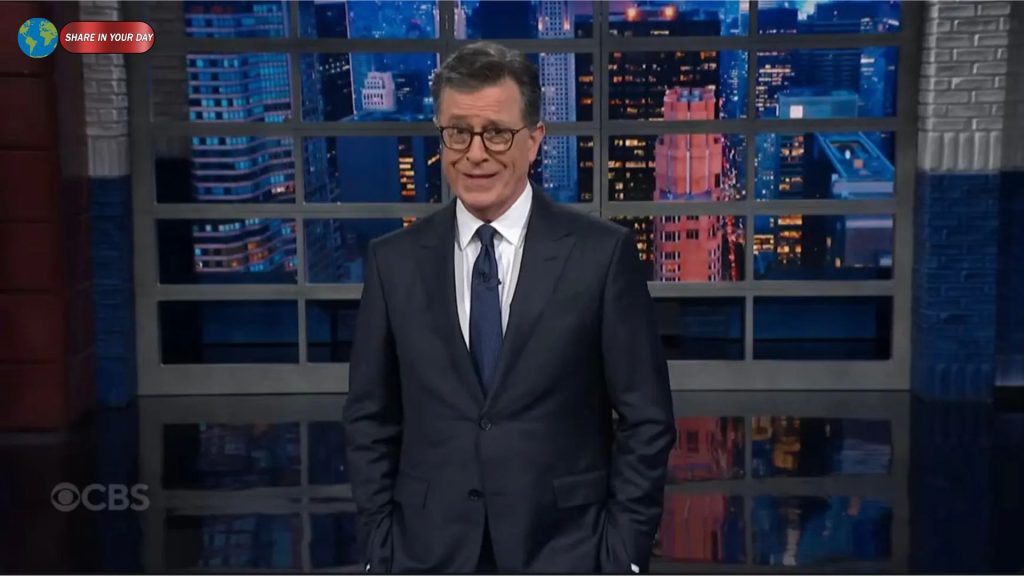
Stephen Colbert, known for blending humor with political commentary, seized the moment. On his late-night program, he transformed the escalating dispute into a series of satirical segments that quickly went viral.
The Colbert Trump feud gained momentum as Colbert mocked Trump’s rhetoric while highlighting the unusual nature of arguing with a religious leader whose central message revolves around peace.
Colbert’s humor relied heavily on contrast. On one side stood a political figure known for direct and often confrontational communication. On the other stood a pope advocating compassion and diplomacy.
This contrast created fertile ground for satire. As a result, Colbert’s segments resonated with audiences who were already closely following the controversy.
3. Media Amplification and Public Reaction
The media played a significant role in amplifying the Colbert Trump feud. News outlets, social media platforms, and political commentators all contributed to the rapid spread of the story.
Meanwhile, audiences reacted in sharply divided ways. Supporters of Trump criticized Colbert for what they perceived as biased commentary. Others praised the comedian for using humor to highlight serious political issues.
Social media further intensified the situation. Clips from Colbert’s show circulated widely, often accompanied by commentary that added new layers of interpretation.
Therefore, what began as a political disagreement quickly transformed into a cultural phenomenon, demonstrating the power of modern media ecosystems.
4. The Role of Late-Night Television in Politics
The Colbert Trump feud underscores the evolving role of late-night television in shaping political narratives. Shows like Colbert’s no longer serve solely as entertainment; they function as platforms for commentary, critique, and even influence.
In recent years, late-night hosts have increasingly addressed political topics, often blending humor with analysis. This approach makes complex issues more accessible to broader audiences.
However, it also raises important questions. Should comedians play such a significant role in political discourse? Or does their involvement risk oversimplifying serious issues?
Despite these concerns, one fact remains clear: late-night television has become a powerful force in modern media. As a result, figures like Colbert continue to shape how audiences perceive political events.
5. Political and Cultural Implications
Beyond entertainment, the Colbert Trump feud carries meaningful political implications. The involvement of Pope Leo XIV introduces a religious dimension that complicates the narrative further.
For example, Catholic voters in the United States may view the conflict differently depending on their political and religious perspectives. This dynamic could influence public opinion and potentially impact future elections.
Additionally, the feud highlights the growing intersection between politics, religion, and media. In today’s interconnected world, these spheres rarely operate independently. Instead, they constantly influence one another.
Consequently, even a seemingly humorous segment on a late-night show can have far-reaching effects.
6. Why This Story Matters Now
The timing of the Colbert Trump feud is particularly significant. In an era marked by political polarization and rapid information exchange, stories like this gain traction quickly and often shape public discourse.
Moreover, the involvement of high-profile figures ensures sustained attention. Trump remains a dominant presence in American politics, while Pope Leo XIV represents a global religious authority.
When these figures clash—and a comedian amplifies the conflict—the result is a story that transcends traditional boundaries. It becomes not just news, but a reflection of broader societal tensions.
7. The Power of Satire in Modern Media
Satire has long been a tool for critiquing power. In the case of the Colbert Trump feud, it serves as both entertainment and analysis.
Colbert’s approach demonstrates how humor can simplify complex issues without stripping them of significance. By presenting the conflict in a comedic format, he makes it more accessible while still encouraging viewers to think critically.
However, satire also has limitations. It can reinforce existing biases or create misunderstandings if audiences interpret jokes as facts. Therefore, its impact depends largely on how it is received.
Nevertheless, satire remains a powerful medium—one that continues to shape conversations in meaningful ways.
8. What Comes Next?
As the Colbert Trump feud continues to unfold, its long-term impact remains uncertain. Will it fade as another viral moment, or will it leave a lasting mark on political and media landscapes?
Several factors will determine its trajectory. These include ongoing statements from Trump and the Vatican, as well as continued coverage from media outlets and commentators.
Meanwhile, Colbert is likely to continue addressing the situation on his show. His commentary ensures that the story remains relevant, even as new developments emerge.
Ultimately, the feud represents more than a temporary controversy. It highlights the complex interplay between politics, religion, and media in the modern era.
Conclusion
The Colbert Trump feud is a striking example of how quickly a political disagreement can evolve into a global media event. What began as a clash between a former president and a pope has transformed into a cultural phenomenon shaped by satire and public reaction.
Through humor, Stephen Colbert has brought attention to the unusual nature of the conflict while also influencing how audiences perceive it. At the same time, the media’s role in amplifying the story underscores the power of modern communication channels.
As the situation develops, one thing is clear: the intersection of politics, religion, and entertainment will continue to produce stories that captivate and challenge audiences worldwide.