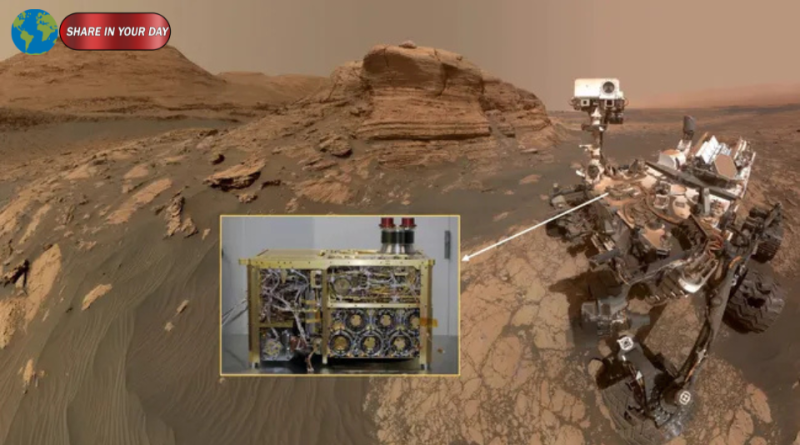
The latest Mars life discovery by NASA has sparked global excitement after the Curiosity rover uncovered a diverse set of organic molecules—chemicals considered essential building blocks of life. While the discovery does not confirm that life ever existed on Mars, it significantly strengthens the possibility that the Red Planet once had conditions suitable for life.
However, scientists remain cautious. The biggest mystery is not just what was found—but how these molecules got there in the first place.
What Exactly Did NASA Discover?
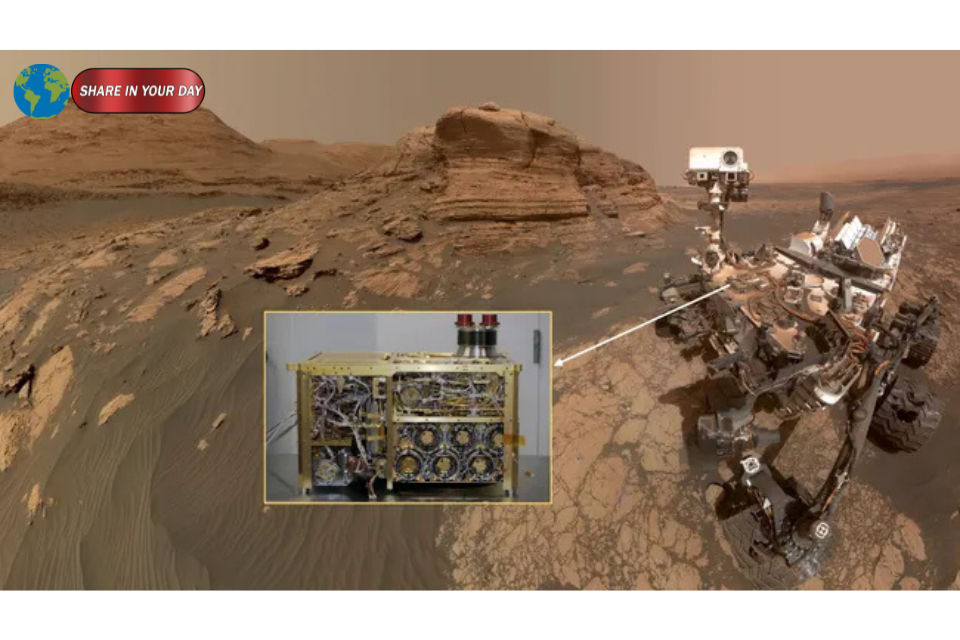
NASA’s Curiosity rover detected a wide range of organic compounds embedded in ancient Martian rock. These molecules are carbon-based and are widely regarded as the chemical foundation of life on Earth.
In total, scientists identified more than 20 different organic chemicals, including several never before confirmed on Mars.
Among the most intriguing findings:
- A nitrogen-bearing molecule similar to DNA precursors
- Benzothiophene, a compound also found in meteorites
- Complex carbon chains linked to prebiotic chemistry
These discoveries represent one of the strongest pieces of evidence yet that Mars once had the ingredients necessary for life.
Why This Mars Life Discovery Matters
The importance of this Mars life discovery lies in what these molecules represent. Organic compounds are the building blocks of life—but they are not proof of life themselves.
On Earth, such molecules are typically associated with biological processes. However, they can also form through non-biological mechanisms, such as:
- Chemical reactions in rocks
- Volcanic activity
- Meteorite impacts
This dual possibility makes the discovery both exciting and frustrating for scientists.
Ancient Mars: A Potentially Habitable World
The organic molecules were found in rocks formed billions of years ago in what is believed to be an ancient lakebed inside Gale Crater.
Scientists believe that around 3.5 billion years ago, Mars was:
- Warmer
- Wetter
- Rich in liquid water
These conditions are similar to early Earth, when life first began to emerge.
This suggests that Mars may once have been a habitable environment capable of supporting microbial life.
The Big Mystery: Where Did These Molecules Come From?
Despite the groundbreaking nature of the Mars life discovery, scientists are still unsure about the origin of these organic compounds.
There are three main possibilities:
1. Biological Origin (Life)
The most exciting possibility is that these molecules were created by ancient microbial life on Mars.
Some recent studies suggest that non-biological explanations may not fully account for the abundance of organic material found.
However, there is currently no direct evidence of past life.
2. Geological Processes
Organic molecules can also form through purely chemical reactions involving water, heat, and minerals.
Mars has experienced volcanic activity and complex geological processes that could generate such compounds without life.
3. Meteorites from Space
Another possibility is that these molecules were delivered to Mars by meteorites.
Some of the detected compounds, like benzothiophene, are known to exist in space rocks.
This raises the possibility that Mars was “seeded” with organic material from elsewhere in the solar system.
A First-of-Its-Kind Experiment
One of the most remarkable aspects of this Mars life discovery is how it was made.
The Curiosity rover conducted a chemical experiment never before performed on another planet.
Using its onboard laboratory, the rover analyzed rock samples and heated them to release gases, which were then studied to identify organic compounds.
This advanced technique allowed scientists to detect a much broader range of molecules than ever before.
Not Proof of Life—But a Major Step Forward
It is important to clarify that this discovery does not confirm life on Mars.
Scientists emphasize that:
- Organic molecules ≠ living organisms
- No fossils or biological structures were found
- No direct biosignatures have been confirmed
Still, the discovery significantly strengthens the case for past habitability.
As one researcher noted, these molecules are “ingredients,” not the finished product of life.
Mars vs Earth: A Shared Chemical Story?
One of the most fascinating aspects of this Mars life discovery is how closely it mirrors early Earth chemistry.
The presence of molecules similar to DNA precursors suggests that Mars may have once followed a similar chemical pathway toward life.
This raises profound questions:
- Could life have started on Mars?
- Did life ever exist there and disappear?
- Could life have traveled between Mars and Earth via meteorites?
While these questions remain unanswered, the discovery brings scientists closer to understanding the origins of life in the universe.
What This Means for Future Mars Missions
The findings come at a crucial time for Mars exploration.
Future missions are already being planned to dig deeper—literally.
Upcoming goals include:
- Collecting and returning Mars samples to Earth
- Drilling deeper below the surface, where molecules may be better preserved
- Searching for definitive biosignatures
Scientists believe that analyzing Martian samples in Earth-based laboratories could finally answer the question of whether life ever existed on Mars.
Why Scientists Are Still Cautious
Despite the excitement, researchers are taking a careful and methodical approach.
Mars presents a harsh environment today:
- Intense radiation
- Extreme cold
- Thin atmosphere
These conditions can destroy or alter organic molecules over time, making it difficult to determine their origin.
As a result, scientists are avoiding premature conclusions.
Key Takeaways from the Mars Life Discovery
- NASA found over 20 organic molecules on Mars
- Some are linked to the chemistry of life
- The discovery was made in ancient lakebed rocks
- The origin of the molecules remains unknown
- The findings support the idea that Mars was once habitable
Conclusion
The latest Mars life discovery marks a major milestone in humanity’s search for life beyond Earth. While it stops short of proving that life ever existed on Mars, it provides compelling evidence that the building blocks of life were present.
Perhaps most importantly, it opens the door to deeper exploration and more advanced missions that could finally answer one of humanity’s biggest questions:
Are we alone in the universe?
For now, the mystery remains—but it is closer than ever to being solved.