Tesla Q1 Earnings 2026 Revealed: A Turning Point for the Company
The Tesla Q1 Earnings 2026 report has delivered a mix of strong financial performance and bold future ambitions, signaling a major strategic shift for the electric vehicle giant.
Despite ongoing concerns about slowing EV demand, Tesla reported solid growth in revenue and profits. At the same time, CEO Elon Musk made it clear that the company is no longer just an automaker — it is rapidly transforming into an artificial intelligence and robotics powerhouse.
This combination of financial strength and aggressive reinvestment is reshaping how investors view Tesla’s future.
Strong Financial Results Beat Expectations
Tesla’s first-quarter results surprised many analysts. The company posted approximately $22.4 billion in revenue, marking a 16% year-over-year increase.
Adjusted earnings per share came in at around $0.41, significantly beating Wall Street expectations.
Even more notable, Tesla generated positive free cash flow of about $1.4 billion, defying predictions of a loss.
These figures suggest that Tesla remains financially resilient, even as it navigates a challenging global market for electric vehicles.
However, not everything was perfect. Revenue slightly missed some analyst expectations, reflecting softer-than-expected vehicle demand.
EV Business Faces Growing Pressure
While the Tesla Q1 Earnings 2026 report highlights financial strength, it also reveals cracks in the company’s core automotive business.
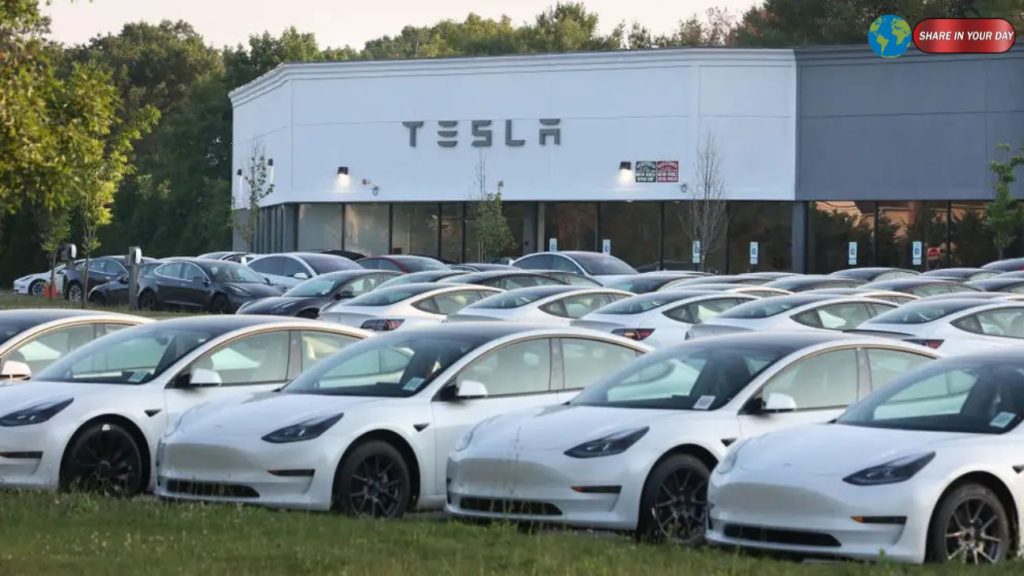
Vehicle deliveries rose modestly year-over-year, but still fell short of forecasts.
Several factors are contributing to this slowdown:
- Increased competition from lower-cost EV manufacturers, particularly in China
- Expiration of government incentives in key markets
- Declining demand for premium models
Tesla has even begun phasing out certain legacy vehicles, including the Model S and Model X, to refocus resources on future technologies.
Meanwhile, newer products like the Cybertruck have not yet delivered the expected level of commercial success.
These challenges indicate that Tesla’s traditional business model is under pressure — and may no longer be the primary driver of growth.
Elon Musk Doubles Down on AI and Robotics
Perhaps the most significant takeaway from the Tesla Q1 Earnings 2026 report is the company’s aggressive pivot toward artificial intelligence.
Elon Musk announced plans to increase capital expenditures to more than $25 billion, a massive investment aimed at accelerating AI development.
This spending will fund several key initiatives:
- Development of advanced AI chips (AI5)
- Expansion of Tesla’s Dojo supercomputing platform
- Construction of new factories focused on robotics
- Scaling production of the Optimus humanoid robot
Musk emphasized that these investments are critical for Tesla’s long-term future, even if they reduce short-term profitability.
This marks a fundamental shift in Tesla’s identity — from a car company to a technology-driven AI leader.
Robotaxi Expansion Gains Momentum
Another major highlight of the Tesla Q1 Earnings 2026 report is the continued development of Tesla’s robotaxi network.
The company is actively expanding its autonomous ride-hailing service in U.S. cities such as Dallas and Houston.
Although still in early stages, these deployments represent a critical step toward a fully autonomous transportation ecosystem.
Tesla is also preparing to launch the Cybercab, a purpose-built robotaxi vehicle with no steering wheel or pedals.
Production is expected to begin later in 2026, though initial rollout will be gradual.
Musk has repeatedly stated that robotaxis could become one of Tesla’s most valuable revenue streams in the future.
The Optimus Robot: Tesla’s Boldest Bet
Beyond vehicles and robotaxis, Tesla is investing heavily in its humanoid robot, Optimus.
The company plans to build large-scale manufacturing facilities capable of producing millions of units annually.
Optimus is designed to perform repetitive and labor-intensive tasks, potentially transforming industries such as manufacturing, logistics, and retail.
However, Musk has cautioned that significant revenue from this product is still years away.
Despite the uncertainty, Optimus represents one of Tesla’s most ambitious and potentially disruptive projects.
Rising Costs Raise Investor Concerns
While the Tesla Q1 Earnings 2026 report showcases strong performance, it also raises concerns about rising costs.
The planned $25+ billion in capital expenditures is expected to weigh on future cash flow.
In fact, Tesla’s CFO has warned that free cash flow could turn negative in upcoming quarters due to these investments.
Following the announcement, Tesla’s stock experienced volatility, reflecting investor uncertainty about the company’s aggressive spending strategy.
This highlights a key tension: balancing short-term financial performance with long-term innovation.
Energy Business Remains a Quiet Strength
Amid all the focus on AI and vehicles, Tesla’s energy division continues to play an important role.
Although energy storage deployments declined in the first quarter, the segment remains highly profitable and is expected to grow over time.
Tesla’s battery systems are increasingly used to support renewable energy infrastructure, positioning the company as a key player in the global energy transition.
This diversification provides an additional layer of stability for Tesla’s business model.
Strategic Shift: From Cars to Technology Ecosystem
The Tesla Q1 Earnings 2026 report makes one thing clear: the company is undergoing a major transformation.
Tesla is no longer focused solely on selling electric vehicles. Instead, it is building an integrated ecosystem that includes:
- Autonomous transportation
- Artificial intelligence
- Robotics
- Energy solutions
This strategy could unlock new revenue streams and redefine the company’s role in the global economy.
However, it also introduces new risks, including technological challenges, regulatory hurdles, and increased competition.
What This Means for Tesla Stock
For investors, the Tesla Q1 Earnings 2026 report presents a complex picture.
On one hand, strong earnings and cash flow demonstrate the company’s resilience.
On the other hand, rising costs and slowing EV growth raise questions about near-term performance.
Tesla’s stock reaction reflects this uncertainty, with shares fluctuating following the earnings announcement.
Looking ahead, much will depend on the success of Tesla’s AI and robotics initiatives.
If these projects deliver on their promise, Tesla could enter a new era of growth.
If not, the company may face increasing pressure from competitors and investors.
Conclusion: A High-Risk, High-Reward Future
The Tesla Q1 Earnings 2026 report highlights a company at a crossroads.
With strong financial results and bold ambitions, Tesla is positioning itself as a leader in the next generation of technology.
However, this transformation comes with significant risks.
Massive investments, uncertain timelines, and evolving market dynamics all add complexity to the company’s outlook.
Ultimately, Tesla’s future will depend on its ability to execute its vision — turning AI, robotics, and autonomy into real, scalable businesses.
For now, one thing is clear: Tesla is no longer just an electric car company. It is betting its future on becoming something much bigger.