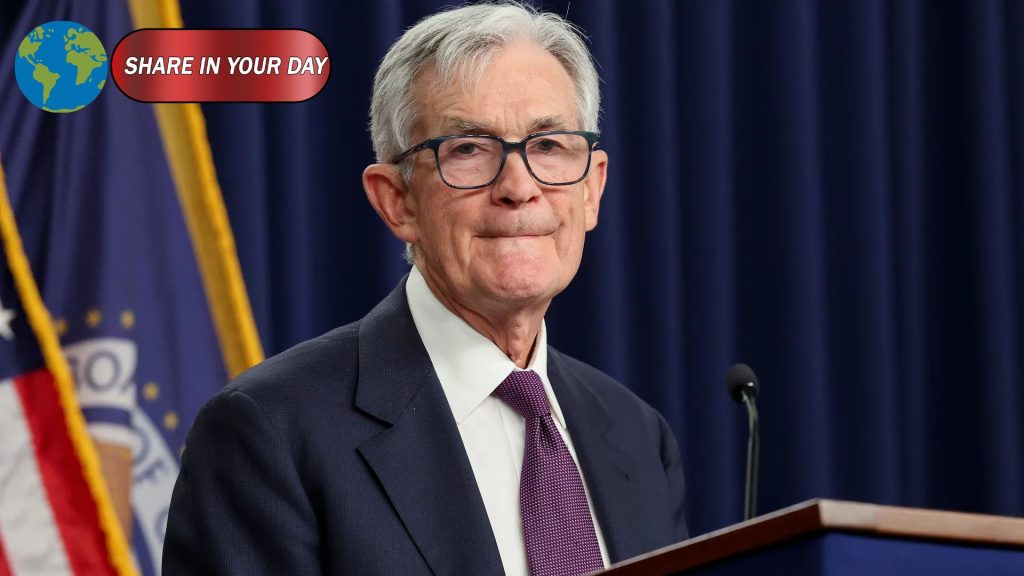
The Fed Powell probe dropped decision marks a dramatic turning point in one of the most controversial clashes between politics and central banking in modern U.S. history. The U.S. Department of Justice (DOJ) officially ended its criminal investigation into Federal Reserve Chair Jerome Powell, closing a months-long inquiry that had sparked intense debate about the independence of the nation’s central bank.
The move not only removes legal pressure from Powell but also reshapes the political and economic landscape surrounding the Federal Reserve, President Donald Trump, and the future of U.S. monetary policy.
What Led to the Fed Powell Probe Dropped Decision?
The investigation into Powell began in late 2025, focusing on alleged misconduct related to a $2.5 billion renovation project at the Federal Reserve’s headquarters in Washington, D.C.
Federal prosecutors, led by U.S. Attorney Jeanine Pirro, examined whether Powell misled Congress about the project’s cost overruns. The probe escalated tensions between the White House and the Federal Reserve, as Trump had repeatedly criticized Powell for not lowering interest rates aggressively.
However, the investigation quickly became controversial. Critics from both political parties argued that the probe appeared politically motivated and could undermine the independence of the Federal Reserve—an institution designed to operate free from direct political pressure.
A federal judge even blocked key subpoenas earlier in 2026, stating there was no evidence of criminal wrongdoing and suggesting the probe may have been used as leverage against Powell.
Why the DOJ Dropped the Probe
The Fed Powell probe dropped decision was announced on April 24, 2026. Prosecutors stated they would close the criminal case while allowing the Federal Reserve’s internal watchdog—the Office of Inspector General—to continue reviewing the renovation project.
Importantly, officials emphasized that the case could be reopened if new evidence emerges. Still, no criminal charges were filed, and the DOJ acknowledged it lacked sufficient evidence to proceed.
This outcome effectively ends the immediate legal threat hanging over Powell, though political tensions remain unresolved.
1. Clears the Path for New Fed Leadership
One of the most immediate consequences of the Fed Powell probe dropped development is its impact on leadership at the Federal Reserve.
President Trump has nominated Kevin Warsh, a former Fed governor, to replace Powell. However, the investigation had stalled Warsh’s confirmation in the Senate.
Republican Senator Thom Tillis had refused to support the nomination until the probe was resolved, creating a political bottleneck. Now that the investigation is over, Warsh’s confirmation is expected to move forward more smoothly.
This could lead to a rapid leadership transition, especially with Powell’s term set to end on May 15.
2. Raises Serious Questions About Fed Independence
The Federal Reserve’s independence is widely considered essential for maintaining economic stability. Economists argue that central banks must remain free from political interference to control inflation and ensure long-term growth.
The investigation into Powell—and its eventual dismissal—has intensified concerns that political actors may attempt to influence monetary policy through legal or institutional pressure.
Several critics argued the probe was an attempt to force Powell to align with the administration’s economic agenda, particularly regarding interest rate cuts.
Even though the Fed Powell probe dropped, the broader issue of political influence over the Fed remains unresolved and could have lasting implications.
3. Highlights Deep Political Divisions
The case exposed significant divisions within Washington, including within the Republican Party itself.
Some GOP lawmakers expressed discomfort with the investigation, viewing it as unnecessary or potentially damaging to economic stability. Others supported the probe as a legitimate inquiry into government spending.
Meanwhile, Democrats largely condemned the investigation, framing it as an attack on institutional independence.
The end of the probe may reduce immediate tensions, but the underlying political conflict between the White House and the Federal Reserve continues.
4. Impacts Financial Markets and Investor Confidence
Financial markets closely monitor the Federal Reserve, as its decisions directly influence interest rates, inflation, and economic growth.
The uncertainty surrounding the investigation had raised concerns among investors about the stability and independence of U.S. monetary policy.
By ending the probe, the DOJ has removed a major source of uncertainty. Analysts suggest this could stabilize investor confidence in the short term.
However, lingering political tensions may still create volatility, especially if future conflicts arise between the administration and the Fed.
5. Leaves the Door Open for Future Investigations
Although the DOJ has closed its criminal case, the matter is far from fully resolved.
The Federal Reserve’s Inspector General will continue reviewing the renovation project, and prosecutors have indicated they could reopen the case if new evidence emerges.
This means Powell—and the Federal Reserve—remain under scrutiny, even if the immediate legal threat has subsided.
The Bigger Picture: Trump vs. the Federal Reserve
The Fed Powell probe dropped story is part of a broader and ongoing conflict between President Trump and the Federal Reserve.
Trump has repeatedly criticized Powell for maintaining higher interest rates, arguing that lower rates would boost economic growth. This tension has fueled a series of confrontations, including public criticism, legal challenges, and now a high-profile investigation.
At its core, the dispute reflects a fundamental question:
Should monetary policy be insulated from political influence, or should elected leaders have greater control over economic decisions?
The answer to that question will shape the future of the Federal Reserve—and potentially the global economy.
What Happens Next?
With the investigation closed, attention now shifts to several key developments:
- The Senate confirmation process for Kevin Warsh
- The outcome of the Inspector General’s review
- Powell’s role after his term ends
- Ongoing legal and political battles involving the Federal Reserve
While the immediate crisis may have passed, the long-term implications of the Fed Powell probe dropped decision are still unfolding.
Conclusion
The DOJ’s decision to drop the investigation into Jerome Powell marks a pivotal moment in U.S. economic and political history. It removes a major obstacle to leadership change at the Federal Reserve while raising critical questions about institutional independence and political influence.
In the short term, the move may stabilize markets and ease political tensions. But in the long run, it underscores a deeper struggle over who controls the direction of the U.S. economy.
As the dust settles, one thing is clear:
The battle over the Federal Reserve’s independence is far from over.