Trump Spirit Airlines Bailout: 5 Shocking Facts Revealed
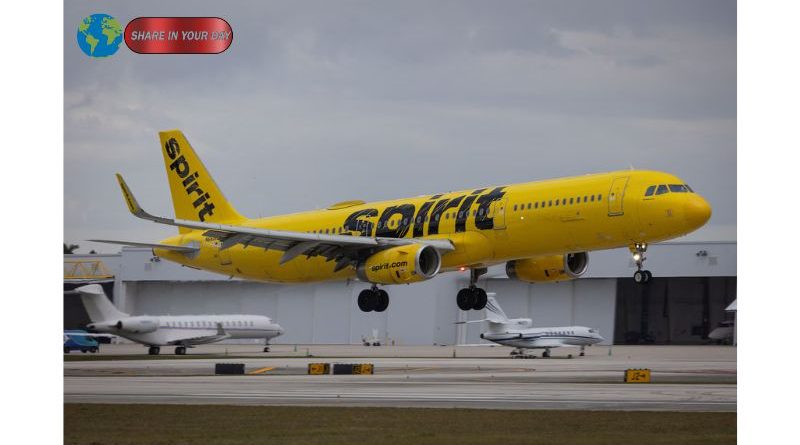
The proposed Trump Spirit Airlines bailout is rapidly becoming one of the most controversial economic and political debates in the United States. As the struggling low-cost carrier faces potential collapse, former President Donald Trump’s suggestion that the government could step in—even to the point of buying the airline—has triggered backlash from lawmakers, industry leaders, and economists alike.
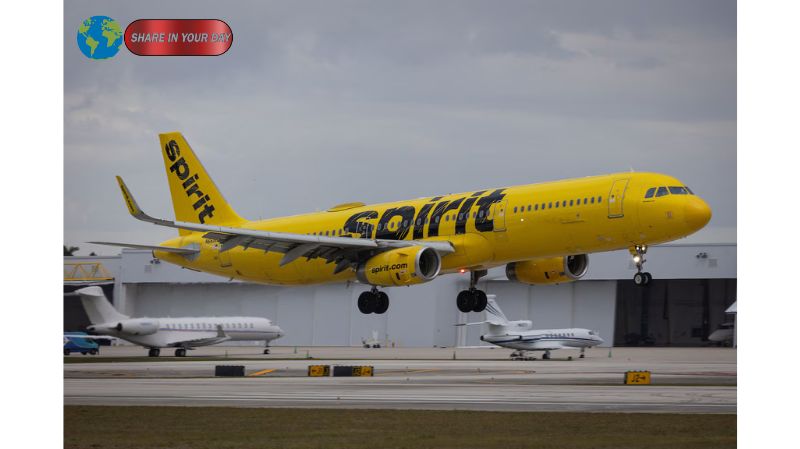
The Trump Spirit Airlines bailout proposal comes at a critical moment, with the airline on the brink of liquidation and thousands of jobs hanging in the balance. However, critics argue the move could break long-standing free-market principles and set a dangerous precedent.
Here are five key facts shaping this unfolding story.
1. A $500 Million Bailout Is on the Table
At the center of the Trump Spirit Airlines bailout discussion is a proposed financial package worth up to $500 million. The plan could involve government-backed loans or even an equity stake in the airline, giving the federal government partial ownership.
Reports indicate that such a deal could grant the government warrants equivalent to a large share of the company—potentially as much as 90%—if implemented.
This level of intervention would be highly unusual outside of national emergencies. While the U.S. government has supported airlines before—particularly after the COVID-19 pandemic—those efforts typically targeted the entire industry rather than a single struggling company.
2. Trump Floats Idea of Government Ownership
Perhaps the most controversial aspect of the Trump Spirit Airlines bailout is the idea that the government could outright purchase the airline.
Trump reportedly suggested that buying the airline at the “right price” could allow the government to later sell it for a profit.
This proposal has raised eyebrows across the political spectrum. Critics argue that such a move resembles nationalization—something traditionally opposed by many conservatives.
Adding to skepticism is Trump’s past involvement in the airline industry. His previous venture, the Trump Shuttle, ultimately failed in the early 1990s, raising questions about the viability of similar efforts today.
3. Deep Political Divisions Emerge
The Trump Spirit Airlines bailout has exposed sharp divisions within the Republican Party itself.
Some officials support intervention, arguing that saving the airline could protect jobs and maintain competition in the aviation market. However, others strongly oppose the idea, calling it a misuse of taxpayer money.
Transportation Secretary Sean Duffy, for example, has warned that rescuing the airline could amount to “putting good money after bad.”
Meanwhile, prominent conservative figures and advocacy groups have criticized the proposal for contradicting free-market principles, a cornerstone of Republican economic ideology.
4. Spirit Airlines Faces Severe Financial Crisis
The urgency behind the Trump Spirit Airlines bailout stems from the airline’s dire financial situation.
Spirit Airlines has filed for bankruptcy twice since 2024, struggling with rising costs, failed merger attempts, and declining demand.
A major factor worsening its situation is the sharp increase in jet fuel prices, driven in part by geopolitical tensions, including conflict involving Iran.
Without immediate financial support, the airline risks liquidation, which could result in tens of thousands of job losses and reduced competition in the airline industry.
5. Concerns Over Economic and Market Impact
Economists and industry experts warn that the Trump Spirit Airlines bailout could have far-reaching consequences.
Unlike previous bailouts that supported the entire airline sector, this proposal focuses on a single company. Critics argue that such targeted intervention could distort competition and disadvantage other carriers.
There are also concerns about moral hazard—the idea that companies may take greater risks if they believe the government will rescue them in times of trouble.
Additionally, rival airlines have called for broader industry support measures, such as tax relief or subsidies, rather than selective bailouts.
The Role of National Security and Defense
Some reports suggest that the Trump Spirit Airlines bailout could involve national security considerations.
Under certain proposals, the airline’s fleet could potentially be used for military transport or logistical support.
This angle introduces a new dimension to the debate, as government intervention tied to defense needs may be viewed differently than purely economic assistance.
However, officials have not confirmed whether such plans will move forward.
Workers and Unions Demand Protection
Labor unions representing airline workers have voiced strong opinions about the proposed bailout.
They argue that any Trump Spirit Airlines bailout must include protections for employees, including job security and restrictions on layoffs.
With more than 17,000 jobs potentially at risk, worker advocacy groups are pushing for conditions similar to those imposed during pandemic-era bailouts, such as limits on executive compensation and stock buybacks.
Industry-Wide Implications
The outcome of the Trump Spirit Airlines bailout could reshape how the U.S. government approaches corporate rescues in the future.
If approved, the plan may signal a shift toward more direct government involvement in private companies, especially during economic crises.
On the other hand, rejection of the proposal could reinforce traditional market-based approaches, even in the face of significant job losses.
The airline industry, already under pressure from rising costs and fluctuating demand, is closely watching the situation.
Public Reaction and Economic Debate
Public opinion on the Trump Spirit Airlines bailout remains divided.
Supporters argue that saving the airline is essential to preserving jobs and maintaining affordable travel options for consumers.
Opponents, however, see the proposal as an unnecessary and risky use of taxpayer funds, particularly given the airline’s history of financial instability.
The debate reflects broader questions about the role of government in the economy—questions that have become increasingly relevant in recent years.
What Happens Next?
The future of the Trump Spirit Airlines bailout remains uncertain.
Negotiations are ongoing, and a bankruptcy court decision could determine whether the airline secures the funding it needs to survive.
Meanwhile, policymakers must weigh competing priorities: protecting jobs, maintaining market competition, and upholding economic principles.
The coming weeks are likely to be critical in determining the fate of both the airline and the broader policy approach to corporate bailouts.
Conclusion
The Trump Spirit Airlines bailout proposal has sparked intense debate across political, economic, and industry circles.
With billions of dollars, thousands of jobs, and fundamental economic principles at stake, the decision will have lasting implications far beyond a single airline.
As the situation continues to evolve, one thing is clear: the outcome will shape not only the future of Spirit Airlines but also the broader role of government in the American economy.