Buddhist Monks Cannabis Sri Lanka Scandal Shocks Nation
The Buddhist monks cannabis Sri Lanka scandal has sent shockwaves across the country and beyond, raising serious concerns about religious integrity, organized crime, and drug trafficking networks in South Asia.
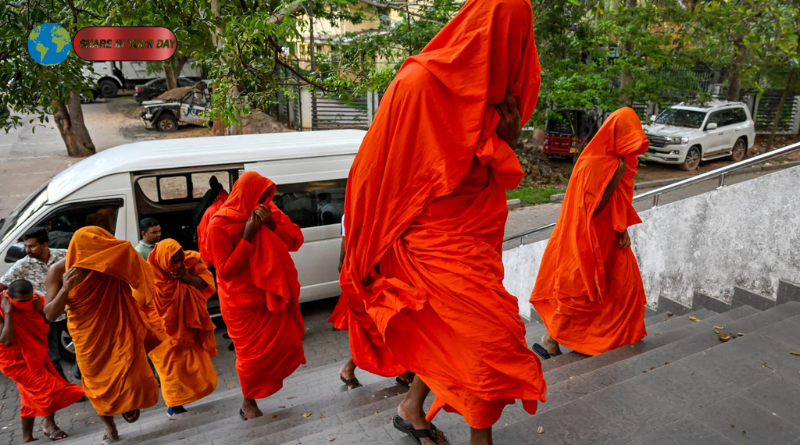
Authorities in Sri Lanka have arrested 22 Buddhist monks after discovering more than 110 kilograms of cannabis hidden in their luggage at Bandaranaike International Airport in Colombo. The case is already being described as one of the most shocking and unprecedented incidents involving members of the clergy in recent history.
The arrests have sparked national outrage, as Buddhism plays a central role in Sri Lankan society, where monks are widely respected and seen as moral guides.
Massive Drug Bust at Colombo Airport
The incident unfolded when the group of monks returned from a trip to Thailand. Airport customs officials became suspicious and conducted a thorough inspection of their luggage.
What they found stunned investigators.
Hidden within specially modified suitcases were large quantities of cannabis—reportedly around 5 kilograms per individual. The drugs were concealed inside false compartments designed to evade detection.
Authorities estimate the total haul at approximately 110 kilograms, with a street value exceeding $3 million.
According to reports, this marks one of the largest drug seizures ever recorded at Sri Lanka’s main international airport.

Sri Lanka police arrest 22 Buddhist monks after 110kg of cannabis found in luggage


Sri Lankan police arrest 22 monks over 110kg cannabis …
How the Smuggling Operation Worked
Investigators believe the operation was carefully coordinated. The monks had traveled to Thailand just days earlier, allegedly on a trip funded by an unidentified sponsor.
Upon returning, they carried luggage filled not only with cannabis but also with everyday items such as snacks and school supplies—likely used as cover to avoid suspicion.
Authorities say the drugs were “packaged very cleverly,” hidden within false walls inside the suitcases.
Further investigations revealed that each monk had been instructed to transport the packages, reportedly under the belief that they were harmless donations.
A 23rd suspect—believed to be the organizer—was later arrested in a suburb of Colombo.
Largest Cannabis Seizure Involving Monks
Officials have described the case as historic—not only because of the quantity of drugs seized but also because of the individuals involved.
“This is the first time such a large group of Buddhist monks has been arrested in connection with drug trafficking,” authorities noted.
The cannabis, often referred to as “kush,” is considered a serious narcotic in Sri Lanka, where strict drug laws remain in place.
The scale of the operation suggests a potentially larger network behind the scenes, raising questions about whether the monks were knowingly involved or exploited by criminal organizations.
Public Reaction and Religious Impact
The Buddhist monks cannabis Sri Lanka case has triggered widespread public debate.
Sri Lanka is a predominantly Buddhist country, where monks are highly respected and often hold influence in both religious and social spheres. The involvement of monks in a drug smuggling operation has therefore struck a deep cultural nerve.
Some senior religious leaders have condemned the suspects, with reports suggesting that certain figures have labeled them “imposters” misusing religious identity for illegal activities.
However, authorities have also indicated that many of the arrested individuals were affiliated with legitimate temples and educational institutions.
This dual reality has complicated the narrative, forcing both the public and religious institutions to confront uncomfortable questions.
Legal Consequences Ahead
All 22 monks have been remanded in custody and are expected to face serious charges related to drug possession and trafficking.
Sri Lanka enforces strict anti-narcotics laws, and those convicted of large-scale drug offenses can face lengthy prison sentences.
The suspects are scheduled to appear before the Negombo Magistrate’s Court as investigations continue.
Meanwhile, authorities are working to identify additional individuals involved in organizing the operation.
Link to Regional Cannabis Trends
The case also highlights broader regional dynamics involving cannabis.
Thailand, where the monks had traveled, has taken steps toward regulating cannabis for medical and economic purposes in recent years.
However, neighboring countries like Sri Lanka maintain strict prohibitions, creating opportunities for cross-border smuggling.
This contrast in legal frameworks may have contributed to the emergence of trafficking routes targeting stricter jurisdictions.
A Pattern of Concern?
While shocking, this is not the first time Buddhist clergy in Asia have been linked to drug-related incidents.
Past cases in countries like Thailand and Myanmar have involved monks being caught with illegal substances, though typically on a much smaller scale.
Experts warn that such incidents, while rare, can damage public trust and undermine religious institutions.
Broader Questions Raised
The Buddhist monks cannabis Sri Lanka scandal raises several critical questions:
- Were the monks knowingly involved, or were they manipulated?
- Who financed the trip and organized the operation?
- Is there a larger criminal network targeting vulnerable individuals within religious communities?
Authorities are expected to pursue these questions in the coming weeks as the investigation deepens.
The Road Ahead for Sri Lanka
In the aftermath of the arrests, there are growing calls for tighter oversight within monastic institutions.
Some officials have suggested implementing stricter monitoring systems to prevent similar incidents in the future.
At the same time, religious leaders are emphasizing the importance of preserving the integrity of Buddhism and ensuring that such events do not define the broader community.
Conclusion
The Buddhist monks cannabis Sri Lanka case is more than just a drug bust—it is a moment of reckoning for a nation where religion and identity are deeply intertwined.
As investigations continue, the story is likely to evolve, revealing more about the networks involved and the circumstances that led to this unprecedented घटना.
For now, the arrests serve as a stark reminder that even institutions built on discipline and morality are not immune to the pressures and temptations of the modern world.