Strait of Hormuz Crisis: Tanker Hit Amid Talks
The Strait of Hormuz crisis intensified after an oil tanker was struck by an unidentified projectile off Oman’s coast, highlighting the continuing risks facing commercial shipping even as diplomatic efforts seek to reopen the strategic waterway.
The tanker was hit Monday night a few miles off Oman’s eastern coast, according to the United Kingdom Maritime Trade Operations organization. The projectile disabled the ship’s engine, but all crew members were reported safe and there were no immediate reports of environmental damage.
The incident came as a senior Pakistani delegation traveled to Tehran in an effort to help bring the wider conflict involving Iran and the United States toward a negotiated settlement.
Pakistan said the discussions produced “significant progress,” with the talks focusing on de-escalation, reopening the Strait of Hormuz and finding a peaceful path out of the conflict.
The combination of a fresh maritime incident and renewed diplomacy underscores how fragile the situation remains.
Strait of Hormuz crisis puts shipping under pressure
The Strait of Hormuz is one of the world’s most important maritime chokepoints.
The narrow waterway connects the Persian Gulf with the Gulf of Oman and the Arabian Sea. Before the current conflict disrupted traffic, roughly one-fifth of the world’s traded oil passed through the strait.
That makes any prolonged disruption potentially significant for energy markets, shipping companies and consumers around the world.
The latest tanker incident demonstrates that the security situation has not been resolved despite diplomatic efforts.
The vessel’s engine was disabled after the projectile strike. While the crew was safe, the attack immediately raised fresh questions about whether commercial ships can safely navigate the waterway.
Shipping companies have already faced extraordinary uncertainty because of the conflict.
Insurance costs, route decisions and concerns about further attacks have made passage through the region considerably more complicated.
Tanker attack raises fresh concerns
The attack happened near Oman rather than deep inside the Persian Gulf, but its proximity to the Strait of Hormuz makes the incident particularly significant.
The United Kingdom Maritime Trade Operations organization reported that the tanker was hit Monday night. The crew survived without reported injuries, and there was no immediate indication of an oil spill.
Authorities have not publicly established who fired the projectile.
That distinction is important.
Although Iran maintains significant control over traffic in and around the strategic waterway, the available reporting does not establish that Iran was responsible for this particular strike.
The incident therefore adds another layer of uncertainty to an already complicated maritime security environment.
For shipping companies, however, the immediate concern is practical rather than political: whether vessels can travel through the area without being damaged.
Pakistan pushes for diplomatic breakthrough
The tanker incident occurred at almost the same time that Pakistan was pursuing a diplomatic solution.
Pakistan has emerged as an important intermediary between Washington and Tehran during the conflict. On Tuesday, a high-level delegation traveled to Tehran, including Pakistani Army Chief Field Marshal Asim Munir and Interior Minister Mohsin Naqvi.
Naqvi said the discussions with Iranian officials had made significant progress.
The talks addressed several interconnected issues, including preventing further escalation, reopening the Strait of Hormuz and reaching a negotiated settlement to the conflict.
The Pakistani delegation’s visit therefore carried significance beyond bilateral relations.
Islamabad is attempting to use its relationships with both Iran and the United States to encourage a broader diplomatic process.
That effort comes at a critical moment.
The longer the conflict affects the Strait of Hormuz, the greater the economic consequences could become.
Iran and Oman also seek a shipping arrangement
Pakistan is not the only country involved in diplomatic efforts surrounding the waterway.
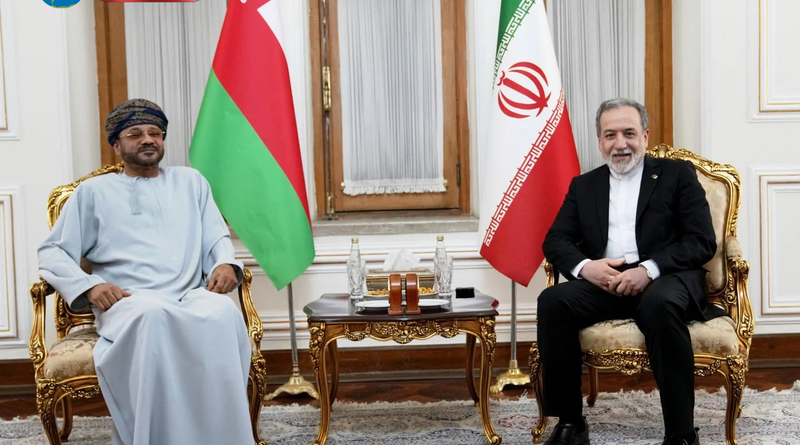
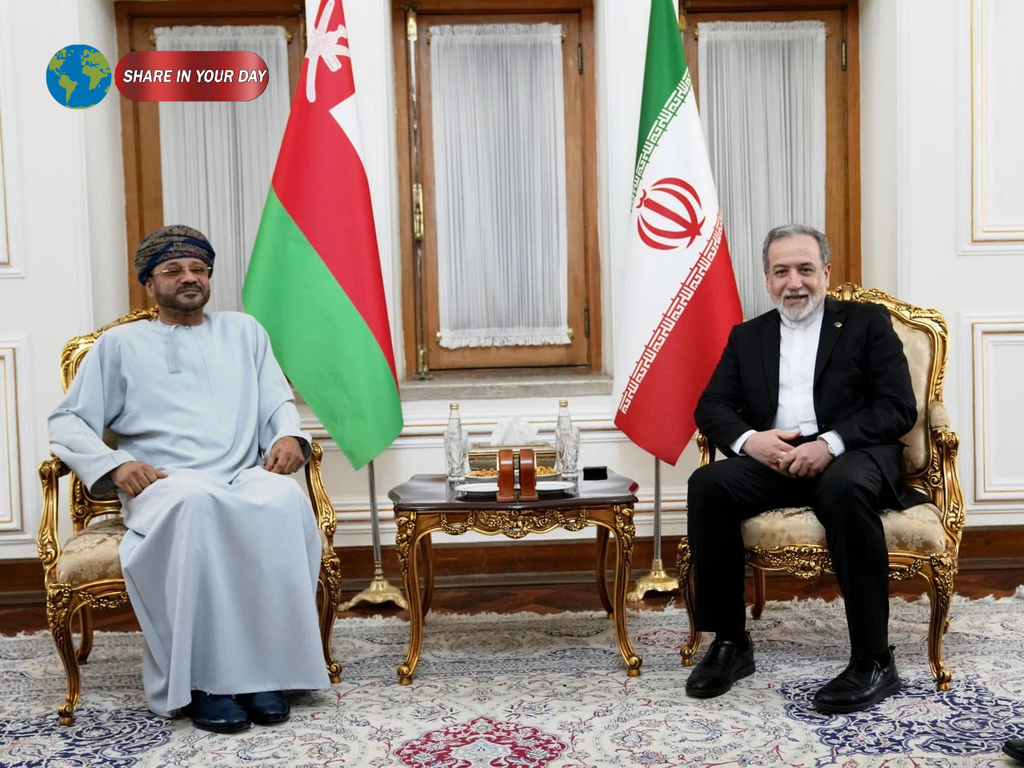
Iran and Oman have also been discussing arrangements that could establish a temporary navigational corridor and eventually create more permanent mechanisms for maritime traffic.
The Financial Times reported that Tehran and Muscat were working toward an interim agreement covering safer navigation, demining and traffic management. However, negotiations remain complicated by disagreements involving the United States and Iran.
Oman occupies a particularly important position because the country sits alongside the Strait of Hormuz and has historically played a role in regional diplomacy.
A functioning corridor could potentially allow more commercial vessels to move through the waterway while negotiations continue.
However, an agreement would need to address both navigation and security.
Trump says Strait of Hormuz has been cleared of mines
Another major development came from U.S. President Donald Trump.
Trump said Tuesday that mines had been cleared from the Strait of Hormuz and warned Iran against placing additional mines in the waterway.
According to Reuters, Trump said the United States was closely monitoring the strategic passage and would take a hard line against any attempt to mine it again.
The announcement is significant because mines have been one of the major threats to maritime traffic during the crisis.
However, clearing mines does not automatically eliminate the wider security problem.
Ships still face the possibility of projectile attacks and other forms of interference.
The latest tanker incident demonstrates precisely why commercial operators remain cautious.
Oil markets remain highly sensitive
The Strait of Hormuz crisis has implications far beyond the Middle East.
The waterway is a critical route for oil and gas exports from Gulf producers. Any sustained reduction in traffic can therefore put upward pressure on energy prices and increase uncertainty for import-dependent economies.
Reuters reported that oil shipments through the strait had fallen dramatically compared with levels before the conflict. The reduction has forced producers and traders to consider alternative routes while clandestine and limited shipments continue through the waterway.
The wider global energy situation is already under pressure.
Reuters reported that conflict-affected regions accounted for a historically large share of global oil production in 2025, while the Iran conflict has added another major disruption to supply chains.
That means another escalation around Hormuz could have consequences for fuel prices, transportation costs and inflation.
U.S. sanctions add another layer of tension
The maritime crisis is developing alongside a new round of U.S. economic pressure on Iran.
The United States has expanded sanctions targeting dozens of individuals, entities and vessels linked to Iran. Washington has also warned countries and companies maintaining certain forms of trade with Tehran that they could face consequences involving the U.S. financial system.
Iran has rejected the measures and accused Washington of pursuing an aggressive economic campaign.
The sanctions complicate diplomatic efforts because the economic pressure is occurring at the same time that regional governments are trying to negotiate a settlement.
For Tehran, sanctions and maritime restrictions are closely connected.
For Washington, maintaining pressure is intended to influence Iran’s behavior.
For neighboring countries, meanwhile, the priority is avoiding a wider regional escalation.
Why the Strait of Hormuz matters so much
The importance of the waterway is difficult to overstate.
The strait is only a relatively narrow maritime passage, yet it sits at the center of one of the world’s most important energy-export regions.
Oil from major Gulf producers normally travels through the waterway before reaching markets in Asia and beyond.
Liquefied natural gas shipments are also affected.
That means a prolonged closure or severe restriction would not simply be a regional transportation problem. It could become a global economic shock.
Energy-importing countries would be forced to compete for alternative supplies, while producers would seek other routes where possible.
The resulting pressure could spread into manufacturing, aviation, transportation and household energy costs.
The diplomatic stakes are rising
The latest developments create a striking contradiction.
On one side, a tanker has been attacked, showing that the maritime security situation remains dangerous.
On the other, Pakistan says negotiations with Iran have made meaningful progress.
Those two developments could ultimately reinforce the argument for diplomacy.
The longer commercial shipping remains exposed, the stronger the economic incentive becomes for regional powers to establish a reliable security arrangement.
Pakistan’s involvement could be particularly important because Islamabad maintains relationships with both Iran and the United States.
The Pakistani government has emphasized that its goal is to help prevent further escalation and encourage negotiations rather than expand the conflict.
Whether that effort can produce a lasting agreement remains uncertain.
Iran’s position remains central
Iran remains the key player in determining how traffic through the Strait of Hormuz develops.
Iranian officials have previously insisted that the waterway remains under Iranian control and that reopening it depends on commitments from the opposing side.
Reuters reported earlier this month that Iran and the United States had made competing claims about control of the strait.
That disagreement illustrates one of the central problems.
Even if a technical arrangement can be reached to permit commercial traffic, the underlying political dispute between Tehran and Washington remains unresolved.
A temporary shipping agreement could therefore provide relief without necessarily ending the broader crisis.
What happens next?
The next stage of the Strait of Hormuz crisis will likely depend on whether diplomatic discussions can turn reported progress into a concrete agreement.
Three issues will be particularly important.
First, shipping companies need confidence that vessels can pass safely.
Second, Iran and the United States need a framework capable of reducing the risk of renewed military escalation.
Third, regional governments need assurances that their territories and economic interests will not become targets as the conflict continues.
The tanker attack makes the first challenge especially urgent.
Even if the main shipping lanes are cleared of mines, commercial operators will remain cautious if vessels continue to face projectile attacks.
That is why diplomacy and maritime security cannot be treated as separate issues.
A fragile moment for global shipping
The latest tanker strike is a reminder that the Strait of Hormuz crisis remains unresolved.
A ship was disabled, but its crew survived. Diplomatic talks took place, and Pakistan reported significant progress. At the same time, the United States announced further measures concerning the waterway and continued its pressure campaign against Iran.
The situation therefore remains highly fluid.
A successful agreement could gradually restore commercial traffic and reduce pressure on global energy markets.
A new escalation, however, could have the opposite effect.
For now, shipping companies, governments and energy markets are watching the Strait of Hormuz closely.
The waterway remains open to limited traffic, but the latest attack shows that reopening it fully and safely will require more than simply clearing mines.
It will require a broader political settlement.
Conclusion
The Strait of Hormuz crisis has reached another critical stage.
A tanker was disabled by a projectile off Oman as Pakistan pursued talks with Iranian officials aimed at reducing the conflict and restoring safer passage through the strategic waterway.
At the same time, Washington is maintaining economic pressure on Tehran, while Iran and Oman continue discussing mechanisms to improve maritime navigation.
The stakes extend well beyond the region.
With the strait serving as a crucial artery for global energy supplies, any prolonged disruption could affect oil prices, shipping costs and inflation worldwide.
The reported progress in Pakistan’s talks offers a possible diplomatic opening. But until commercial ships can travel through the waterway without facing serious security risks, the crisis will remain unresolved.
For the global economy, the message is clear: the future of the Strait of Hormuz remains one of the most important geopolitical questions facing energy markets in 2026.