Ebola Outbreak in Congo Is Racing Ahead of Containment Efforts
The Ebola outbreak in Congo has entered a dangerous new phase, with the virus spreading faster than health teams can consistently track, isolate and treat patients. The Democratic Republic of Congo is now facing its largest Ebola outbreak on record, while international health officials warn that the epidemic could become the most severe Ebola crisis ever recorded if the current trajectory continues.
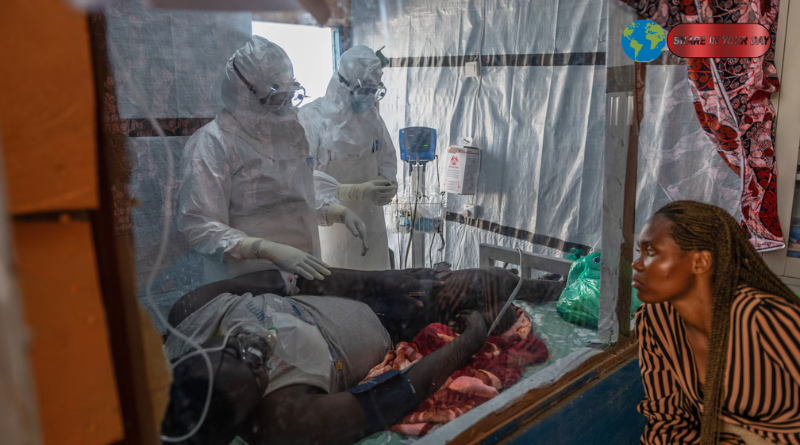
The outbreak is being driven by the Bundibugyo virus, a relatively rare type of Ebola for which there is currently no specifically approved vaccine or treatment. That scientific gap has made an already difficult response even harder.
At the same time, health workers are confronting armed conflict, population displacement, misinformation, poor roads, shortages of resources and attacks on medical teams.
The result is a race against time.
Ebola Outbreak in Congo Has Become the Country’s Largest
The scale of the crisis has changed dramatically since the outbreak was first detected in April and officially declared in May.
According to the World Health Organization, more than 4,600 confirmed cases and more than 2,100 deaths had already been reported by Aug. 12. The outbreak had expanded to 54 health zones across six provinces, including Ituri, North Kivu, South Kivu, Haut-Uélé, Tshopo and Bas-Uélé.
More recent reporting shows the numbers continuing to rise rapidly. Associated Press reported that confirmed cases had reached more than 5,500, with more than 2,600 deaths by late August. One recent week alone recorded more than 300 deaths.
That growth has alarmed international health officials because the outbreak is not simply increasing in size. It is expanding at an unusually fast pace.
The Washington Post reported Aug. 26 that responders are struggling to keep up as the epidemic spreads through some of the most difficult areas of eastern Congo. Funding shortages and misinformation are further weakening containment efforts.
1. The Ebola Outbreak in Congo Is Spreading Faster Than Previous Epidemics
The first major warning sign is the speed of transmission.
The WHO said in August that the Bundibugyo outbreak was expanding faster than any previous Ebola outbreak in the Democratic Republic of Congo. During the week of Aug. 3 through Aug. 9, officials recorded 579 confirmed cases and 304 deaths, the highest weekly totals reported at that point in the outbreak.
The speed creates a major problem for contact tracing.
Ideally, health teams identify an infected person, determine who may have been exposed, monitor those contacts and isolate anyone who develops symptoms. But when large numbers of infections occur outside existing monitoring networks, teams are forced to chase the outbreak instead of staying ahead of it.
That appears to be happening in Congo.
Recent reports indicate that a large share of newly identified patients were not previously being monitored as contacts. This means the virus is reaching people through chains of transmission that response teams have not yet identified.
For an Ebola response, that is a serious warning.
2. Bundibugyo Virus Has Few Proven Medical Tools
The second major challenge is the virus itself.
The current outbreak is caused by Bundibugyo virus, a species of Ebola that has historically caused fewer outbreaks than the more widely known Zaire virus.
However, that rarity comes with a major disadvantage: there are fewer proven medical countermeasures.
The WHO says there are currently no approved vaccines or specific treatments for Bundibugyo virus disease. Treatment therefore depends heavily on early diagnosis, isolation, infection prevention and supportive medical care.
That is particularly important because Ebola can initially resemble other illnesses common in the region.
Patients can develop fever, weakness and gastrointestinal symptoms before progressing to more severe disease. Without laboratory testing, distinguishing Ebola from illnesses such as malaria can be difficult.
Early diagnosis can dramatically improve the chances of survival.
But when patients reach medical facilities late, treatment becomes more difficult and the risk of transmission to relatives, caregivers and health workers increases.
A Vaccine Could Still Play a Role
There is, however, a potentially important development.
Congo has begun receiving doses of Ervebo, a vaccine licensed for Zaire ebolavirus rather than Bundibugyo virus. More than 16,000 doses were recently delivered, with additional doses promised.
Researchers are studying whether Ervebo could provide protection against the current strain.
The WHO has recommended that Ervebo be prioritized for inclusion in a randomized clinical trial during the outbreak. A separate clinical trial is also examining potential treatments for Bundibugyo virus disease.
That research could become one of the most important elements of the response.
3. Conflict and Displacement Are Blocking Containment
The third warning sign is the environment in which the epidemic is unfolding.
Eastern Congo has experienced years of armed conflict and instability. Some communities affected by Ebola are difficult to reach because roads are poor, security conditions are unpredictable and populations are constantly moving.
The WHO has warned that insecurity, displacement and cross-border movement are making outbreak control significantly more difficult.
For Ebola responders, every obstacle matters.
A delayed ambulance can mean a patient remains in a community longer.
A blocked road can prevent medical teams from reaching a suspected case.
An insecure area can make contact tracing impossible.
A displaced family may move before health officials can identify and monitor them.
Together, these problems create opportunities for the virus to spread unnoticed.
The epidemic has already expanded beyond its initial location in Ituri Province into multiple provinces. Uganda and France have also reported infections linked to the outbreak, although authorities have taken measures to prevent further transmission.
4. Misinformation Is Becoming a Major Barrier
The fourth warning sign is not medical. It is social.
Health officials and humanitarian organizations say misinformation and mistrust are undermining efforts to control the outbreak.
In some affected communities, residents have attacked health teams, ambulances and medical facilities. The violence is often linked to fear, rumors and a lack of understanding about Ebola treatment and safe burial procedures.
This creates a dangerous cycle.
When people do not trust health workers, they may avoid treatment centers. They may also delay reporting symptoms or hide contacts.
That delay can allow an infected person to transmit the virus to relatives and other members of the community.
The WHO and Africa CDC have therefore emphasized that community engagement must be at the center of the response. Their joint appeal called for stronger early detection, contact follow-up, access to care and direct support for frontline workers.
In other words, containing Ebola is not only about protective suits, laboratories and treatment centers.
It is also about trust.
5. Health Workers Are Under Extreme Pressure
The fifth warning sign is the condition of the people fighting the outbreak.
Health workers are among those at greatest risk of infection. The WHO reported at least 155 confirmed infections among health workers by early August, including 45 deaths.
More recent reports have put the number of infected health workers even higher.
At the same time, frontline staff have faced delayed payments and difficult working conditions. In July, health workers at an Ebola treatment center in Bunia went on strike over unpaid compensation.
That problem goes beyond employee morale.
If nurses, doctors, cleaners, ambulance workers and other staff are exhausted, unpaid or unable to safely reach patients, the entire response becomes weaker.
Healthcare workers must also protect themselves while treating patients. Every exposure can remove another experienced responder from the front line.
The WHO has repeatedly stressed the importance of infection prevention and control measures, protective equipment and adequate staffing.
Why This Ebola Outbreak Could Become Even Worse
The central concern now is whether the response can begin moving faster than the virus.
The 2014-2016 West Africa Ebola epidemic remains the deadliest Ebola outbreak on record, killing more than 11,000 people. Officials now warn that the current epidemic in Congo could eventually approach or exceed that toll if transmission remains unchecked.
That does not mean such an outcome is inevitable.
Ebola can be contained.
Uganda’s experience during the same regional outbreak demonstrates that rapid surveillance, strong leadership, treatment capacity and community cooperation can stop transmission. The country has moved toward ending its outbreak after successfully controlling local transmission.
The challenge in Congo is scale.
The outbreak is spreading across a huge and difficult geographic area. Armed conflict complicates access. Communities are moving. Healthcare workers are under pressure. Funding remains inadequate, and the virus itself lacks an approved targeted vaccine or treatment.
That combination makes speed essential.
International Response Faces a Critical Test
International organizations are increasing their efforts.
The WHO, Africa CDC and national authorities are expanding surveillance, laboratory testing, treatment centers, infection prevention programs and community engagement. Researchers are also working to evaluate vaccines and treatments that could offer additional protection against Bundibugyo virus.
Yet the response requires sustained financing.
The Washington Post reported that severe funding shortages are already affecting the response, while misinformation is making field operations more difficult.
That combination is particularly dangerous because Ebola containment depends on continuous operations.
Contact tracing cannot simply stop.
Laboratories must continue testing.
Treatment centers need staff and supplies.
Safe burials must be conducted.
Communities need accurate information.
And health workers need protection.
If any part of that system breaks down, transmission can accelerate again.
What Happens Next?
The next several weeks could determine whether the Ebola outbreak in Congo begins to slow or enters an even more dangerous phase.
The immediate priority is straightforward: find cases earlier, isolate patients quickly, trace contacts aggressively and make treatment accessible.
But the broader response must also address the conditions that allow the virus to spread.
That means protecting medical workers.
It means rebuilding community trust.
It means reaching displaced populations.
It means securing roads and healthcare facilities.
And it means providing enough funding to keep response teams operating continuously.
The scientific response is also entering a crucial period. Vaccine trials and treatment studies could produce valuable evidence about how to fight Bundibugyo virus. Meanwhile, existing Ebola tools may offer some level of protection even though they were developed for a different strain.
The situation remains serious, but it is not hopeless.
The experience of previous Ebola epidemics shows that determined public-health action can reverse explosive transmission. The difference this time will depend largely on whether international support, local leadership and community cooperation can move quickly enough.
For Congo, the race is already underway.
And with the Ebola outbreak in Congo growing faster than containment efforts, the cost of waiting could become far greater.