North Korea Missile Drill: US, Japan, Seoul Unite
A new North Korea missile drill will bring the United States, South Korea and Japan together next month as the three countries strengthen their military coordination against Pyongyang’s growing nuclear and missile capabilities.
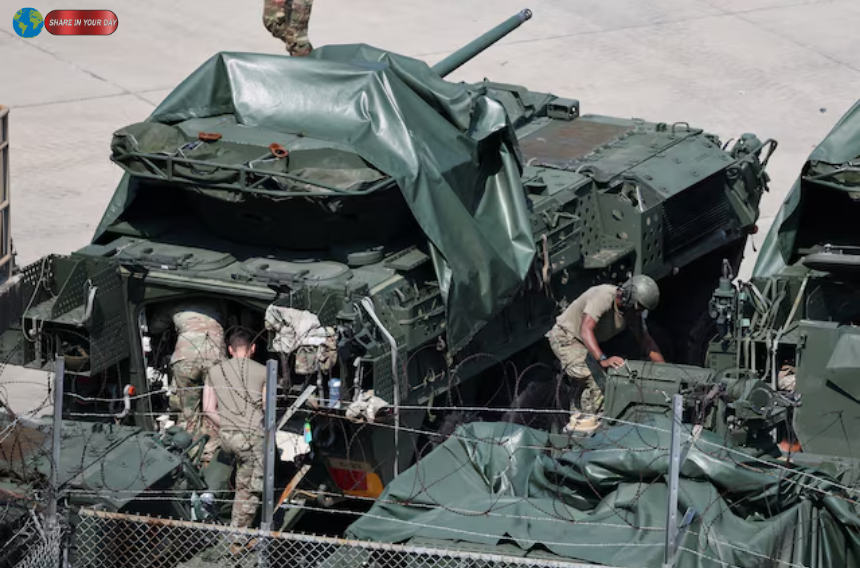
The trilateral exercise, known as Freedom Edge, is scheduled for September 9 through September 11 in international waters south and east of South Korea’s Jeju Island. South Korea’s Joint Chiefs of Staff said the exercise will focus on testing the three countries’ readiness to respond to threats from North Korea’s nuclear and missile programs.
The announcement comes at a sensitive moment for the Korean Peninsula.
North Korea has continued to develop its missile capabilities while criticizing military cooperation between Washington, Seoul and Tokyo. At the same time, U.S. President Donald Trump has been seeking to revive diplomacy with North Korean leader Kim Jong Un.
That creates an unusual combination of military preparation and diplomatic outreach.
While Washington is attempting to reopen communication with Pyongyang, its allies are simultaneously demonstrating that they remain prepared for a potential security crisis.
North Korea Missile Drill Will Test Trilateral Readiness
The upcoming North Korea missile drill is designed to strengthen the ability of the three countries to respond collectively to a changing security environment.
Freedom Edge is a trilateral exercise rather than a traditional bilateral U.S.-South Korea drill. That distinction matters because North Korea’s missile and nuclear programs affect all three countries.
South Korea faces the most immediate conventional and missile threat because of its geographic proximity to North Korea.
Japan is also vulnerable to North Korean missile launches, particularly because Pyongyang has repeatedly fired projectiles over or toward waters near Japan.
The United States, meanwhile, provides extended deterrence and maintains military forces in the region.
By training together, the three countries can improve communication and coordination during a potential crisis.
The exercise is expected to focus on preparedness against nuclear and missile threats rather than simply demonstrating military strength.
South Korea’s Joint Chiefs of Staff described the drill as a defensive exercise intended to improve the ability of the three countries to respond to North Korea’s evolving weapons capabilities.
Freedom Edge Comes After North Korean Missile Launches
The announcement follows a period of increased missile activity by North Korea.
On August 20, North Korea launched more than 10 short-range ballistic missiles while U.S.-South Korean military exercises were underway. South Korean officials condemned the launches and instructed the military to maintain full readiness.
The launches illustrated the continuing tension between military exercises conducted by the United States and its allies and North Korea’s response.
Pyongyang has repeatedly described joint exercises involving the United States and South Korea as rehearsals for invasion.
North Korea has also accused Washington, Seoul and Tokyo of moving toward what it describes as a nuclear military alliance.
In an earlier statement reported by Reuters, North Korea’s Foreign Ministry said the growing military cooperation among the three countries represented a serious threat and vowed to respond by strengthening its deterrent.
The upcoming Freedom Edge exercise therefore carries significance beyond routine military training.
It demonstrates that the three allied countries intend to maintain security cooperation despite diplomatic efforts to reduce tensions.
US, Japan and South Korea Face a Shared Threat
The North Korea missile drill highlights how closely the security interests of Washington, Seoul and Tokyo have become connected.
North Korea’s weapons programs have expanded over several years.
Pyongyang has developed ballistic missiles capable of threatening targets throughout South Korea and Japan. It has also continued efforts to develop longer-range systems capable of reaching the United States.
That creates a strategic challenge for the three governments.
South Korea must protect its population and military forces from a potential attack.
Japan must prepare for missiles that could fly toward or over Japanese territory.
The United States must maintain credible extended deterrence while ensuring that its forces in the region can operate effectively during a crisis.
Trilateral exercises allow the three countries to practice coordination before a real emergency occurs.
That preparation can be especially important during the first hours of a missile crisis, when information must move rapidly between military commands.
Why Japan’s Participation Matters
Japan’s participation is one of the most important aspects of Freedom Edge.
For decades, security cooperation between Japan and South Korea has been complicated by historical and political disputes.
However, North Korea’s missile program has encouraged greater coordination.
Japan has sophisticated missile-defense capabilities and operates systems designed to detect and respond to ballistic missile threats.
South Korea also has extensive missile-defense capabilities, while U.S. forces provide additional intelligence, surveillance and defensive resources.
Combining those capabilities can improve the allies’ ability to track missile launches and coordinate responses.
The three countries have increasingly used joint exercises to build interoperability.
Freedom Edge represents another step in that process.
The Drill Comes as Trump Seeks Talks With Kim Jong Un
The timing of the North Korea missile drill is particularly significant because Trump is simultaneously attempting to reopen dialogue with Kim Jong Un.
Trump has previously met Kim three times, including summits in Singapore in 2018 and Hanoi in 2019, followed by a meeting at the inter-Korean border later that year.
The Trump administration has recently shown interest in arranging another meeting.
South Korea has also expressed support for renewed U.S.-North Korean dialogue, particularly efforts aimed at reducing nuclear tensions and establishing peace on the Korean Peninsula.
However, Seoul has emphasized that diplomacy should not come at the expense of its security.
South Korean National Security Adviser Wi Sung-lac said Seoul wants to remain closely involved in any future negotiations between Washington and Pyongyang.
That position reflects a central dilemma.
Diplomacy may reduce tensions.
But military readiness remains necessary as long as North Korea retains nuclear weapons and ballistic missiles.
Trump Has Already Reduced Some Military Exercises
The upcoming trilateral exercise is also notable because Trump recently ordered changes to other U.S.-South Korean military activities.
The annual Ulchi Freedom Shield exercise was scaled back this year. The duration was reduced from 11 days to five days, according to reporting at the time.
Trump has also moved to cancel or reduce certain additional exercises.
The decision has been interpreted partly through the lens of his broader effort to improve relations with North Korea.
Yet the Freedom Edge exercise shows that military cooperation among Washington, Seoul and Tokyo is continuing.
That distinction is important.
The United States may reduce some large-scale exercises while maintaining other forms of military coordination.
For South Korea and Japan, maintaining readiness remains a priority because North Korea has shown no indication that it intends to abandon its nuclear arsenal.
North Korea Has Rejected the Idea of Denuclearization
Diplomatic efforts face a major obstacle.
North Korea has consistently rejected demands that it surrender its nuclear weapons as a precondition for negotiations.
Pyongyang regards its nuclear arsenal as essential to national security.
That position makes traditional denuclearization negotiations extremely difficult.
The United States and South Korea have historically argued that North Korea must ultimately eliminate its nuclear weapons program.
North Korea, however, has continued expanding its capabilities.
The disagreement means that even if Trump succeeds in arranging another meeting with Kim, the two sides could face enormous differences over the purpose of negotiations.
A summit could still reduce tensions.
But it may not quickly resolve the underlying nuclear dispute.
North Korea Missile Drill Sends a Strategic Message
The North Korea missile drill also sends a message to Pyongyang.
The message is that military cooperation among the United States, Japan and South Korea will continue even while diplomatic channels are being explored.
That may reassure allies.
But it could also provoke a response from North Korea.
Pyongyang has repeatedly argued that U.S.-led military exercises justify its own military buildup.
This creates a cycle.
The United States and its allies conduct exercises because they perceive a North Korean threat.
North Korea responds by testing missiles or issuing warnings.
The allies then strengthen military cooperation because of those actions.
That cycle has persisted for years.
Breaking it would require significant diplomatic progress.
The Korean Peninsula Remains Highly Militarized
The Korean Peninsula remains one of the world’s most heavily militarized regions.
South Korea maintains a large and technologically advanced military.
The United States also maintains forces in South Korea as part of its longstanding alliance commitment.
Japan provides another critical component of the regional security architecture.
North Korea, meanwhile, maintains a large conventional military alongside its nuclear and missile programs.
The result is an environment in which even relatively small military incidents can create major risks.
That is why exercises such as Freedom Edge are designed not only to demonstrate capabilities but also to improve coordination.
The better the three countries understand each other’s systems and procedures, the faster they can respond if a crisis develops.
North Korea’s Recent Missile Activity Raises Concerns
Recent launches have reinforced concerns about Pyongyang’s willingness to use missile tests as a political and military tool.
On August 12, North Korea launched a ballistic missile toward the sea off the Korean Peninsula’s east coast. South Korean and Japanese authorities said the missile traveled roughly 700 kilometers.
Just over a week later, North Korea launched more than 10 short-range ballistic missiles.
The pattern suggests that missile testing remains an important part of Pyongyang’s strategy.
These launches can serve several purposes.
They can test weapons systems.
They can train military units.
They can send political messages.
They can also demonstrate that North Korea retains the ability to respond to military pressure.
That makes intelligence-sharing among the United States, South Korea and Japan especially important.
Military Readiness and Diplomacy Must Move Together
The central challenge for the allies is balancing deterrence with diplomacy.
Too little military readiness could create vulnerabilities.
Too much military pressure could make negotiations more difficult.
The upcoming North Korea missile drill illustrates that balance.
The three countries are preparing for the possibility of conflict while Washington simultaneously explores the possibility of another meeting with Kim Jong Un.
That does not necessarily mean the diplomatic effort is failing.
In fact, military readiness can sometimes support diplomacy by giving negotiators confidence that their countries remain secure.
The challenge is ensuring that military exercises are understood as defensive preparations rather than immediate preparations for offensive action.
What Freedom Edge Could Mean for Regional Security
If conducted as planned, Freedom Edge will give the United States, South Korea and Japan another opportunity to improve interoperability.
The exercise can help military commanders understand how to share information and coordinate responses.
It can also reinforce political cooperation among the three governments.
That matters because regional security challenges extend beyond North Korea.
Japan and South Korea are also watching China’s growing military power and the broader strategic competition between Washington and Beijing.
However, North Korea remains an immediate and distinct threat.
A coordinated response among the three countries could therefore become an important component of broader Indo-Pacific security planning.
The Bigger Question Is What North Korea Does Next
The most important development may come after the exercise.
North Korea has historically responded to military exercises with strong rhetoric, missile tests or other demonstrations of military power.
If Pyongyang follows the same pattern this time, tensions could rise again.
However, the diplomatic environment is different from previous years.
Trump is seeking another meeting with Kim.
South Korea has expressed support for renewed dialogue.
At the same time, North Korea has continued to strengthen its nuclear capabilities and remains resistant to traditional denuclearization demands.
That combination makes the months ahead particularly important.
North Korea Missile Drill Highlights a Delicate Balance
The upcoming North Korea missile drill is more than another military exercise.
It is a demonstration of trilateral coordination at a moment when the United States is attempting to revive diplomacy with Pyongyang.
South Korea, Japan and the United States will conduct Freedom Edge from September 9 to 11, focusing on preparedness against North Korea’s nuclear and missile threats.
The exercise follows recent North Korean missile launches and comes after Washington reduced the scale of some other military exercises with South Korea.
For the allies, the priority is clear: maintain credible deterrence while leaving room for diplomacy.
For North Korea, the exercise will likely be closely watched.
Pyongyang has repeatedly criticized U.S.-led military cooperation and has promised to strengthen its own deterrent in response.
The coming weeks will therefore test whether military readiness and diplomatic outreach can coexist without producing another escalation.
For now, Washington, Seoul and Tokyo appear determined to prepare for the worst while hoping diplomacy can produce something bette