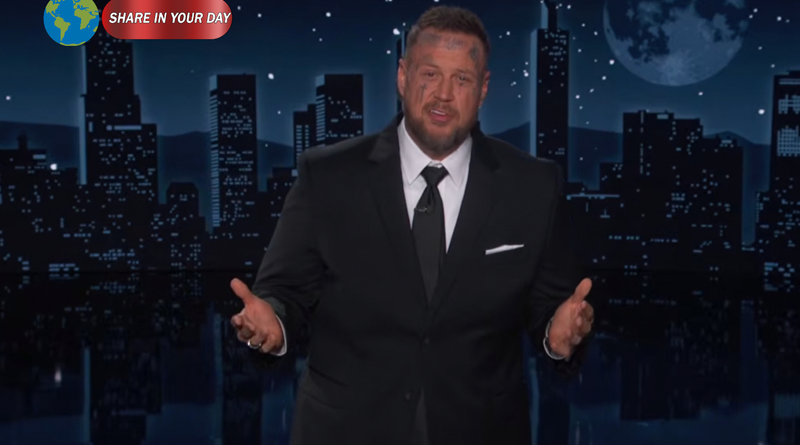
Jelly Roll Politics Finally Come Into Focus
The debate over Jelly Roll politics took a dramatic turn this week when the country star finally addressed the political questions that had followed him since the 2026 Grammy Awards.
Jelly Roll, whose real name is Jason DeFord, had avoided giving a detailed explanation of his political views when reporters questioned him about politics at the Grammys in February. At the time, he indicated that he had plenty to say but wanted to address the subject later.
That moment became increasingly significant after the singer stepped in as guest host of Jimmy Kimmel Live! this week.
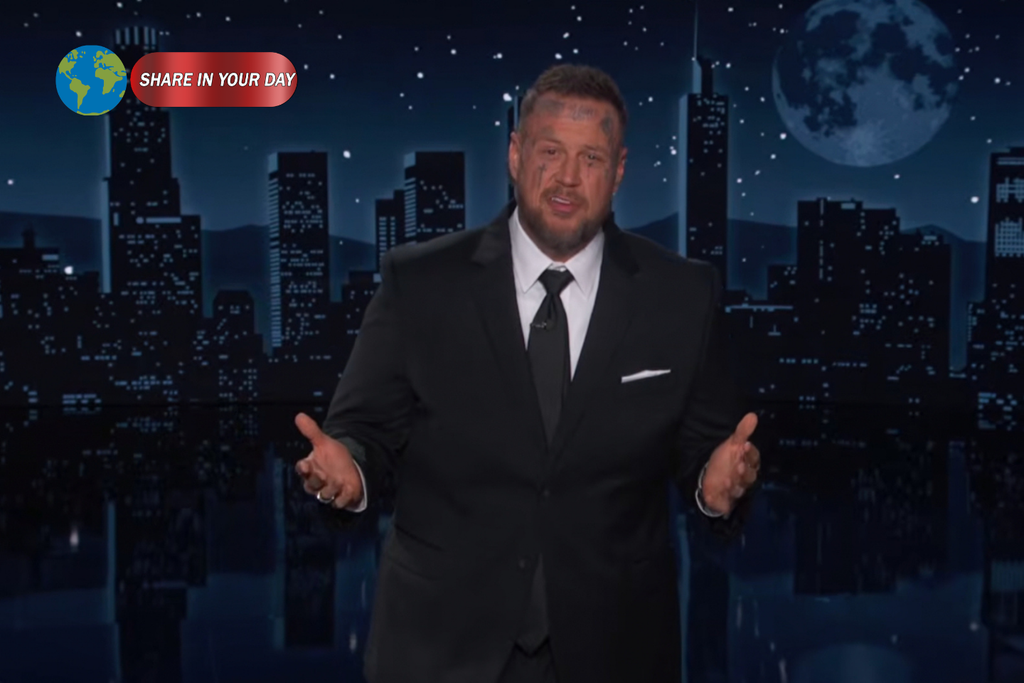
During several appearances, Jelly Roll made jokes about President Donald Trump and his administration. The jokes surprised some fans who had previously assumed that the country singer was politically aligned with Trump and the MAGA movement.
By Thursday night, however, Jelly Roll decided that humor alone was not enough.
In an emotional final monologue, he explained where he stands politically, why he had avoided the subject and why he believes his comments should not be reduced to a simple Republican-versus-Democrat argument.
His message was ultimately less about choosing a political party and more about compassion, dignity and representing people who feel ignored.
Jelly Roll Politics Were Shaped by the Grammys
The story goes back to the 2026 Grammy Awards.
Jelly Roll described the ceremony as one of the greatest moments of his career. He had achieved a major personal milestone, receiving Grammy recognition after years of building his career from a difficult background.
But the celebration was followed by a question about politics.
Instead of answering directly, he asked for more time.
At the time, Jelly Roll said he had a lot to say and promised that people would eventually hear his position clearly. Yet weeks and months passed without the political statement he had promised.
That silence created a vacuum.
Fans, commentators and political observers began interpreting his public image through their own assumptions. His country-music background, Christian identity and previous interactions with Trump led some people to view him as conservative or MAGA.
Others pointed to his advocacy for people facing addiction, incarceration and social hardship and interpreted his worldview differently.
Jelly Roll now says the situation became frustrating because people were deciding what he believed without hearing him explain it himself.
His Kimmel Jokes Changed the Conversation
The political debate exploded when Jelly Roll became a guest host on Jimmy Kimmel Live! during the show’s summer break.
Rather than simply filling in as a celebrity host, he used his opening monologues to make jokes about Trump.
One of the most widely discussed moments involved Trump’s appearance at an IndyCar event in Washington, D.C. Jelly Roll mocked the president’s flag-waving and used his own dramatic weight-loss transformation as the setup for jokes about Trump’s weight.
The jokes were intentionally provocative.
They also created a sharp contrast with the assumptions many people had previously made about Jelly Roll.
For some viewers, the jokes appeared to signal that the singer had moved firmly toward the political left.
Others saw the jokes as nothing more than late-night comedy.
The backlash nevertheless became significant enough that Jelly Roll addressed it directly during his final night as guest host.
Jelly Roll Rejects the MAGA or Liberal Label
Jelly Roll’s most important clarification was that he does not consider himself a straightforward member of either major American political camp.
He acknowledged that he leans left on some issues but described himself as generally somewhere around the middle.
That explanation challenged the binary assumptions surrounding him.
For months, some people had treated him as a conservative country singer. After his Trump jokes, some of the same people suddenly began treating him as a liberal celebrity.
Jelly Roll pointed out the absurdity of that transformation.
In effect, his argument was that making jokes about a president does not automatically place someone in a particular political party.
His identity is more complicated than a political label.
He described himself as a Christian, country singer, farmer and bow hunter. Those elements of his identity are often associated with conservative American culture, but Jelly Roll argued that none of them automatically determine his political allegiance.
That distinction became central to his message.
He Says Human Dignity Comes First
The most emotional section of Jelly Roll’s monologue came when he moved beyond party politics.
Rather than announcing support for a particular political party, he focused on people who he believes are often overlooked.
He talked about people struggling with addiction, people who have served time in prison, single mothers working difficult jobs and families experiencing hardship.
His broader message was that compassion should not belong exclusively to one side of the political spectrum.
Jelly Roll emphasized that human dignity is not inherently Republican or Democratic. He similarly rejected the idea that compassion and mercy should be treated as ideological positions.
That was an important distinction because it explained why he had struggled to answer the political question at the Grammys.
He was worried that whatever he said would immediately be transformed into a partisan statement.
Ironically, he concluded that his effort to avoid politics had eventually become political itself.
Jelly Roll Says He Now Plans to Vote
Another major revelation involved Jelly Roll’s voting status.
He explained that he had not previously been able to vote because of his criminal history. According to his comments, that changed in March 2026.
Now, he says, he intends to exercise that right in the November midterm elections.
However, Jelly Roll did not identify the political party or candidate he intends to support.
That omission was deliberate.
His point was not to announce himself as a Democratic or Republican celebrity. Instead, he wanted to explain that having the ability to vote has personal significance for him.
For an artist who has openly discussed his troubled past, recovery and transformation, the right to participate in the political process represents another stage in his personal journey.
It also makes his comments more significant than a typical celebrity political endorsement.
The Grammys Remain a Source of Regret
Jelly Roll also revisited the moment that started the controversy.
He said he does not necessarily regret asking for additional time before responding to the political question at the Grammys.
In retrospect, however, he wishes he had found the words to explain his feelings sooner.
That distinction is important.
He was not apologizing for refusing to give an immediate political answer. Instead, he appeared to regret that he had not been able to communicate the values behind his hesitation.
He said he had been afraid that anything he said would immediately be interpreted as a political statement.
That fear ultimately prevented him from expressing what he wanted to say.
The result was months of speculation.
His Kimmel monologue became an opportunity to finally close that chapter.
Why Jelly Roll’s Trump Jokes Caused Such a Reaction
Celebrity politics is particularly complicated in country music.
Country artists often have audiences that include conservative voters, while many performers also have fans with liberal political views.
Jelly Roll occupies an unusual position within that landscape.
His personal story has helped him connect with people across cultural and political boundaries. He has built a fan base around authenticity, recovery, resilience and working-class identity.
That makes political categorization difficult.
When he joked about Trump, some fans interpreted the comments as betrayal.
Others welcomed them.
The backlash demonstrates how quickly celebrity humor can become a political statement in an increasingly polarized media environment. Jelly Roll himself appeared surprised that a few jokes could generate such intense assumptions about his political identity.
But the controversy also gave him a larger platform.
Instead of allowing commentators to define his politics, he used the final Kimmel monologue to explain them himself.
His Message Was Bigger Than Donald Trump
Although Trump was at the center of Jelly Roll’s recent jokes, the singer’s final message went beyond the president.
His argument was fundamentally about how Americans treat one another.
Jelly Roll emphasized people who are struggling, forgotten or unable to speak for themselves.
That approach reflects themes that have appeared throughout his public career.
His personal history has often been central to his music and public image. He has discussed incarceration, addiction, recovery and the difficulty of rebuilding one’s life.
Those experiences help explain why his political philosophy does not fit neatly into a conventional partisan box.
For Jelly Roll, personal hardship appears to be a stronger reference point than party identity.
Fans Are Now Left With a More Complicated Picture
The controversy has changed how many fans view Jelly Roll.
Before this week, some believed he was firmly aligned with Trump.
After his Kimmel appearances, others assumed he had become a liberal political figure.
His final explanation challenges both interpretations.
He says he leans left on some issues but remains broadly in the middle.
He also says he is committed to voting and representing people who feel overlooked.
That leaves his exact political preferences less clearly defined than some fans may have expected.
But perhaps that was the point.
Jelly Roll did not appear interested in replacing one label with another.
Instead, he wanted to reject the idea that every public statement must be interpreted through the lens of a political party.
The Power of a Celebrity Refusing a Political Label
Jelly Roll’s decision is notable in an era when celebrities are frequently pressured to declare political allegiances.
Musicians are often expected to endorse candidates, comment on elections or explain their positions on controversial issues.
For artists with large audiences, silence can itself become controversial.
Jelly Roll’s experience demonstrates why.
His refusal to answer at the Grammys did not make the political speculation disappear. It arguably made the speculation stronger.
Once he finally spoke, his comments were immediately interpreted through the same partisan framework he had tried to avoid.
Yet his final Kimmel monologue offered a different approach.
Rather than saying, “I am Republican” or “I am Democrat,” he essentially said that his values matter more than the label.
That may be the clearest explanation of Jelly Roll politics yet.
What Comes Next for Jelly Roll?
Jelly Roll’s political comments are unlikely to end the discussion.
If anything, his decision to acknowledge that he plans to vote in November could lead to even more scrutiny.
Every future political comment may now be examined for clues about which candidates or policies he supports.
But his message suggests that he is comfortable with that possibility.
The important change is that he has now established his own framework.
He does not want to be defined simply by his country-music background, his Christian faith, his history or his jokes about Trump.
He wants his political identity to be understood through a broader commitment to compassion and dignity.
Whether that position satisfies people on either side of America’s political divide remains uncertain.
Jelly Roll Politics Are About Values, Not Labels
The latest chapter in the Jelly Roll politics debate began with a Grammy question, intensified through a series of Trump jokes on Jimmy Kimmel Live! and ended with an emotional explanation of his worldview.
Jelly Roll did not announce a party affiliation.
Instead, he said he leans left on some issues while generally considering himself politically in the middle. He also explained that he intends to vote now that he has regained that right.
Most importantly, he argued that compassion, mercy and human dignity should not be owned by either political party.
That message may ultimately prove more revealing than any endorsement.
The singer’s political identity remains complicated, but his priorities are becoming clearer.
He wants to speak for people who feel forgotten.
He wants to exercise his right to vote.
And after months of allowing others to decide what he believes, Jelly Roll has finally chosen to explain his politics in his own words.