Below is the WordPress-ready version based on the PetaPixel report and Adobe’s official announcement. I’ve chosen “Photoshop Light Adjustment Layer” as the focus keyword because it closely matches the main news and is specific enough for SEO.
Photoshop Light Adjustment Layer Brings Camera Raw Power to Photoshop
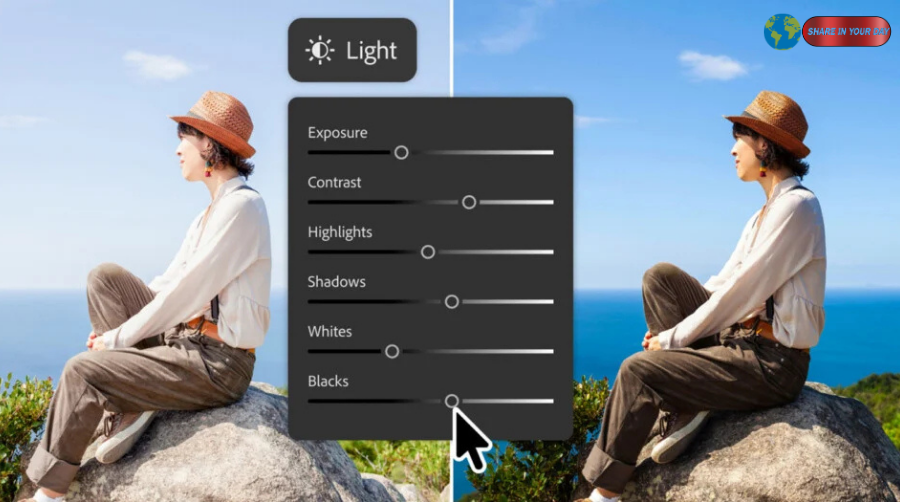
The Photoshop Light Adjustment Layer is one of the biggest additions in Adobe’s latest Photoshop update, bringing powerful Camera Raw-style exposure controls directly into the application’s familiar layer-based workflow.
Adobe introduced the new feature as part of a broader set of Photoshop innovations designed to give photographers and creators more control while reducing interruptions during editing. The update also introduces new Firefly-powered tools, visual markup features, improved Dynamic Text capabilities, deeper Adobe Stock integration and a beta AI Assisted Editor.
For photographers who have traditionally moved between Photoshop and Camera Raw to make lighting adjustments, the change could make everyday editing considerably smoother.
The key difference is that the new Light Adjustment Layer is non-destructive. Instead of permanently changing the pixels in an image, users can make lighting adjustments through a dedicated adjustment layer and continue modifying them later.
That makes the feature particularly useful for professional workflows where flexibility matters.
Photoshop Light Adjustment Layer Adds Six Key Controls
At the heart of the update is a new Light Adjustment Layer that provides six major lighting controls.
Users can adjust:
- Exposure
- Contrast
- Highlights
- Shadows
- Whites
- Blacks
These controls are familiar to photographers who already work with Adobe Camera Raw or Lightroom. Adobe says the new adjustment layer brings Camera Raw-level lighting results directly into Photoshop without requiring users to leave the layer workflow.
This is important because Photoshop and Camera Raw have traditionally served somewhat different purposes.
Camera Raw is especially strong for global tonal adjustments and RAW processing, while Photoshop offers extensive layers, compositing, retouching and detailed pixel-level editing.
The new Light Adjustment Layer helps close that gap.
A photographer can now work on an image in Photoshop, create a Light Adjustment Layer and fine-tune its exposure and tonal range without flattening the project or permanently changing the underlying image.
Why Non-Destructive Editing Matters
Non-destructive editing has long been an important part of professional photography workflows.
When an adjustment permanently changes the original pixels, reversing the decision later can become difficult. By contrast, an adjustment layer allows editors to return to the controls and change the result without rebuilding the entire edit.
Adobe describes the new Light Adjustment Layer as a non-destructive solution. The company previously introduced the feature in beta with Exposure, Contrast, Highlights, Shadows, Whites and Blacks controls while maintaining the existing Brightness/Contrast functionality.
That distinction could make a major difference for photographers working on complex projects.
For example, an editor might initially reduce highlights because a bright sky is distracting. Later, the client may request a brighter version. With a dedicated adjustment layer, the editor can simply change the Highlights setting instead of restoring the original image and repeating other edits.
The result is a more flexible workflow.
Photoshop Light Adjustment Layer Could Reduce Camera Raw Switching
One of the most practical benefits of the Photoshop Light Adjustment Layer is convenience.
Photographers often combine several Adobe applications or editing environments depending on the job. Camera Raw is deeply integrated into Photoshop, but moving between different stages of an editing workflow can still add friction.
Adobe’s new approach puts more of those controls directly into Photoshop.
That means photographers can potentially complete more of their tonal work while staying inside the Layers panel and the main Photoshop environment.
For professionals handling large numbers of images, even small workflow improvements can add up.
A wedding photographer, portrait editor or commercial retoucher may make dozens of exposure and tonal decisions during a single project. Keeping those adjustments editable inside Photoshop can make revisions easier and reduce the need to move between tools.
New AI Editing Tools Arrive Alongside the Light Layer
The new Light Adjustment Layer is only one part of Adobe’s latest Photoshop update.
Adobe is also expanding its AI-powered editing capabilities with Instruct Edit with Masks, powered by Firefly Image 5. The tool is designed to understand the context of an image and make targeted changes based on natural-language instructions.
Instead of manually creating a highly precise selection before making a change, users can describe what they want.
Adobe gives examples such as opening a person’s closed eyes or placing a hat on a particular person’s head.
The important element is the masking behavior.
Adobe says the unmasked portions of the image remain untouched, helping protect important elements such as faces, logos and brand assets.
That could be particularly useful when an image contains several people or complex backgrounds.
Rather than asking AI to reinterpret the entire photograph, the editor can identify the intended area and let Photoshop focus its changes there.
Photoshop Markup Makes AI Instructions More Visual
Adobe is also introducing dedicated Markup capabilities.
The idea is simple: instead of relying entirely on written prompts, users can visually show Photoshop what they want.
An editor can select an area, draw an arrow, sketch a rough shape or indicate where a new element should appear. Firefly can then interpret that visual information when generating or modifying content.
This approach could be valuable because text descriptions do not always communicate spatial relationships clearly.
For example, telling an AI system to place an object “to the left of the person” may be less precise than drawing an arrow directly on the image.
Markup gives creators another way to communicate intent.
It also reflects Adobe’s broader strategy of allowing users to combine traditional editing skills with generative AI rather than forcing them to choose one approach.
AI Assisted Editor Arrives in Photoshop Beta
Another major addition is the new AI Assisted Editor, which is arriving in beta.
Adobe describes it as an optional space where users can experiment with prompt-based editing through a dedicated interface and natural-language prompt bar.
The AI Assisted Editor can work with several existing Photoshop capabilities, including:
- Prompt to Edit
- Remove Background
- Generative Expand
- Remove Tool
- Generative Fill
- Generative Upscale
- AI Markup
This creates a more conversational approach to Photoshop.
Instead of manually searching through menus and tools for every task, users can describe what they want and let Photoshop determine which capabilities should be used.
However, Adobe is not removing the traditional Photoshop workflow.
The company emphasizes that users can continue working in the Pro Editor if they prefer precise manual controls. Prompt to Edit is also available through Photoshop’s Contextual Task Bar, allowing users to use natural-language instructions without leaving the familiar editing environment.
Photoshop AI Edits Can Remain Organized
One potentially important detail is how Adobe handles AI-generated changes.
Adobe says Prompt to Edit results become generative layers in the layer stack when used in the Pro Editor. This keeps the generated changes organized and supports a non-destructive workflow.
That is an important distinction for professionals.
AI editing can be extremely fast, but professional users still need to understand what changed and maintain the ability to revise the result.
Generative layers can provide a bridge between fast AI experimentation and traditional Photoshop project management.
Instead of treating AI output as the final image, editors can incorporate it as another editable component of the project.
Dynamic Text Gets a Major Upgrade
Adobe’s latest Photoshop update is not focused exclusively on photography.
Dynamic Text is also receiving an expansion that allows it to work with custom shapes and paths.
This means text can automatically adapt to curved or freeform layouts rather than being restricted to conventional text arrangements.
For designers, that could make certain layouts much faster to create.
Poster designers, advertising professionals and social media creators frequently need text to follow unusual shapes. Previously, achieving these effects could require additional manual work.
The new capability aims to make those layouts more flexible while reducing repetitive adjustments.
Adobe Stock Gets a Massive In-Photoshop Integration
Photoshop is also getting improved Adobe Stock integration.
Adobe says the new dockable Stock panel provides access to more than 900 million Adobe Stock assets without requiring users to leave Photoshop.
That could simplify the process of finding reference images, design assets and other materials during a project.
Instead of opening a browser, searching for an asset, downloading it and importing it into Photoshop, users can browse from within the application.
For designers working under tight deadlines, eliminating those small interruptions can make the overall workflow more efficient.
Photoshop 27.10 Brings the New Features Together
Adobe’s community announcement identifies the release as Photoshop 27.10 and highlights the Light Adjustment Layer alongside the new AI tools and other workflow improvements.
The update represents a broader shift in Photoshop.
Adobe is not simply adding more AI features. It is also expanding traditional editing controls and attempting to make them easier to access.
That distinction matters.
For photographers who prefer manual adjustments, the Light Adjustment Layer provides more precise control. For users who want faster experimentation, the AI Assisted Editor provides natural-language tools.
The result is a Photoshop experience that supports multiple editing styles.
Photoshop Light Adjustment Layer vs. Camera Raw
The new feature naturally raises a question: does the Photoshop Light Adjustment Layer replace Camera Raw?
Not exactly.
Camera Raw remains an important part of Adobe’s photography ecosystem. Adobe’s documentation describes Camera Raw as an editing environment that integrates with Photoshop, Bridge and Lightroom.
Instead, the new Photoshop feature appears designed to bring some of Camera Raw’s most useful lighting controls into Photoshop itself.
That can be especially helpful after an image has already entered a Photoshop layer-based workflow.
Photographers can make exposure and tonal changes without necessarily returning to Camera Raw for every adjustment.
This is less about eliminating Camera Raw and more about giving Photoshop users greater control within the application they are already using.
Why Photographers May Welcome the Update
For many photographers, the biggest benefit is not flashy AI generation.
It is workflow efficiency.
The Light Adjustment Layer addresses a fundamental part of photo editing: controlling brightness and tonal range.
Exposure adjustments can dramatically change the mood of an image. Highlights can recover detail in bright areas. Shadows can reveal information in darker regions. Whites and Blacks can help refine the overall tonal structure.
Having those controls available as a dedicated, non-destructive Photoshop layer gives photographers another way to fine-tune their images.
It also makes experimentation safer.
An editor can try a dramatic exposure change, reduce the effect, disable the layer or return to the settings later.
That flexibility is valuable when a photograph needs to go through multiple rounds of review.
Adobe’s Bigger Photoshop Strategy
The latest update shows Adobe pursuing two goals at the same time.
The first is to improve traditional creative controls.
The second is to make AI-assisted creation easier to use.
The Photoshop Light Adjustment Layer belongs largely to the first category, while Firefly-powered Instruct Edit, Markup and the AI Assisted Editor belong to the second.
Together, they create a hybrid workflow.
Users can make careful manual adjustments when precision matters. They can also use natural-language prompts when speed or experimentation is more important.
Adobe says its goal is to provide more choice and control at every stage of the creative process.
That approach could become increasingly important as AI becomes a normal part of professional image editing.
What the Photoshop Update Means for Creators
The latest Photoshop release is significant because it does not force creators into a single workflow.
Photographers who want Camera Raw-style controls can use the new Light Adjustment Layer. Designers can benefit from expanded Dynamic Text and improved Stock integration. AI-focused users can experiment with the beta AI Assisted Editor and Firefly-powered tools.
At the same time, traditional Photoshop tools remain available.
For professionals, that flexibility may be more valuable than any individual feature.
Creative projects often change direction. A client may request a darker image. A designer may need to move text around a curved shape. A photographer may want to experiment with an AI-generated modification while preserving the original composition.
Photoshop’s latest tools are designed to make those changes easier without abandoning the application’s established layer-based workflow.
Photoshop Light Adjustment Layer Is the Standout Upgrade
Adobe’s latest Photoshop update includes a long list of new features, but the Photoshop Light Adjustment Layer could be the most meaningful addition for photographers.
It brings Exposure, Contrast, Highlights, Shadows, Whites and Blacks into a dedicated non-destructive adjustment layer, giving users more Camera Raw-style control without leaving Photoshop.
Meanwhile, Firefly-powered editing, AI Markup and the beta AI Assisted Editor push Photoshop further into AI-assisted creation.
The combination is notable.
Adobe is effectively expanding Photoshop in two directions at once: more precise traditional controls and more powerful AI-assisted workflows.
For photographers and designers, that means more ways to reach the same creative goal.
The latest update is available now, giving Photoshop users the opportunity to explore the new tools and decide how much of the AI-powered workflow fits their own editing process.
Suggested Internal Links
- Adobe Photoshop Tutorials: [INSERT YOUR INTERNAL LINK]
- Best Photo Editing Software: [INSERT YOUR INTERNAL LINK]
- Adobe Creative Cloud News: [INSERT YOUR INTERNAL LINK]
- AI Photo Editing Tools: [INSERT YOUR INTERNAL LINK]