Venezuela Oil Deal: 5 Key Questions Revealed
The Venezuela oil deal announced by President Donald Trump is being presented as a major shift in the global energy landscape. The agreement could give the United States significant access to Venezuelan oil reserves while bringing billions of dollars of investment into an industry that has suffered from years of underinvestment and deteriorating infrastructure.
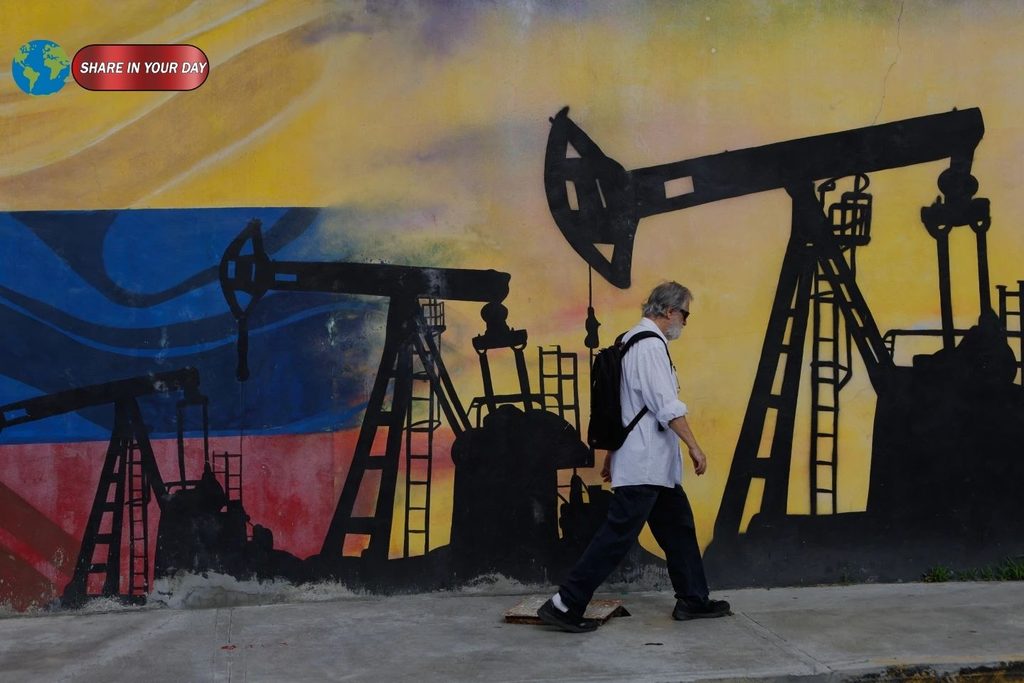
Trump described the agreement as the “biggest oil deal in world history.” However, the headline figure is only part of the story. Many of the most important details remain unresolved, including who will finance the projects, how quickly production can increase, how the oil will be allocated and how the arrangement will operate over the long term.
According to The Associated Press, the agreement involves 17 Venezuelan oil fields with a stated potential of 65 billion barrels. Venezuela’s government says the arrangement could attract roughly $100 billion in investment and generate more than $209 billion in taxes for Caracas. The reported structure would give the United States a 55% effective output share through ownership and rights to purchase oil at cost.
The deal therefore represents more than a conventional energy investment. It could reshape Venezuela’s oil industry, affect U.S. energy security and create a new relationship between Washington and Caracas.
Venezuela Oil Deal Could Unlock Vast Reserves
Venezuela has one of the world’s largest petroleum resource bases. The U.S. Energy Information Administration estimated that the country had approximately 303 billion barrels of proven crude oil reserves in 2023, the largest national reserve base in the world.
Yet enormous reserves have not translated into equally enormous production.
Venezuela’s petroleum sector has been weakened by years of limited investment, maintenance problems, economic turmoil, sanctions and a shortage of technical capacity. Much of its crude is also extra-heavy oil from the Orinoco Belt, which requires specialized technology and infrastructure to extract, process and transport efficiently.
That distinction is critical.
A reserve figure tells investors how much oil is believed to be recoverable under defined conditions. It does not mean that all of that oil can immediately be produced and sold.
The EIA has previously noted that Venezuela’s energy sector has been constrained by deteriorating infrastructure, insufficient investment and difficulties involving its state oil company, PDVSA.
That means the new Venezuela oil deal could have enormous potential, but its practical impact will depend on how quickly companies can rebuild the country’s production system.
What Does the Venezuela Oil Deal Actually Cover?
The agreement announced by Trump reportedly creates a new company involving the U.S. government and an unnamed private operator.
According to AP, the arrangement would provide rights to develop 17 previously untapped oil fields for 100 years. Venezuela’s government says those fields have a potential of approximately 65 billion barrels.
The United States would receive a 55% effective output share through an ownership interest and rights to buy oil at cost. A U.S. official cited by AP said American purchases would be directed toward strategic petroleum reserves and military needs.
The structure is unusual because it combines commercial oil development with broader U.S. strategic objectives.
The reported plan also raises an immediate question: what exactly does “control” mean in practical terms?
Control over production is different from legal ownership of underground resources. Venezuela remains the country where the oil fields are physically located, and the precise legal structure of the new company will determine how revenue, operating authority, investment obligations and production rights are divided.
No complete text of the agreement had been publicly released when AP reported on the arrangement.
That lack of publicly available documentation makes it difficult to assess the deal’s full economic and legal implications.
Why the 65 Billion-Barrel Figure Matters
The reported 65 billion barrels is enormous, but it should not be confused with Venezuela’s entire reserve base.
OPEC’s 2025 statistical data lists Venezuela’s proven crude oil reserves at about 303.2 billion barrels.
The 65 billion barrels cited in connection with the agreement therefore represent a substantial portion of the country’s proven reserves, but not all of them.
The bigger issue is recoverability and production capacity.
Venezuelan crude is dominated by heavy and extra-heavy grades. These oils can require additional processing and, in some cases, blending with lighter hydrocarbons or other inputs to make them easier to transport and refine.
The country also needs functioning pipelines, storage facilities, export terminals, drilling equipment, electricity supplies, skilled workers and reliable financing.
Consequently, the agreement cannot simply turn 65 billion barrels into an immediate supply of crude.
That is one of the most important points for investors and consumers to understand.
Venezuela Oil Deal May Not Lower Gas Prices Quickly
Trump’s agreement comes at a time when U.S. consumers are facing pressure from elevated energy costs.
AP reported that the average U.S. gasoline price was around $4.09 per gallon on Friday, compared with approximately $3.21 a year earlier. The administration has therefore had a strong incentive to identify additional sources of oil and improve supply security.
However, Venezuelan oil production cannot be expanded overnight.
Oil fields require capital, drilling programs and supporting infrastructure. Existing facilities may need major repairs before additional production can begin.
That means consumers should not assume that the announcement will immediately translate into cheaper gasoline.
Even if investment begins rapidly, significant production increases could take years.
Oil prices are also determined by global supply and demand rather than by a single country’s reserves. Events in the Middle East, shipping disruptions, refinery capacity, OPEC policy, global economic growth and geopolitical risks can all influence crude prices.
Therefore, the Venezuela oil deal could eventually add supply to global markets, but its short-term effect on gasoline prices is likely to be much more limited.
Who Will Pay for Venezuela’s Oil Infrastructure?
One of the biggest unanswered questions concerns financing.
Venezuela needs significant investment to restore and expand its oil sector. The government has suggested that the agreement could attract around $100 billion in investment.
But attracting that amount of capital will require investors to believe that the political and legal environment is stable enough to justify spending billions of dollars.
International oil companies have previously operated in Venezuela, but the country’s political instability, sanctions environment and economic crisis created major obstacles.
The EIA has highlighted the lack of investment, deteriorating infrastructure and limited foreign participation as important reasons for Venezuela’s weak production performance.
For investors, the questions go beyond the size of the reserves.
They include:
- Who guarantees the investment?
- Who owns the new company?
- What happens if political conditions change?
- How are profits divided?
- Who controls exports?
- Who pays for infrastructure repairs?
- What legal protections are available to foreign investors?
Until these issues are clearly answered, the $100 billion investment figure should be viewed as a potential target rather than money already committed and deployed.
Venezuela Could Gain Billions in Revenue
For Caracas, the economic incentive is straightforward.
Venezuela’s government says the agreement could generate more than $209 billion in taxes. That would represent a potentially transformative source of government revenue.
Oil has historically been central to Venezuela’s economy. PDVSA has played a crucial role in financing the government, while the country’s economic problems have been closely connected to the collapse in petroleum production and exports.
A successful investment program could therefore provide Venezuela with more than export income.
It could create jobs, improve infrastructure, increase government revenue and strengthen the country’s position in global energy markets.
However, the benefits will depend on implementation.
If investment is delayed, production targets are missed or political disputes return, the expected economic gains could take much longer to materialize.
The U.S. Has a Strategic Interest Beyond Gasoline
The Venezuela oil deal also has a strategic dimension for Washington.
According to AP, U.S. purchases under the reported arrangement could support the country’s strategic petroleum reserves and military requirements.
That is significant because the United States has increasingly focused on energy security as global geopolitical tensions disrupt traditional supply routes.
The White House has recently emphasized the importance of maintaining energy flows amid the conflict involving Iran and disruption around the Strait of Hormuz.
Venezuelan oil is geographically attractive to the United States because of the country’s proximity to the U.S. Gulf Coast.
However, Venezuelan crude characteristics also matter. Much of the country’s oil is heavy crude, meaning refineries must be configured to process it efficiently.
This makes the relationship between Venezuelan production and U.S. gasoline prices more complicated than simply adding barrels to the market.
Political Opposition Could Complicate the Agreement
The agreement is also politically controversial.
Trump’s supporters have described it as a historic opportunity that could strengthen U.S. energy security while helping Venezuela rebuild its economy.
Critics argue that the arrangement raises questions about sovereignty, transparency and whether the United States is gaining excessive influence over Venezuela’s natural resources.
AP reported that Venezuelan critics and some U.S. Democrats have challenged the arrangement, while Republicans have praised it.
Those disagreements could become more significant as the agreement moves from announcement to implementation.
A large-scale oil investment requires legal certainty over many years. If political opposition produces regulatory changes or legal challenges, companies may hesitate to commit capital.
That is particularly important for a project expected to operate over a century.
What Happens Next?
The next stage will be closely watched by oil companies, investors and governments.
First, the full terms of the agreement will need to become clearer. Investors will want to know which company will participate, how ownership will be structured and what financial commitments each party must make.
Second, Venezuela’s oil infrastructure will need to be assessed.
The country has enormous geological resources, but increasing production requires functioning physical infrastructure and experienced personnel.
Third, Washington and Caracas will have to establish how the arrangement interacts with existing laws, sanctions, contracts and international investment rules.
Finally, oil companies will have to decide whether the potential rewards outweigh the political and operational risks.
The experience of Venezuela’s oil sector shows why that calculation will not be simple.
The Biggest Question Is Not How Much Oil Venezuela Has
The central question surrounding the Venezuela oil deal is not whether Venezuela has enough oil.
It clearly has enormous reserves.
The real question is how much of that oil can be produced economically, reliably and at scale.
Venezuela has approximately 303 billion barrels of proven crude reserves, according to EIA and OPEC data. Yet production has remained far below what the size of those reserves might suggest.
That gap between resources and production is where the success or failure of the new agreement will ultimately be determined.
If the United States and private investors can provide capital, technology and operational expertise while Venezuela maintains a stable investment environment, the deal could eventually produce significant additional oil.
If those conditions fail, the announcement could remain far more important politically than economically.
What the Venezuela Oil Deal Means for the Global Oil Market
The agreement could still matter even before production rises significantly.
Oil markets respond not only to current production but also to expectations about future supply.
The prospect of substantial new Venezuelan output could influence investment decisions, refinery planning and long-term supply forecasts.
It could also strengthen Washington’s position in the Western Hemisphere’s energy market.
For Venezuela, meanwhile, the deal offers the possibility of returning to a much larger role in global petroleum production.
But oil markets are notoriously difficult to predict.
Prices can rise because of geopolitical conflicts, shipping disruptions or production cuts. They can fall when demand weakens or additional supplies become available.
Therefore, the impact of the agreement will depend on global market conditions as much as on Venezuelan production itself.
Bottom Line
The new Venezuela oil deal is potentially one of the most consequential energy agreements of the Trump administration, but its biggest promises remain dependent on execution.
The agreement reportedly covers 17 oil fields with a potential 65 billion barrels. Venezuela says it could attract $100 billion in investment and generate more than $209 billion in tax revenue.
The United States would receive a reported 55% effective output share and access to oil for strategic reserves and military purposes.
Yet major questions remain unanswered.
Who will finance the infrastructure? How quickly can production increase? What legal protections will investors receive? How will ownership and profits be divided? And how much of the promised oil can actually reach international markets?
Those questions will determine whether the agreement becomes a genuine energy transformation or simply a dramatic announcement with a much slower economic impact.
For now, the size of Venezuela’s oil reserves is undeniable. The challenge is turning those reserves into reliable production.
That process could take years.
Internal Link Placeholder: Add a relevant article from your website here, such as a previous story about Donald Trump, U.S. energy policy, Venezuela, crude oil prices or global oil markets.