Iceland EU Referendum Deals a Major Blow to Brussels
The Iceland EU referendum has delivered a narrow but politically significant rejection of renewed European Union membership negotiations, dealing a setback to Brussels at a time when the bloc is trying to strengthen its security credentials and deepen relationships with wealthy European partners.
Icelandic voters rejected a proposal to restart accession talks with the EU by 52.8% to 47.2%, according to final results. Turnout reached 82.5%, highlighting the importance voters attached to the question.
The result does not mean Iceland is turning away from Europe. Instead, it reinforces an unusual relationship that already gives Iceland extensive access to the European single market while allowing it to remain outside the EU’s political institutions.
That distinction is central to understanding why the vote matters.
For Brussels, the result comes at an awkward moment. The European Union has increasingly presented itself as a more capable geopolitical and security actor as Russia’s war against Ukraine, tensions in the Arctic and uncertainty over America’s future role in European security reshape the continent’s strategic landscape.
Iceland, meanwhile, has chosen to maintain its existing model: close economic integration with the EU, membership in NATO and extensive cooperation with European partners without becoming an EU member.
What the Iceland EU Referendum Actually Decided
The referendum was not a direct vote on whether Iceland should immediately join the European Union.
Instead, voters were asked whether the country should resume negotiations for EU membership. A “yes” vote would have reopened the accession process, while a “no” vote would keep the issue on hold.
That distinction is important because restarting negotiations would not automatically have made Iceland an EU member.
A future accession agreement would still have required negotiations, approval by Iceland and ratification by EU member states. Nevertheless, a “yes” result would have represented a major political shift after Iceland suspended its previous accession process.
The “no” result therefore represents a decision to maintain the current relationship rather than move toward deeper institutional integration.
The outcome was close enough to demonstrate that Iceland remains divided over its European future. Yet the margin was sufficient to close the immediate political opportunity for reopening negotiations.
Prime Minister Kristrún Frostadóttir had previously indicated that a rejection would effectively shelve the issue for the remainder of her term, which runs until 2028.
Why Brussels Wanted Iceland Closer
The Iceland EU referendum was particularly important because Iceland is not an ordinary potential EU member.
The country is already deeply integrated into Europe’s economic and travel systems through the European Economic Area, Schengen Area and European Free Trade Association. The European Commission says Iceland applied for EU membership in 2009, while accession negotiations were put on hold in 2013.
Iceland therefore represents a relatively unusual enlargement opportunity.
Unlike countries that would need to undergo years of economic and institutional transformation before joining the bloc, Iceland already operates within many European frameworks.
Its economy is also highly connected to the EU. The European Commission says the EU accounted for 53.6% of Iceland’s goods trade in 2025 and represented 66.5% of Iceland’s exports.
From Brussels’ perspective, closer integration with Iceland could therefore have been achieved without the enormous political and economic challenges associated with some other enlargement candidates.
More importantly, Iceland has strategic value.
The country sits in the North Atlantic between Europe and North America, close to important sea routes and the strategically significant Greenland-Iceland-United Kingdom gap.
That makes Iceland important to NATO’s northern security architecture and to wider European discussions about Arctic security.
Security Was Supposed to Strengthen the EU’s Case
One of the biggest reasons the Icelandic debate attracted international attention was the changing security environment.
The EU has increasingly sought to demonstrate that it can contribute to European defence rather than relying entirely on NATO and the United States.
In March 2026, Brussels and Reykjavík signed an EU-Iceland Security and Defence Partnership designed to deepen cooperation on issues including Arctic affairs, maritime security, cyber threats, economic security and support for Ukraine.
The agreement was presented as an important step in a relationship that was already close.
It also showed why Iceland was strategically attractive to Brussels.
The EU’s security partnerships are intended to bring countries closer to European defence initiatives without necessarily making them EU members. The bloc has established similar arrangements with partners including Norway, Canada, Japan, South Korea, the United Kingdom and India.
Yet Iceland’s referendum demonstrated that deeper security cooperation does not automatically translate into support for EU membership.
That is arguably the most important lesson for Brussels.
Iceland Already Has NATO Security Guarantees
For many Icelanders, EU membership was not viewed as necessary to secure the country.
Iceland is a founding NATO member and occupies a strategically important position in the North Atlantic. Although it does not maintain traditional armed forces, it contributes to NATO’s regional security architecture through surveillance, infrastructure and host-nation support.
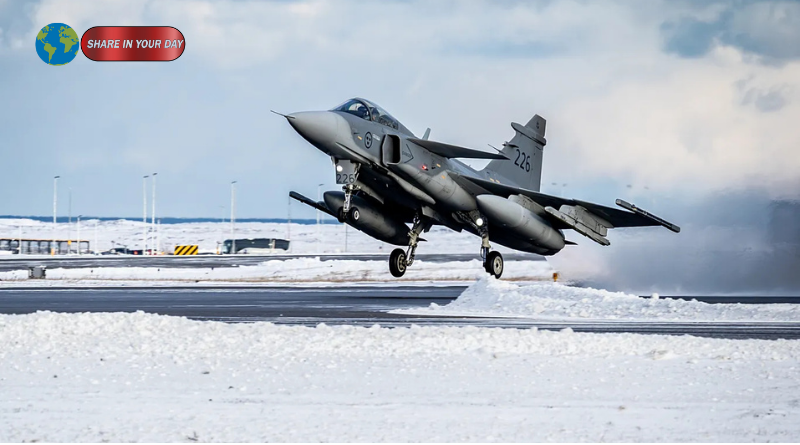
NATO also conducts periodic air-policing missions over Iceland.
According to NATO, allied fighter aircraft are deployed to Keflavík Air Base on a rotational basis to protect Icelandic airspace. The alliance describes Iceland’s location as strategically important to security in the High North and Arctic.
That existing security structure weakened one of the arguments for using EU membership as an additional answer to Iceland’s strategic concerns.
In other words, Icelanders could look at the current system and conclude that they already have strong military protection through NATO while retaining economic access to Europe through the EEA.
For voters prioritizing national sovereignty, that combination was difficult to beat.
Fishing Remained the Biggest Political Obstacle
Security was only one part of the debate.
The more traditional obstacle was fishing.
Iceland’s fishing industry has long been central to the country’s economy, politics and national identity. Control over fishing resources has also been one of the most sensitive issues in previous discussions over EU membership.
The EU’s Common Fisheries Policy was therefore a major concern for opponents of renewed negotiations.
The existing EEA framework gives Iceland access to the European single market, but important areas including fisheries and agriculture are outside the core single-market arrangements.
For opponents of EU membership, this created a powerful argument: Iceland could enjoy many economic benefits of close European integration without transferring control over its fisheries policy to Brussels.
That argument proved particularly effective outside Reykjavík.
The Urban-Rural Divide Was Striking
The referendum revealed a sharp geographic divide.
Reykjavík was the strongest centre of support for reopening EU talks. Both Reykjavík North and Reykjavík South voted in favour of continuing the process.
Outside the capital, however, the picture changed dramatically.
The South, Northwest and Northeast constituencies all rejected reopening negotiations by substantial margins. The Southwest constituency, which surrounds the capital, also ultimately voted “no.”
The divide reflects more than a simple argument about Europe.
Urban voters can have different economic priorities from rural communities where fishing, agriculture and control over natural resources have a greater political and economic significance.
That made the referendum about sovereignty as much as European integration.
Iceland’s Status Quo Is More Powerful Than It Looks
The Iceland EU referendum also highlights the strength of the country’s existing relationship with Brussels.
Iceland is not isolated from the European Union.
Through the EEA, it participates in the European single market alongside EU member states and fellow EFTA countries Norway and Liechtenstein. The arrangement provides broad access to the movement of goods, people, services and capital.
Iceland is also part of the Schengen area.
That means Icelanders already experience many practical aspects of European integration in everyday life.
What they do not have is direct representation in EU institutions and decision-making.
This creates a fundamental trade-off.
EU membership would give Iceland greater influence over rules that affect it. However, it would also require the country to accept deeper political obligations and participate in common EU policies.
The referendum suggests that a majority of voters currently prefer the existing balance.
The Result Is a Warning for Brussels
For Brussels, the biggest consequence may not be Iceland itself.
It may be the message the vote sends to other wealthy European countries.
Iceland’s rejection demonstrates that economic prosperity, European integration and security concerns do not automatically create public support for EU membership.
That is particularly relevant to countries such as Norway, which has also maintained a close relationship with the EU while remaining outside the bloc.
Iceland’s decision could reinforce the argument that wealthy, stable countries may prefer flexible arrangements to full political integration.
This creates a challenge for the EU’s enlargement strategy.
The bloc has a strong geopolitical interest in attracting partners closer to Europe. But closer cooperation does not necessarily mean full membership.
Brussels may therefore need to explain more clearly what EU membership offers beyond arrangements such as the EEA and bilateral security partnerships.
The Arctic Dimension Is Growing
The result also matters because the Arctic is becoming increasingly important in global geopolitics.
Iceland’s location gives it strategic relevance well beyond its population and economic size.
Russia’s military posture, growing interest in Arctic routes, critical infrastructure concerns and increasing competition among major powers have made the High North a central part of European security planning.
The EU itself has identified Arctic matters as an area for cooperation with Iceland under the new Security and Defence Partnership.
NATO has likewise emphasized Iceland’s importance to situational awareness and defence in the North Atlantic.
In June 2026, NATO’s Military Committee visited Iceland and highlighted the country’s role in supporting Allied operations and monitoring the strategically important GIUK Gap.
Therefore, Iceland can remain strategically close to Europe without joining the EU.
That reality limits the immediate geopolitical impact of the referendum.
Iceland Is Not Turning Its Back on Europe
It would be misleading to describe the vote as an anti-European decision.
The referendum did not reject cooperation with the EU.
Instead, it rejected a specific step toward full membership.
Iceland will continue to participate in the EEA and Schengen arrangements. It will also continue cooperating with the EU on security, foreign policy and other areas of shared interest.
Indeed, the EU-Iceland Security and Defence Partnership signed earlier this year remains an important part of that relationship.
The referendum therefore produces a paradox.
Iceland has rejected deeper political integration at the same time that its security cooperation with the EU is becoming stronger.
That may become a defining feature of Europe’s relationship with Iceland in the years ahead.
What Happens Next?
The immediate consequence is that Iceland’s EU accession process will remain frozen.
The political debate is unlikely to disappear entirely, however.
The referendum was decided by a relatively narrow margin, with almost half of voters supporting renewed negotiations. That means the underlying question remains politically relevant.
Economic conditions could also change the debate.
Supporters of EU membership have argued that closer integration and eventual adoption of the euro could provide greater economic stability. Critics counter that Iceland would surrender too much control over fisheries and other national interests.
Future geopolitical developments could also alter public opinion.
If uncertainty surrounding NATO, the United States or Arctic security grows, Iceland may again reconsider how best to protect its strategic interests.
For now, however, voters have chosen continuity.
A Significant Setback, But Not a Break With Europe
The Iceland EU referendum represents a clear setback for Brussels’ hopes of bringing the wealthy North Atlantic country closer to full EU membership.
The rejection also complicates the EU’s effort to present deeper European integration as an increasingly attractive answer to security uncertainty.
Yet the result should not be interpreted as an Icelandic retreat from Europe.
Iceland remains deeply integrated into the European economy. It remains part of Schengen. It remains a NATO member. And it has just strengthened its security cooperation with the European Union.
The lesson is therefore more nuanced.
Icelanders appear to believe they can remain closely connected to Europe without joining its political union.
For Brussels, that may be the real challenge.
The EU can offer security partnerships, market access and strategic cooperation. But the Icelandic vote shows that these benefits may not be enough to persuade wealthy, sovereign-minded nations to accept full membership.
As Europe’s security environment continues to change, that question will become increasingly important.
For now, Iceland has said no to reopening the door to EU membership — but it has not closed the door on Europe.