France Sends Aircraft Carrier Group Into Red Sea as Hormuz Tensions Escalate
France has moved its flagship aircraft carrier strike group into the Red Sea and Gulf of Aden as concerns grow over security in the Strait of Hormuz, one of the world’s most important maritime trade routes. The deployment marks a significant escalation in Europe’s military positioning in the Middle East amid rising tensions tied to Iran, shipping disruptions, and fears over global energy supplies.
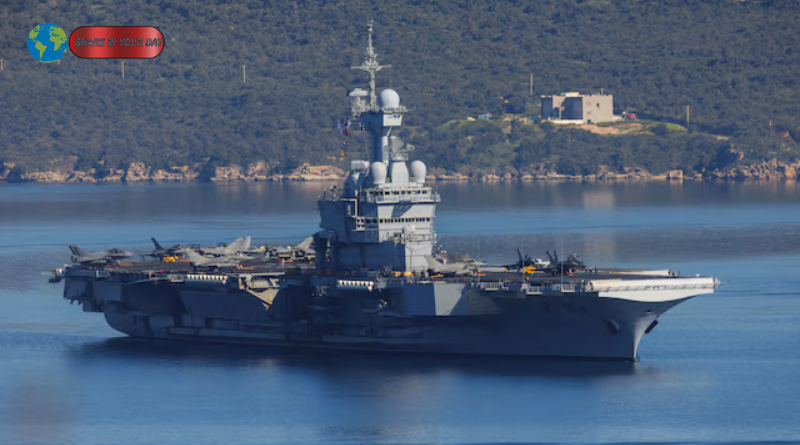
The French Armed Forces ministry confirmed that the nuclear-powered aircraft carrier Charles de Gaulle crossed the Suez Canal this week and is now operating south of the Red Sea. French officials said the mission is part of a broader effort coordinated with Britain and allied nations to prepare for a future maritime security operation designed to protect freedom of navigation through the Strait of Hormuz.
The latest French carrier Red Sea deployment comes during a period of extreme instability in the Gulf region. Shipping traffic through Hormuz has faced mounting disruptions following renewed military pressure between the United States and Iran, creating uncertainty across global oil and trade markets.
Why the Strait of Hormuz Matters
The Strait of Hormuz is widely regarded as one of the world’s most strategically important waterways. Roughly a fifth of global oil supplies normally pass through the narrow shipping corridor linking the Persian Gulf to international markets.
Any disruption in Hormuz can rapidly affect oil prices, insurance costs, shipping routes, and broader global trade flows. European governments have become increasingly concerned that prolonged instability could trigger another major economic shock.
French President Emmanuel Macron has argued that securing the maritime corridor is essential for stabilizing international commerce and avoiding a wider regional conflict. France and Britain have reportedly been leading discussions involving dozens of countries regarding a possible multinational naval mission focused on defensive maritime security rather than offensive military operations.
According to reports, the proposed initiative would aim to reassure commercial shipping companies and insurers while helping protect civilian maritime traffic.
Charles de Gaulle Carrier Group Positioned for Long Deployment
The Charles de Gaulle is France’s only nuclear-powered aircraft carrier and serves as the flagship of the French Navy. The carrier strike group includes escort warships and support vessels capable of extended overseas deployment.
French military officials indicated the carrier group may remain operational in the region for up to four or five months depending on developments.
The vessel had already been deployed to the eastern Mediterranean earlier this year following U.S. and Israeli air strikes targeting Iran-linked sites. Its repositioning toward the Red Sea now places French naval aviation assets closer to the Gulf region without directly entering the Persian Gulf itself.
Analysts believe the move gives France strategic flexibility while avoiding actions that could further inflame tensions with Tehran.
France and Britain Push for Defensive Maritime Mission
French and British officials have repeatedly emphasized that any future naval operation in Hormuz would focus on defense and maritime protection rather than combat operations.
Earlier diplomatic meetings hosted by France and Britain reportedly involved more than 50 participating countries discussing options for future escort operations and mine-clearing support for commercial shipping.
The French government has also attempted to distance the proposed mission from previous U.S.-led initiatives in the region. Reports indicate Paris prefers a separate multinational framework designed to lower tensions while maintaining legal legitimacy under international maritime law.
Macron has urged all parties to remove blockades and return to negotiations aimed at preventing further escalation in the Middle East.
Rising Tensions Between the U.S. and Iran
The French carrier Red Sea operation comes against the backdrop of a rapidly evolving confrontation involving Washington and Tehran.
Recent reports suggest the United States and Iran have been involved in indirect negotiations concerning sanctions relief, nuclear restrictions, and maritime access. However, the situation remains unstable, with periodic military incidents and warnings continuing from both sides.
The United States had previously launched a naval blockade initiative in response to attacks linked to Iran and regional proxy groups. Shipping routes across the Gulf region became increasingly dangerous as commercial vessels faced threats from missile strikes, drones, and naval interception operations.
Several European nations initially criticized aspects of the American approach but have since increased their own military readiness due to concerns over economic fallout from continued instability.
Oil Markets and Global Trade Watching Closely
Global energy markets are monitoring the situation closely because even limited disruptions in Hormuz can trigger sharp fluctuations in oil prices.
Insurance premiums for tankers traveling through the Gulf have already increased significantly, according to maritime analysts. Meanwhile, shipping companies continue to assess alternative trade routes should the security situation worsen further.
European economies remain especially vulnerable because of their dependence on Middle Eastern energy imports and international trade flows through the region.
Military analysts say France’s deployment may also serve a political purpose by signaling European willingness to independently protect international shipping routes without relying entirely on U.S. naval leadership.
The Strategic Importance of the Red Sea
The Red Sea has become increasingly militarized over the past year due to ongoing instability across the Middle East. The waterway connects the Mediterranean Sea to the Indian Ocean through the Suez Canal and Bab el-Mandeb Strait, making it another vital global trade corridor.
By moving into the Red Sea and Gulf of Aden, the French carrier group gains rapid operational access to several regional hotspots while remaining positioned to support future escort operations if required.
Military experts note that positioning naval forces south of the Suez Canal also allows quicker response times to developments in the Arabian Sea and Gulf region.
Could a Larger International Coalition Follow?
Diplomatic efforts are now focused on whether a broader international coalition can emerge to secure maritime routes while avoiding direct military confrontation.
France and Britain appear determined to build a multinational framework that includes regional cooperation and diplomatic engagement alongside military preparedness.
However, challenges remain significant. Iran has insisted that any reopening of Hormuz must be tied to broader political agreements involving sanctions relief and regional security guarantees. Meanwhile, the United States continues to maintain military assets across the region.
Despite the uncertainty, the arrival of the French carrier Red Sea deployment signals that European powers are preparing for a prolonged period of instability in one of the world’s most sensitive strategic regions.
What Happens Next
For now, French officials say the deployment is primarily aimed at assessing operational conditions and reassuring commercial maritime actors. Whether the carrier group eventually participates in a formal escort mission will likely depend on diplomatic developments over the coming weeks.
The situation remains fluid, but the movement of the Charles de Gaulle into the Red Sea represents one of the clearest signs yet that European nations are preparing for a larger security role in the Middle East maritime crisis.
As negotiations continue and tensions fluctuate, global markets, shipping companies, and regional governments will be closely watching every movement in the Strait of Hormuz and surrounding waterways.